Musée de Cluny is the Museum of the Middle Ages located in Paris's Latin Quarter, housed within a 15th-century knight's residence. The museum exhibits stone sculptures, stained glass, textiles, and Islamic art, with the remains of Gallo-Roman baths beneath it.
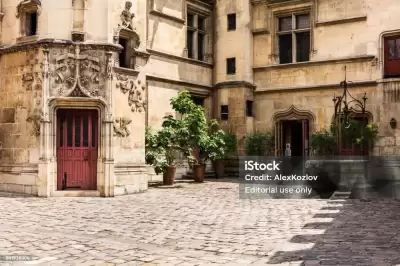
Musée de Cluny, officially known as the Musée national du Moyen Âge, stands in the heart of the Latin Quarter in a two-layered structure. Below are the vaulted remains of Gallo-Roman public baths dating from the 1st century AD, while above rises the Gothic facade of the Hôtel de Cluny, built at the end of the 15th century. Seeing two millennia of settlement traces on the same plot is what distinguishes the museum from other collection museums in Paris.
The collection spans approximately 1,000 years, from late Antiquity to the early Renaissance. Out of a total of around 23,000 artifacts, about 1,600 are displayed in 21 halls. While wandering among sculptures, stained glass, ivory works, and illuminated manuscripts, the main stop is the Lady and the Unicorn tapestry series: five panels representing the five senses and a sixth, mysterious panel inscribed with "À mon seul désir." Visitor comments frequently mention this series as the museum's most talked-about work, memorable for its red-flowered background and craftsmanship.
The museum's tranquility also draws attention. Visitors who go on Saturday mornings report finding the halls almost empty and a pace far removed from the crowds of the Louvre. It is also frequently mentioned that the explanations in the halls are clear and that children's everyday items (such as toys) are included. One comment describes a rude reception during audioguide pickup, but this is an isolated experience and does not change the overall impression.
Related discoveries: Museums, Paris museums, Saint-Étienne-du-Mont Church.
Guide's Note
When to Visit
Early Saturday morning is mentioned in comments as the calmest period. One visitor states that the halls were practically empty, making the experience more relaxed. Compared to the Louvre or Orsay, the museum is already smaller and less crowded; those who go on weekday mornings also find similar tranquility. On the first Sunday of the month, due to free entry, the crowds might increase. If you want a quiet visit, choose another day.
How to Get There
The Cluny – La Sorbonne station on Metro Line 10 is within walking distance of the museum. You can also get there by taking RER B or C to Saint-Michel Notre-Dame and walking through the cobblestone streets of the Latin Quarter. The Sorbonne and Panthéon are nearby, making it logical to include these two points in the same day's itinerary.
How Many Hours to Allocate
A visit focusing only on the main works, the tapestry series, bath ruins, and a few prominent halls, takes 1.5 hours. Those who want to explore all 21 halls, reading the explanations, allocate up to 2.5 hours. One comment notes that the museum turned out to be much more interesting than expected, leading to a longer stay than planned.
Suggested Itinerary
Going downstairs to see the Gallo-Roman frigidarium at the entrance is a good start. Its ceiling is high, and the stone texture still belongs to the Roman period. Then, you can go upstairs and pass through the Gallery of the Kings of Judah and the ivory/jewelry rooms. The tapestry series is usually displayed in a separate, darkened hall; it is recommended to save it for the end of the visit and explore it slowly. If time permits, going out to the cloister garden to sit and take a short break among the stone buildings is a good option.
Things to Note
Those wishing to get an audioguide may need to be patient while waiting at the reception. One visitor reported a cold welcome; it's not a general example, but it's good to be aware that you might encounter it. Strollers are allowed in the museum, but during crowded times, security guards may ask for them to be left at the entrance. Wheelchairs and folding chairs can be requested at the bag check point, with identification.
Photo Spots
The tapestry hall is ideal for flash-free photography due to its lighting conditions; the colors of the textures appear more vibrant in the darkened environment. The stone arches of the frigidarium also yield good results with vertical framing. Outside, the flamboyant Gothic facade of the Hôtel de Cluny is suitable for shots taken from street level.
General Information About the Museum
The collection covers a broad period from late Antiquity to the early Renaissance: sculptures, stained glass, manuscripts, metalwork, and everyday objects are all together. One comment mentions that everyday objects like children's toys are exhibited, which makes it easier to understand the period. The hall explanations are generally said to be clear, with only one comment noting that the information could be more detailed.
FAQ

Updated: