The Alexandre III Bridge is an example of Art Nouveau architecture completed in 1900 over the Seine River in Paris. Adorned with granite pillars, golden statues, and winged horses, the bridge was named in memory of the Franco-Russian alliance and can be visited for free.
The Alexandre III Bridge is Paris's most elegant bridge, connecting the Champs-lysées to the Eiffel Tower and crossing the Seine River. Construction began in 1896, and the bridge, opened at the 1900 World's Fair, is a monument to the Franco-Russian alliance of 1891. Naming the bridge after Russian Tsar Alexander III symbolizes the friendship between the two countries.
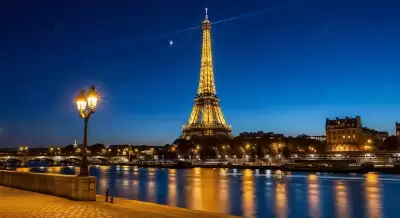
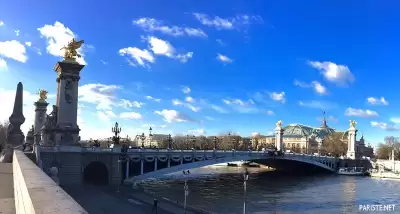
Built in the Beaux-Arts style, the bridge is supported by four 17-meter-high granite pillars. Atop each pillar are golden statues, nymphs, and winged horses. Along the balustrades are mythological figures symbolizing the Seine and Neva rivers, intricate decorations, and Art Nouveau lamps. When illuminated at night, this magnificent decoration takes on an entirely different beauty.
The bridge is not only functional but also a visual masterpiece. With a length of 160 meters and a width of 40 meters, it is one of Paris's most photographed locations. Walking across it, it is possible to feel the delicacy of its historical architecture with every step. It is very important for showcasing Paris's cultural richness, along with period structures like the Grand Palais and Petit Palais in its vicinity.
Related discoveries: Things to do in Paris, Historical Places, Historical places in Paris, Rodin Museum.
Guide's Note
Alexandre III Bridge: Paris's Most Magnificent Bridge
The Alexandre III Bridge, located over the Seine River, is one of Paris's most elegant and splendid bridges. Completed in 1900, this structure is considered one of the masterpieces of Art Nouveau architecture and rises like a work of art with its angel statues, winged horses, and golden ornaments.
The bridge connects the Champs-lysées district to the Eiffel Tower, and also links the Esplanade des Invalides with Winston Churchill Avenue. It was named after Russian Tsar Alexander III in memory of the Franco-Russian alliance signed in 1891.
Best Time to Visit
There is no specific seasonal restriction for visiting the bridge, but spring and autumn months may be preferred due to suitable weather conditions. During the high tourist season (June-August), the bridge can be crowded, so you might consider visiting in the early morning or evening hours.
Crossing the bridge at sunset offers a wonderful experience, especially for photographers. You can also see the bridge from the water by joining boat tours on the Seine River and take photos from different angles.
Transportation
The nearest metro stations are available to reach the bridge. Bus lines 63, 72, and 83 serve the bridge area. You can also easily reach it by walking from the Champs-lysées or Invalides area.
By car or bicycle, you can access the bridge directly. Its central location in Paris makes it a very convenient spot and it is included in most tourist routes.
What's Around?
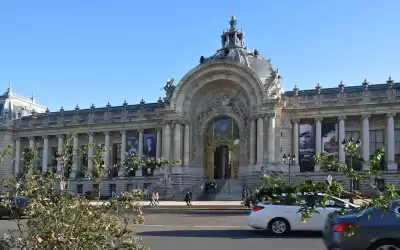
Right next to the bridge are the Grand Palais and Petit Palais; both are important venues for art and exhibitions. The Les Invalides area is also very close, and you can use the bridge to reach the Eiffel Tower.
You can start from the Champs-lysées and walk towards Place de la Concorde, strolling among the cafes and boutiques in the area. It is also possible to sit comfortably by the Seine and enjoy the panoramic views.
Best Spots for Photography
Photos taken from the top of the bridge are very impressive; especially the angle that includes the four 17-meter-high pillars, angel statues, and winged horses is the most popular choice. Taking photos with the Eiffel Tower in the background at sunset, with the bridge in the foreground, allows you to capture impossible pictures.
Photos taken from under the bridge, from the Seine River, are also quite impressive. It is possible to photograph the bridge from different angles during boat tours. A photo of the bridge illuminated at night also creates unforgettable images.
Food and Drink Options
There are many restaurants, cafes, and brasseries right around the bridge and on the Champs-lysées. Restaurants opening by the Seine offer the opportunity to dine with a bridge view, while more budget-friendly options are also available.
Having a picnic on the bridge or grabbing light snacks is also a popular option. Nearby are pizzerias, sandwich and pastry shops, and traditional French cafes. You can also take advantage of food and beverage services while on a boat tour on the Seine.
Budget Planning
Crossing the bridge on foot is completely free. Taking photos and enjoying the view also does not require any fee. Spending time in the area and exploring the surroundings may not incur additional costs.
If you want to take a boat tour on the Seine, the price of the tour varies depending on its length and type; it is recommended to check the websites of official tourism companies for current prices. The cost of dining in restaurants and cafes depends on Paris's general price levels.
Points to Note
During the high tourist season, the bridge can be quite crowded, and it is advisable to be careful about pickpocketing. When taking photos on the bridge, you should pay attention to the safety of other pedestrians and directional signs.
Cycling on the bridge may be restricted, and you should stay within the pedestrian lanes. Depending on the weather, it can be slippery due to wind and rain; wearing appropriate footwear is advised.
How Many Days to Stay?
One to two hours is sufficient to see the bridge. If you want to take photos, explore the surroundings, and comfortably enjoy the view, it would be more appropriate to allocate 2-3 hours.
If you plan to visit museums in the area such as the Grand Palais, Petit Palais, and Les Invalides, you might plan for a longer duration. If you want to go shopping on the Champs-lysées, additional time may be needed.
Suggested Route
As a starting point, you can begin from the Champs-lysées and proceed towards Place de la Concorde, then reach the Alexandre III Bridge. After crossing the bridge, you can walk towards Les Invalides and the Eiffel Tower.
Alternatively, it is also possible to start from the Eiffel Tower, come towards the bridge, and then proceed towards the Champs-lysées. If you wish to take a boat tour along the Seine, you can get information at the piers in the area.
Accommodation Options
In the areas close to the bridge, there are many hotel options in the Champs-lysées district, the 8th Arrondissement, and the Invalides area. Both luxury hotels and budget-friendly options are available; prices vary depending on location and season.
By choosing among hotels within walking distance of the bridge, you might be able to enjoy the views morning and evening. Hotels along the Seine are particularly preferred by visitors seeking a romantic Paris experience.
Shopping Opportunities
Around the bridge, on the Champs-lysées, there are stores of international brands, boutiques, and luxury shopping centers. Shops selling art and souvenirs are also available in the area.
Near the Grand Palais and Petit Palais, you can find art galleries and specialty shops. If you want to buy traditional Parisian souvenirs, you can visit the small shops in the area. Online shopping and credit card transactions are widely accepted.
Alexandre III Bridge Videos
Alexandre III Bridge videos load when you open this section to keep the page fast.
Show videos
FAQ
Updated: