
At the opening of Bursa Grand Mosque, Emir Sultan entrusted the sermon to Somuncu Baba, a simple baker. He then explained the Fatiha in seven layers, teaching not to be deceived by outward appearances.
As the morning coolness settled over Bursa, a thin mist descending from the foothills of Uluda covered the streets. The shutters of the inns slowly opened, the first hammer blows of coppersmiths echoed against the stone walls, and the scent of bread rising from the bakeries spread through the neighborhoods before dawn. At those hours, Bursa was not just a capital. It was a city where prayer and commerce walked hand in hand, where hard work was not scorned.
In the middle of the city stood a majestic structure that had just been completed: the Grand Mosque. With its twenty domes, it carried a solemn silence towards the sky. Anyone who saw it would pause for a moment, then involuntarily raise their head. Here, not only the architects' measurements but also the spirit of the era could be felt.
That day was the opening day.
The people of Bursa began to flock to the courtyard from early morning. Merchants, students, dervishes, soldiers, old people, children, travelers passing through. Everyone was driven by the same curiosity. The first Friday prayer would be performed, and the first sermon delivered in this great place of worship built by Sultan Bayezid. The excitement of this had been discussed for days. Some said Emir Sultan would ascend the minbar, while others predicted that one of the great scholars of the era would be assigned. The first words spoken in such a place could not be ordinary.
Among the crowd was a simple man walking with his basket. He wore an unpretentious aba, and a worn turban on his head. His face was tanned by the sun, his gaze deep but calm. People usually saw him around the bakery. He would distribute warm loaves, offer bread to the needy, and leave small pieces in the palms of children. No one knew much about him. To those who asked his name, he would say "Hamid." The people, however, affectionately called him Somuncu Baba.
That morning, too, he had fresh loaves in his basket. But there was something different in his steps than usual. He was neither hurried nor slow. He walked like someone going to a place he had been called to.
When he entered the mosque, the hum filling the vast space touched his ear for a moment, then receded. Light filtering through the marble columns struck the newly polished wood and gently diffused under the domes. The sound of water rising from the central fountain was clear enough to be heard despite the multitude of people. Every drop seemed to fall into the heart of this great structure.
Somuncu Baba sat near the back rows. He placed his basket beside him. A few children noticed him and smiled. He took a small loaf from the basket and offered it to the nearest child. The child took the bread with both hands, and the joy of a festival appeared in his eyes.
Soon, the activity inside increased. The Sultan, state officials, and dignitaries took their places. Everyone was waiting to see who would ascend the minbar. Emir Sultan's name circulated in whispers. That wise man of Bursa gathered the gazes of the congregation upon him.
But when Emir Sultan stood up, he did not head for the minbar. Instead, he turned his eyes to the back of the crowd. People tried to understand whom he was looking for. Then his gaze stopped on the simply dressed baker.
"I am not the one who will deliver the sermon today," said Emir Sultan. His voice echoed under the domes. "Among us is someone more worthy than I."
At these words, there was a slight ripple inside. Everyone looked at each other. Who was this person? Which scholar, which professor, which sheikh was deemed worthy of such a duty?
Emir Sultan walked slowly towards Somuncu Baba. He stood before him and bowed respectfully.
"Please come," he said. "This minbar awaits you."
Somuncu Baba raised his head. There was neither surprise nor arrogance in his eyes. Only a deep humility. For the hardest test for someone who wishes to remain hidden is to be called before everyone.
"You have exposed us," he whispered.
A faint smile appeared on Emir Sultan's face.
"The trust must find its owner," he said.
The congregation held its breath. A baker being called to the minbar confused many. Some found it hard to understand. Others felt something else opening a door deep in their hearts. There are some people whose greatness lies not in their titles, but in what they conceal.
Somuncu Baba slowly placed his basket on the ground. He stood up. As he walked through the crowd, he did not bump into anyone, nor did he disturb anyone. His every step was light enough to be unheard on the stone floor. When he approached the minbar, he paused briefly. He bowed his head. Then he ascended the steps.
There was such a silence inside that even the sound of the water falling in the fountain was heard more distinctly.
He began the sermon with the Basmala. His voice was not loud, but even the person at the very back could hear him clearly. His words were not harsh; they settled gently into the heart. His sentences, seemingly simple at first glance, unfolded layer by layer within the listeners. He spoke not only to the ear but to the forgotten chambers of the heart.
He began to explain the Surah Al-Fatiha.
First, he explained it with its universally known meaning. He spoke of mercy, servitude, and the straight path. Then he opened a deeper door. He showed the correspondence of each verse in the human soul. After that, he continued with another interpretation; this time, his words made the minds of scholars tremble. At the fourth explanation, the dervishes could not hold back their tears. At the fifth, the sultan bowed his head. At the sixth, a confirming serenity settled on Emir Sultan's face. By the seventh interpretation, most of the congregation could no longer fully grasp what was being said, but they felt that those words came from truth.
People simultaneously realized they were both shrinking and expanding. The knowledge flowing from the mouth of a baker had a clarity that could not be found even after years of searching in madrasah pulpits. At that moment, many understood what a great delusion it was to be deceived by outward appearances.
When the sermon ended, no one moved immediately. Somuncu Baba descended from the minbar and returned to his place with slow steps. The prayer was performed. In prostration, everyone was left alone with their own secret. Some wished for forgiveness, some wanted the rust in their hearts to be wiped away, and some were ashamed for not having noticed that humble man who distributed bread all this time.
After the prayer, the people wanted to gather around him. Everyone wished to kiss his hand, receive his blessings, and learn who he was. But before the crowd grew, he took his basket and headed for the exit.
The Grand Mosque had three gates. According to legend, those who wanted to see him that day ran to every gate. Some headed north, some east, some west. But everyone who went said he had exited through their gate. People looked at each other in astonishment. How could one person leave from three places at once? Perhaps the issue was not with the body. Perhaps everyone saw him as much as their destiny allowed.
As Somuncu Baba disappeared into the narrow streets, the scent of bread was once again on the stone paths of Bursa. But that scent was no longer just the smell of warm loaves rising from the bakery. It had transformed into something that reminded of humility, hidden service, and unpretentious depth.
From that day on, the people of Bursa began to look at ordinary-looking people with different eyes. They thought that there might be an unknown value in the strange person drinking water at a fountain, in the old man sweeping in front of a shop, in the porter carrying a load on his shoulder, in the traveler silently praying. Because the first great lesson given by the Grand Mosque, before its stones or its minbar, was this: Truth sometimes comes not with ornate robes, but with hands smelling of flour.
Years passed. Sultans changed, bazaars were renewed, countless people came and went through the streets. But the memory of that first sermon continued to live in Bursa's memory. The water of the fountain, whenever it flowed, seemed to multiply that day's silence anew. Those who looked at the domes saw not only an architectural beauty but also the shadow of a hidden wisdom.
Today, if one enters the Grand Mosque and listens to the sound of water in the center, one can imagine a simply dressed man walking among the crowd for a moment. With his basket in hand, a humble peace on his face, a lightness in his steps that harms no one. Perhaps he again offers bread to a child. Perhaps he passes by without looking at the minbar. Or perhaps he leaves one with this question without saying anything:
"Do you truly know the person you see?"
Some stories do not remain in the past. They seep into stone, blend with water, wait at the doorstep. The secret of Somuncu Baba told within the Grand Mosque is like this. It does not loudly advise a person; it merely reduces the noise of their heart. Then it silently shows that the greatest rank is sometimes to be unknown, the deepest knowledge is carried in silence, and the most valuable service can be as simple as a loaf offered without expectation of return.
Perhaps this is why, when passing in front of a bakery in Bursa in the morning, the scent of bread still reminds some hearts of that old opening day. The congregation gathered under the twenty-domed sanctuary, the hidden saint called to the minbar, the layered meaning of the Fatiha, and that one should not judge by outward appearances.
As long as the Grand Mosque stands, this story will live on. Because even if the stone ages, the intention does not. Even if the doors change, the quest that enters does not. No matter what era one lives in, one wonders about the secret behind a hand that offers bread. This is the true legacy Somuncu Baba left to Bursa: No structure is fully seen, no word fully understood, no person fully known until the eye of the heart is opened.
Bursa Grand Mosque
Places in This Article
Places to visit mentioned in this article
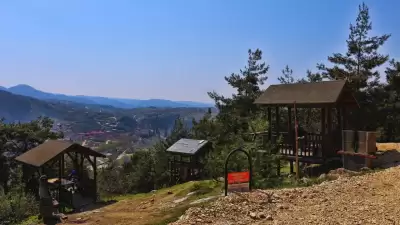
Atatürk Urban Forest
Atatürk Urban Forest, located right next to Odunluk Neighborhood in Bursa's Nilüfer district…

Ayazma Beach
Ayazma Beach, located on the coast of the Marmara Sea in the Mudanya district of Bursa, stan…
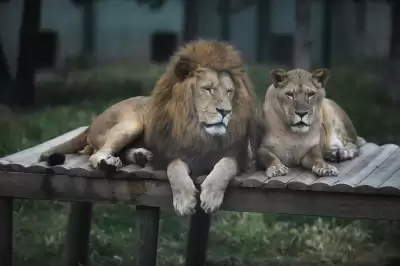
Bursa Zoo
Bursa Zoo, a member of the European Association of Zoos and Aquaria (EAZA), has been operati…
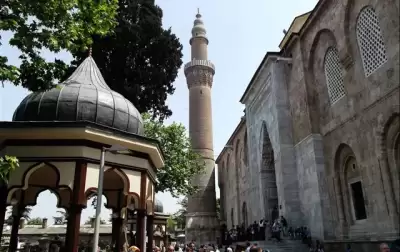
Bursa Grand Mosque
The Grand Mosque, a symbol of Bursa, was built by Sultan Bayezid I between 1396 and 1399. Wi…

Çambaşı Plateau
A vast plateau in Ordu's Kabadüz district, at an altitude of 1850 meters. Visited for cool w…
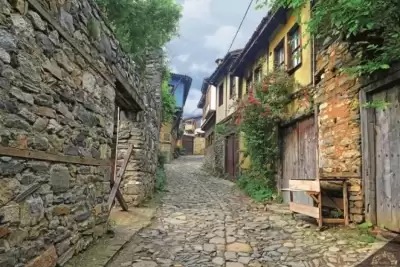
Cumalıkızık Village
Located in the Yıldırım district of Bursa, on the northern foothills of Uludağ, Cumalıkızık …

Eşkel (Esence) Public Beach
Eşkel Public Beach, located in the Esence neighborhood of Mudanya district in Bursa, is one …
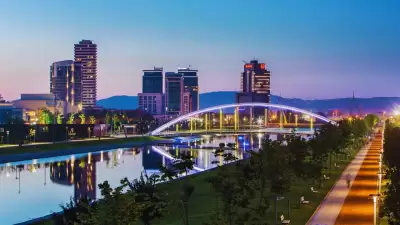
Hüdavendigar City Park
Hüdavendigar City Park, Bursa's largest urban park, is a favorite among city residents with …
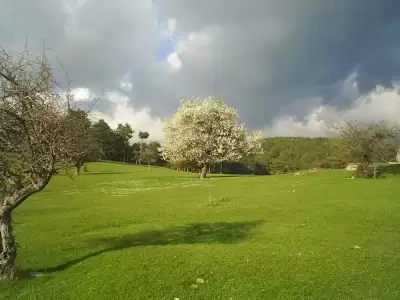
Koca Yayla
Koca Yayla, located in the Keles district of Bursa, is a picnic and recreation area spanning…
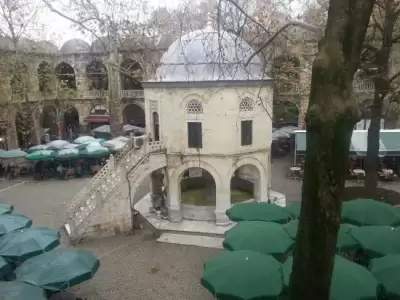
Koza Han
Built by Bayezid II in 1491, Koza Han is the center of Bursa's historical silk trade and one…
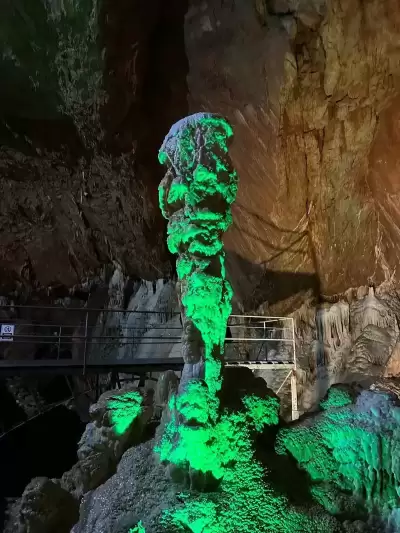
Oylat Cave
Located 17 km southeast of İnegöl, Bursa, at the end of Oylat Canyon, Oylat Cave is one of T…

Perşembe Plateau
A plateau in Ordu's Aybastı district, winding in meanders at an altitude of 1,500 meters. It…
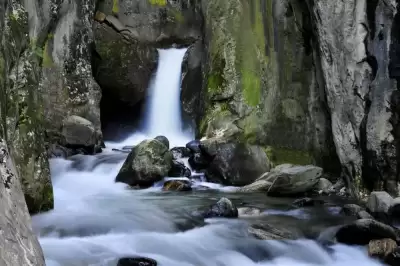
Saitabat Waterfall
Saitabat Waterfall, located at an altitude of 630 meters in the Kestel district of Bursa, is…

Softaboğan Waterfall
Hidden in the foothills of Uludağ, in Bursa's Osmangazi district, Softaboğan Waterfall is a …
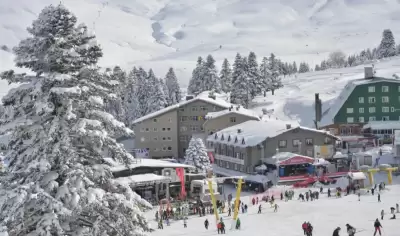
Uludağ
Uludağ, the symbol of Bursa and the highest mountain in the Marmara Region, with an altitude…