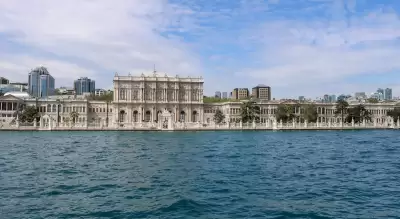
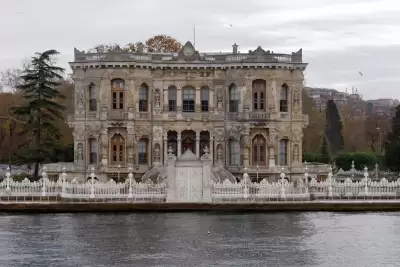
Küçüksu Pavilion is an Ottoman Baroque style resting pavilion built in 1856 for Sultan Abdülmecid by architect Niko臒os Balyan on the Beykoz coast, and is currently open to visitors as a museum.
Küçüksu Pavilion is a magnificent Ottoman pavilion located on the Anatolian side of the Istanbul Bosphorus, on the Üsküdar-Beykoz coastal road, right next to where the Göksu Stream and Küçüksu Stream flow into the Bosphorus. Completed in 1856 by order of Sultan Abdülmecid, the structure was designed by the famous architect of the period, Nikoos Balyan. Built with rubble masonry technique on a 15 x 27 meter base area, the pavilion has three floors including the basement and exhibits one of the most delicate examples of Ottoman Baroque style.
Used by Ottoman sultans as a hunting and recreation pavilion, the structure today serves as a museum open to visitors under the auspices of the Directorate of National Palaces. The pavilion, a favorite stop for photography enthusiasts with its façade facing the Bosphorus, offers a captivating atmosphere in every season with its ornate stone decorations, elegant interiors, and unique location.
Related discoveries: Places to visit in Istanbul, Museums, Istanbul museums, Hagia Sophia History and Experience Museum.
Guide's Note
About Küçüksu Pavilion
Küçüksu Pavilion is one of the most elegant representatives of Ottoman palace architecture on the Bosphorus coast. Completed in 1856 during the reign of Sultan Abdülmecid, the structure was built to be used by the sultan as a hunting and recreation pavilion. It is known that a wooden structure previously stood in this area, and the current stone pavilion rose in place of the old structure.
Designed by architect Niko臒os Balyan, the pavilion stands out with its ornate façade decorations, rounded corner projections, and elegant balconies, reflecting the Ottoman Baroque understanding of the period. Consisting of three floors including the basement, the interior spaces of the structure are furnished with original furniture, mirrors, chandeliers, and decorative elements reflecting the taste of the era. The small garden and coastal strip in front of the pavilion add a distinct tranquility to the structure.
Best Time to Visit
The most ideal times to visit Küçüksu Pavilion are April-May and September-October. During these seasons, the color of the Bosphorus, the greenery in the garden, and the stone façade of the pavilion complement each other perfectly. While crowds increase in the summer months, if you go in the early morning, you can explore the pavilion almost as if it were your own.
In winter months, the number of visitors significantly decreases, so this period can also be preferred for those seeking a calm experience; however, it is beneficial to follow weather conditions. Weekdays, especially Tuesday and Wednesday, are much quieter compared to weekends. In the hours close to sunset, the silhouette of the pavilion reflected on the Bosphorus turns into a special attraction point for photography enthusiasts.
How to Get to Küçüksu Pavilion?
The most practical way to reach the pavilion is via Üsküdar. Bosphorus line minibuses and buses departing from Üsküdar will take you to the Küçüksu stop; the pavilion is a very short walk from the drop-off point. If you are coming from the European side, you first need to cross to Üsküdar by ferry or over the bridge.
For those coming by car, it is easy to reach the pavilion via the Üsküdar-Beykoz coastal road; however, traffic and parking problems may occur on the coastal road on weekends. Taxis and app-based car rental services can also easily navigate to the location. Using public transport is both practical and a more enjoyable option for enjoying the Bosphorus view.
Photography Spots
Küçüksu Pavilion stands out as one of Istanbul's most photogenic historical structures. The front façade facing the Bosphorus allows you to capture all the ornate details of the pavilion and the blue water in the same frame; this angle yields magnificent results especially in the morning light. For photographs to be taken from the sea side of the pavilion, the piers and coastal stones on the shore offer a good vantage point.
Indoors, chandeliers, ornate ceilings, and original furniture provide rich content for detailed photography. At sunset, the light filtering from behind the pavilion paints the façade in golden tones, and these hours are perfect for long exposure experiments. The marble fountain pool in the garden is also a frequently preferred element by photographers seeking composition.
What to Eat Nearby?
Within the pavilion, there is a cafe-restaurant area for visitors; it is a nice option to relax with a Bosphorus view. Around the pavilion, on the Küçüksu and Göksu coastal strip, there are also tea gardens and small restaurants.
For those seeking a wider range of dining options, Beykoz center and the vicinity of Anadoluhisarı offer various fish restaurants and tavern options within a short distance. Those who want to eat fresh fish by the Bosphorus can prefer the Anadoluhisarı coast a few kilometers away.
Suggested Itinerary with Surrounding Area
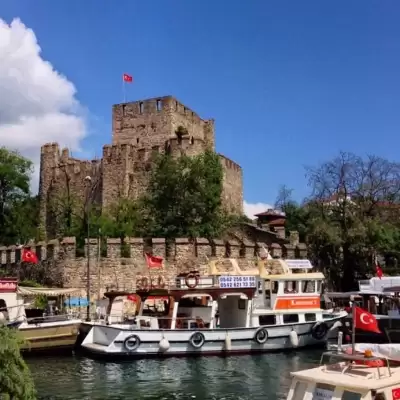
If you combine your visit to Küçüksu Pavilion with other historical sites on the Anatolian side of the Bosphorus, you will have a much fuller day. You can visit the pavilion in the morning and then proceed to Anadoluhisarı a few kilometers north; the ruins of Anadolu Hisarı and the coastal strip here offer a beautiful walking route.
In the afternoon, you can extend to Beykoz center to explore its historical fountain and coastal cafes. Returning via Üsküdar pier to the European side to complete the day is both practical and offers the opportunity to see the Bosphorus from both sides. For those coming by car, this route can be comfortably completed in approximately half a day.
Things to Know Before Your Visit
The pavilion is closed to visitors on Mondays and Thursdays; don't forget to plan accordingly. Entrance fees are determined by the Directorate of National Palaces and may be updated over time; we recommend checking the official website for current prices before your visit. Müzekart is not valid at this venue.
Since rules regarding photography inside the pavilion may vary, it is advisable to ask the staff at the entrance. As the structure has three floors, using a wheelchair or stroller is quite difficult. With its location close to the coastal road, the pavilion may be exposed to traffic noise during busy summer months; therefore, early morning hours offer a calmer and more peaceful visiting experience.
Küçüksu Pavilion Videos
Küçüksu Pavilion videos load when you open this section to keep the page fast.
Show videos
FAQ
Updated: