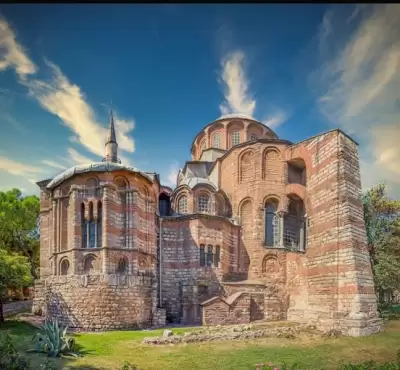
Kariye Mosque, located in the Fatih district of Istanbul, is one of the most important art treasures of the Byzantine period with roots dating back to the 4th century; the mosaics and frescoes commissioned by Theodoros Metochites in the 14th century transformed the structure into a world heritage site.
Standing within Istanbul's walled historic peninsula, a stone's throw from the Theodosian Walls, Kariye Mosque holds one of the most brilliant artistic legacies of Byzantine civilization that has survived to this day. With roots dating back to the early 4th century, the structure first served as a monastery church; it was converted into a mosque in 1511, opened its doors as a museum between 1945-2020, and regained its mosque status from 2020 onwards.
The element that brought the structure its true fame are the mosaics and frescoes commissioned in the 14th century by the Byzantine statesman and scholar Theodoros Metochites. These artworks, covering the narthex sections, present a panorama of the Bible with scenes depicting the life of Jesus, the birth of the Virgin Mary, and the resurrection from death. Far ahead of their time in terms of color vibrancy and figure depth, these works are the product of a breakthrough that even influenced pre-Renaissance Western art.
Kariye Mosque, which is part of the Historic Areas of Istanbul list under UNESCO World Heritage, today may be overshadowed by Hagia Sophia and Topkapi Palace, but it transforms into an unforgettable experience for every visitor who discovers it. For those who wish to see the pinnacle of Byzantine art in an intimate atmosphere away from the crowds, this structure is perfectly suited.
Related discoveries: Istanbul attractions, Religious Sites, Istanbul religious sites, Bebek Coast.
Guide's Note
What is Kariye Mosque? A Brief History
The story of Kariye Mosque begins with a small monastery established just outside the walls of Istanbul in the early 4th century. The name of this building complex, known as the Chora Monastery, means 'in the countryside' or 'outside' in Greek; because when it was first built, it was beyond the city walls. The church, rebuilt in 534 during the reign of Justinian, gained its magnificent form in the 11th century under the patronage of the Byzantine aristocracy.
The mosaics and frescoes we see today were commissioned in the early 14th century by Theodoros Metochites, one of the most powerful Byzantine statesmen of the period. Metochites, both a scientist and a poet, had the church almost entirely rebuilt and brought together the most talented masters to decorate the interior with a highly innovative approach for that era. Converted into a mosque in 1511 during the Ottoman period, the structure's mosaics were preserved without being covered with plaster. Declared a national monument in 1945, Kariye was opened to visitors as a museum from 1948. In 2020, it was reclassified as a mosque by decision.
Mosaics and Frescoes: What's Where?
The artworks that form the focal point of a visit to Kariye Mosque are concentrated in three main sections: the outer narthex, the inner narthex, and the parekklesion (side chapel).
The outer narthex is covered with mosaics depicting scenes from the life of Jesus. The birth in Bethlehem, the flight into Egypt, and various miracles are located in this section. The inner narthex houses mosaics depicting the life of the Virgin Mary; the dome mosaic in this section presents a highly impressive composition with Mary surrounded by her ancestors. The most recognized work in the narthex is the Theodoros Metochites mosaic above the door arch: Metochites is depicted personally presenting a model of the church to Jesus.
The parekklesion on the south side contains the Anastasis scene, a masterpiece of fresco art. This fresco is one of the most powerful images in Christian iconography: Jesus breaks down the gates of hell and pulls Adam and Eve from the underworld. The intensity of color and the dynamism of the figures showcase the extraordinary level achieved by 14th-century Byzantine art.
Best Time to Visit
Kariye Mosque offers a calmer visiting experience compared to Istanbul's major tourist centers; however, it can still get crowded in the summer months. April, May, September, and October are the most suitable periods in terms of both weather conditions and visitor density.
When it comes to the time of day, early morning hours are always advantageous. Especially for those who want to photograph the mosaics, the morning light provides both a softer and a less crowded environment. Access to the visiting area may be restricted or completely stopped during prayer times, especially Friday prayers; therefore, it is advisable to check current visiting hours in advance.
How to Get to Kariye Mosque?
Kariye Mosque is located in the Edirnekapı district, within Istanbul's historic peninsula. Although its location is central, it is not within walking distance from the Sultanahmet or Grand Bazaar areas; therefore, public transport or a taxi is recommended.
By Metro: Take the M1A or M1B line, get off at Topkapı-Ulubatlı station, and from there you can take a taxi or a minibus to the area.
By Bus: IETT lines 28, 87, 90, and 126 pass through the Edirnekapı route. After getting off at the Edirnekapı stop, you can reach the structure within a few minutes on foot.
By Taxi or ride-sharing: It can be reached from Sultanahmet in approximately 10-15 minutes. It should be noted that those arriving by car may have difficulty finding parking due to the narrow streets in the vicinity.
Surrounding Area: Places to Combine with Kariye
The Edirnekapı and Fatih region where Kariye Mosque is located is covered with a historical layer where you can spend hours alone. Here are a few suggestions to make your visit more efficient:
Theodosian Walls: These walls, stretching right next to the structure, are one of the largest land wall systems remaining from the Roman period. A short walk along the walls will allow you to get lost in history.
Fethiye Mosque: This structure, a few minutes' walk from Kariye, was also converted from a Byzantine church and houses mosaic remnants.
Balat and Fener districts: By heading from Edirnekapı towards the Golden Horn coast, you can see the colorful Balat houses, the Greek Orthodox Patriarchate, and historic synagogues. This route is one of the most unique routes offering Istanbul's multi-layered history all at once.
What to Eat, Where to Rest in the Vicinity?
The area around Kariye Mosque offers a more local and intimate dining atmosphere, very different from the tourist restaurants of Sultanahmet. In the Edirnekapı and Fatih districts, you can find traditional Turkish cuisine at artisan restaurants, kebab shops, and pastry shops.
Small cafes and tea gardens are also available near the mosque. Especially after an intense historical tour, these places serve as a suitable break point to sit, drink tea, and relax. If you go to the Balat district, boutique cafes and breakfast places that have opened in recent years will also be waiting for you.
Things to Know Before Your Visit
As Kariye Mosque is an active place of worship, some rules must be observed during your visit. Female visitors are expected to cover their heads and all visitors to remove their shoes; therefore, easily removable shoes should be preferred.
During prayer times, access to certain sections for visitors may be restricted or completely stopped. Planning your visit by considering current prayer times will help prevent disappointment. Your ticket allows for a single entry; you cannot re-enter after exiting. Flash photography near the mosaics is generally prohibited; non-flash photography is allowed.
FAQ

Updated: