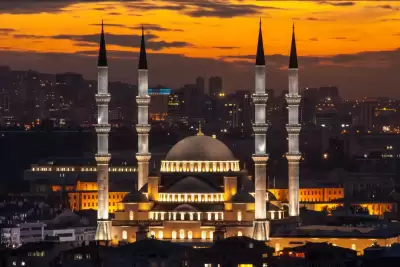
The Temple of Augustus is a Roman-era structure dating back to 25-20 BC, located next to Hacı Bayram Mosque in Ankara's Altındağ district; the Res Gestae inscription, detailing Emperor Augustus's will, is found on the inner and outer walls of the temple.
Rising in the middle of a dense historical fabric in Ankara's Altındağ district, the Temple of Augustus is a Roman structure built between 25-20 BC. The history of the area where the temple is located extends much further back; the Phrygians had established a sacred place here for the moon god Men and the fertility goddess Cybele. After the death of Amyntas, the last Galatian ruler, a new temple was built in honor of Emperor Augustus in the Province of Galatia, which joined Rome, on top of this initial structure that had been damaged over time.
The true importance of the structure for world history stems from the inscription known as Res Gestae Divi Augusti. The Latin text of this testament, in which Emperor Augustus recounts his life and deeds, is carved on the inner walls of the temple, and its Greek translation on the outer surfaces. This inscription, one of the best-preserved examples in the world, continues to be a primary source for ancient history researchers. The temple was converted into a church by the Byzantines in the 6th century; and in 1427-1428, the Hacı Bayram Veli Mosque was built adjacent to it. This layered historical accumulation gives the place a unique atmosphere.
Related discoveries: Places to visit in Ankara, Historical Sites, Historical sites in Ankara, Wonderland.
Guide's Note
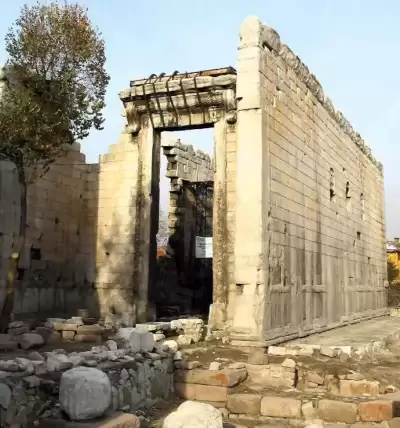
The Temple of Augustus is a Roman structure built around 25 BC, located in Ankara's Ulus district, right next to the Hacı Bayram Mosque. The vast majority of visitors speak of the impact of encountering such an ancient structure right in the middle of the city; the size and craftsmanship of the stones are better understood up close. The area is not physically large and can be explored with a short visit; however, for history enthusiasts, the content is quite rich.
The most striking feature of the temple is the Monumentum Ancyranum inscriptions on its walls: since the original of this text, which describes the deeds of Emperor Augustus, was lost in Rome, the copy here is considered among the most important epigraphic documents in world history. The integrity formed with the adjacent Hacı Bayram Mosque and its tomb concretely shows how different periods and beliefs are layered in the same space; this intertwining is a point emphasized by many visitors.
However, some visitors express reservations about the general condition and presentation quality of the structure. Admission is free and the visit can be quite short; therefore, it is advisable to adjust your expectations accordingly.
- It is stated that the level of preservation is limited compared to the original state of the structure, which may create a feeling of "not much left to see."
- There are opinions that the information signs and landscaping are insufficient; visitors who explore the area without context may not fully grasp what they are seeing.
- Doing a brief preliminary research on the history of the temple and the inscriptions before visiting significantly enriches the experience.
When to Visit?
The most suitable period to visit the Temple of Augustus is during the spring and autumn months. Between April-May and September-October, the weather is neither too hot nor too cold; you can comfortably walk around the open area and examine the inscriptions and architectural details at length. Ankara summers are quite hot and dry; choosing the early morning hours during July-August will both protect you from the sun and allow you to visit in a less crowded environment.
Weekday mornings, especially between 10:00-12:00, are the calmest times for the area. Since the vicinity of the adjacent Hacı Bayram Mosque may become crowded during Friday prayer times, it is advisable to keep these hours in mind.
How to Get There?
Since the temple is located in Ulus, the historical center of Ankara, it is easily accessible from all parts of the city. Coming by metro is the most practical option: you can get off at the Ulus station of the M1 line and walk for about 10-15 minutes towards Hükümet Square to reach the temple. Along the way, you can also observe Ankara's historical fabric.
For those who want to come by bus, there are many lines that reach Ulus Square; you can check current routes via EGO's official application or website. For those coming by car, there are paid open parking lots around Ulus; however, finding a parking spot in narrow streets can sometimes be difficult.
Suggested Route: Historical Ulus Tour
The Temple of Augustus can be combined with historical sites in and around Ulus to create a beautiful walking route. The suggested order is as follows:
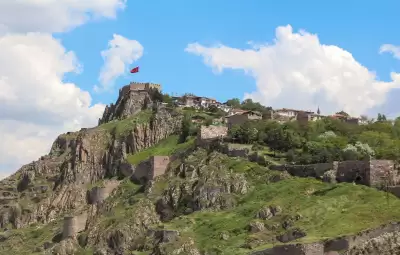
1. Temple of Augustus and Hacı Bayram Mosque: Start with these two structures, which stand back-to-back; examine the temple's inscriptions, and take a short break in the mosque's courtyard. 2. Julian Column: From here, walk a few minutes to reach the Julian Column, dating from the 4th century AD. 3. Roman Bath: The remains of the Roman Bath on Çankırı Street can be your next stop. 4. Ankara Castle: You can complete the tour by climbing up to Ankara Castle to shake off the day's fatigue and enjoy a panoramic view of the city. This entire route takes approximately half a day.
Photo Spots
The Temple of Augustus is one of Ankara's most powerful photo locations. The angle where the Temple and Hacı Bayram Mosque are seen together allows you to capture the juxtaposition of Roman and Ottoman architecture in a single frame; it is recommended to try the north-west corner of the temple to achieve this shot.
The Res Gestae inscription on the inner surfaces of the walls offers an interesting detail for close-up shots. Since the morning light comes from the east, you can prefer morning hours to highlight the reliefs on the inscriptions. On the other hand, the light before sunset, known as the golden hour, is ideal for shots where the columns take on yellow-orange tones and the sense of depth is enhanced.
What to Eat Nearby?
The area around Ulus and Hükümet Square, where the temple is located, hosts many artisan restaurants offering traditional Ankara delicacies. Small artisan restaurants in Ulus are a good starting point to try capital-specific flavors such as Ankara tava and brain toast.
The simit and börek sellers around Hacı Bayram Mosque offer a practical option for morning visits. For lunch, you can reach a much wider range of restaurants by walking from Ulus Square towards Kızılay or by a short metro ride.
Things to Know Before Visiting
Since the temple area is outdoors, it is recommended to wear comfortable walking shoes; the ground can be stony and uneven in places. Don't forget to bring water; especially in summer, Ankara's hot and dry climate can be tiring quickly.
If you also wish to visit the adjacent Hacı Bayram Mosque, pay attention to prayer times and consider wearing appropriate attire. Avoiding touching the inscriptions on the temple walls contributes to the preservation of this unique historical heritage. Photography is generally allowed; however, it is advisable to consult officials as different rules may apply indoors.
Temple of Augustus Videos
Temple of Augustus videos load when you open this section to keep the page fast.
Show videos
FAQ

Updated: