Rüstem Pasha Mosque is a 16th-century Ottoman structure completed by Mimar Sinan in 1563, located in the market streets of Tahtakale, Istanbul; it is known for its Iznik tiles covering its walls and columns, and admission is free.
Rüstem Pasha Mosque stands on Hasırcılar Street, right in the middle of the bustling Tahtakale market, but one floor up. Bearing the signature of Mimar Sinan, the structure was started in 1561 and completed after the death of Süleyman the Magnificent's son-in-law and Grand Vizier, Rüstem Pasha. From the outside, it looks like an ordinary market mosque. When you climb the stairs above the shops and enter, something completely different greets you.
Its interior is covered from floor to ceiling with Iznik tiles: the mihrab, minbar, columns, and walls. There are tulip, carnation, and pomegranate blossom motifs in shades of cobalt blue, turquoise, and coral red. Most visitors describe it as a miniature Blue Mosque, but without the crowds. Reviews particularly highlight the tiles in the second-floor gallery and the mosaic patterns at the entrance. Some visitors write about how calm the mosque is and that they didn't have to wait to enter.
The mosque has been damaged and repaired several times by earthquakes and fires. One of the last restorations was in 1997, and another in 2020. Historic hans like Büyük Yeni Han and Küçük Yeni Han are next to it, and shops line its base. Since it's almost adjacent to the Spice Bazaar, it's easy to visit while walking along the Grand Bazaar-Eminönü route.
Guide's Note
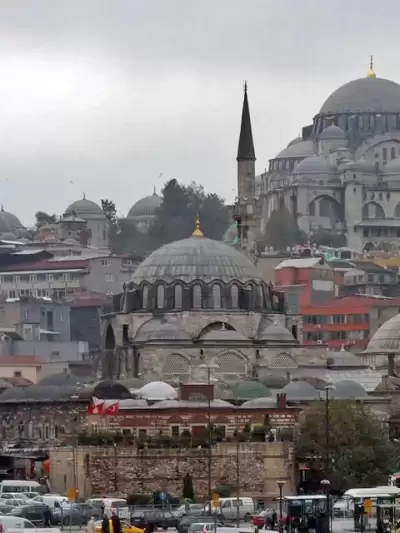
Mimar Sinan's work, the Rüstem Pasha Mosque, leaves a strong impression on visitors. The Iznik tiles covering the interior, with their blue, green, and red tones, attract attention and are a feature many visitors particularly emphasize. The general atmosphere of the mosque is described as calm and spiritual; the vast majority of those who enter state that they feel peace and tranquility.
Its proximity to the Spice Bazaar makes the mosque quite easy to reach. Visitors report that the place is kept clean and well-maintained. It is understood to be a suitable stop for those who come both to worship and to see historical architecture.
- Ablution facilities and toilets for women are extremely limited or difficult to access; multiple visitors have expressed complaints about this.
When to Visit
The mosque is open daily from 10:00 to 18:00, but closes 15 minutes before prayer times. On Fridays, there are visiting restrictions between 12:00 and 14:00, so avoid visiting at that time. If you go before the market comes alive, both the journey and the mosque will be calmer. Confirm with an official source before visiting.
How to Get There
The easiest way is to take the T1 tram to Eminönü stop, then walk 5-10 minutes along Hasırcılar Street towards the Grand Bazaar. If you're coming from Sirkeci, you can get off at Marmaray and walk in the same direction. For those coming from the Anatolian side by metro, Haliç metro stop is also an option, requiring a slightly longer walk from there. For bus users, line 30D stops near the area.
Best Spots for Photos
The mosaic patterns looking down from above the entrance stairs are the first striking detail. Inside, the tiles around the mihrab and the second-floor gallery are the most photographed places. Reviews particularly praise the tiles of this gallery. In the afternoon, the light coming through the windows makes the colors of the tiles appear more vibrant.
What's Nearby
The mosque is almost adjacent to the Spice Bazaar. It's very easy to combine the two in the same trip. Next to it are historic han structures like Büyük Yeni Han and Küçük Yeni Han; you can peek inside if you're curious. Eminönü waterfront and New Mosque are also within walking distance.
Things to Note
The entrance is via a narrow staircase between the market shops. First-time visitors might easily miss the building. Since the mosque is still an active place of worship, entries are briefly stopped during prayer times. Headscarves are usually available at the entrance for women, but it's more practical to carry your own.
Brief History
Rüstem Pasha was the son-in-law and Grand Vizier of Sultan Süleyman the Magnificent. After his death in 1561, the mosque built in his name was completed by Mimar Sinan. The structure has been affected by several earthquakes and fires throughout history; it underwent repairs in 1958, 1962, 1997, and 2020. Previously, the Halil Efendi Masjid was located on the same plot.
This content originates from neresigezilir.com.tr and may not be copied without permission.
FAQ
Updated: