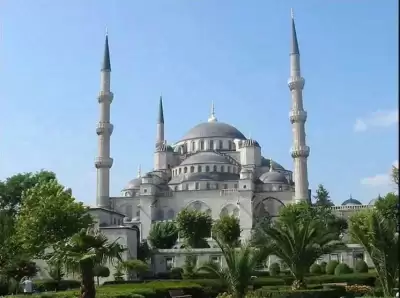
Fatih Mosque is an Ottoman mosque located on Istanbul's fourth hill, built by Mehmed II between 1463 and 1470. A symbol of Istanbul's conquest with its complex comprising 16 madrasahs, a hospital, an imaret, and a library, the structure also houses the tomb of Fatih Sultan Mehmed and is open to visitors free of charge.
Only ten years after the conquest of Istanbul, the foundation of the Fatih Mosque was laid, making it one of the structures symbolizing the rebirth of a city. Designed by Architect Atik Sinan and completed in 1470, the mosque is situated on the fourth of the city's seven hills, dominating the Istanbul skyline. Severely damaged in the 1771 earthquake, the structure was rebuilt by Architect Mehmed Tahir Ağa in the style of that era.
The mosque holds a significance far beyond being merely a place of worship. Its surrounding complex, with 16 madrasahs, a hospital (darüşşifa), a guesthouse (tabhane), an almshouse (imaret), a library, and a Turkish bath, reflects a complete city plan within itself. Fatih Sultan Mehmed's tomb is also located in the complex courtyard, welcoming hundreds of visitors daily. Situated in the heart of the vibrant Fatih district, this complex continues to breathe within the daily life of Istanbul with its historical texture.
Guide's Note

Fatih Mosque and Complex, built by Sultan Mehmed II in 1470, was later rebuilt in Baroque style after being damaged by earthquakes. Visitors particularly appreciate the architectural integrity of the mosque and its spacious courtyard; the courtyard is highlighted as providing a peaceful area for relaxation during the day. The tomb within the complex holds special significance for visitors as it houses the grave of Fatih Sultan Mehmed.
The mosque continues to be actively used during prayer times and sermon programs. Visitors positively receive the religious atmosphere and peaceful environment here. It has also been noted that public restrooms are available at the courtyard entrance, which is a practical convenience for long visits.
- Crowd: On public holidays and special days, with the addition of tourist groups, the place can become quite crowded; quieter days can be preferred for a comfortable visit.
- Maintenance: One visitor noted that the carpets in the interior appeared poorly maintained.
- Interest in the Tomb: An observation was shared that the tomb of Fatih Sultan Mehmed does not receive the attention it deserves.
The Conquest Reflected in Stone: Fatih Mosque
After the conquest of 1453, Mehmed II wanted to give the captured city a lasting Ottoman identity. This will took concrete form with the Fatih Mosque and Complex, whose foundation was laid in 1463 and completed in 1470. The work of Architect Atik Sinan, it was one of the largest complex projects of its time.
A large part of the mosque was destroyed in the 1771 earthquake, and it was subsequently rebuilt by Architect Mehmed Tahir Ağa. Therefore, the mosque building seen today largely reflects 18th-century Ottoman architecture, while some elements of the complex bear traces from the original period. With its two minarets, spacious courtyard, and magnificent dome, the structure continues to be the undisputed symbol of the Fatih district.
When to Visit?
The calmest period to visit Fatih Mosque is immediately after the morning prayer until noon. During these hours, both the interior of the mosque and the courtyard have a very serene atmosphere. Before and after Friday prayers, the surroundings become quite crowded; those planning to visit at those times should be prepared accordingly.
From a seasonal perspective, spring and autumn months are the most comfortable periods to spend time in the courtyard. In summer, especially at noon, the temperature of the marble courtyard rises considerably; choosing early morning hours offers a more pleasant experience. In winter, visitor density decreases, and the interior of the mosque gains a more intimate atmosphere.
How to Get to Fatih Mosque?
The most practical way to reach the mosque is by metro. You can get off at Vezneciler Station on the M2 line and walk for about 10-15 minutes to reach the mosque. Along the route, the historical texture of the Fatih district naturally turns into a walking route.
Bus lines coming from Eminönü, Beyazıt, and Aksaray also stop at Fatih. If you are traveling by tram, you can get off at Beyazıt stop on the T1 line and walk for about 15-20 minutes or transfer to a minibus from there. For those coming by car, there are paid parking areas in the vicinity, but public transport is always a more practical option due to the narrow streets.
Best Spots for Photography
Among the most impressive photographic angles of Fatih Mosque, the area in front of the main courtyard entrance gate stands out; from this point, the two minarets and the main dome come together in a single frame. In photos taken around the ablution fountain in the courtyard, the symmetrical facade of the mosque and the sky create a beautiful composition.
The section where the tomb is located also offers interesting shots in terms of both architecture and light. The soft light hitting the courtyard in the early morning creates a magnificent effect on the marble surfaces. For those who want to shoot from outside, the streets overlooking the north and south facades of the mosque also offer alternative angles. After Friday prayers, the congregation gathered in the courtyard creates another opportunity for those who want to take documentary-style photos.
What to Eat Nearby?
The area around Fatih Mosque is one of the districts offering Istanbul's most authentic neighborhood flavors. In the streets near the mosque, there are small businesses serving traditional Turkish breakfast, pita and pastry bakeries, and meatball restaurants. On days when the Fatih Çarşamba Market is set up (Wednesday), street food also diversifies significantly.
If you are willing to walk a little further, there are long-established restaurants in the Saraçhane and Aksaray areas that keep the historical Istanbul cuisine alive. Especially classic Istanbul flavors such as tripe soup, dried beans, and pilaf are quite easy to find in this district. For those looking for dessert, simit, poğaça, and various Ottoman-style sweets sold in the district's bakeries are also noteworthy.
Fatih Mosque Centered Tour Route
You can position Fatih Mosque as the focal point of a comprehensive historical peninsula tour that you can fit into one day. Starting from the mosque early in the morning, first visit the complex courtyard and the tomb, then proceed to Şehzade Mosque, which is within walking distance. The road extending from there to Süleymaniye Mosque offers the opportunity to experience three different periods of Ottoman architecture consecutively.
In the afternoon, you can proceed towards Vezneciler to reach the Grand Bazaar and the Spice Bazaar. Those planning a longer route can also add Kariye Mosque in the direction of Edirnekapı to their itinerary. All these points are within walking distance or can be connected by public transport.
Things to Know Before Visiting
Fatih Mosque is an active place of worship; therefore, adhering to certain rules during your visit is important for both respect and a smooth experience. You need to take off your shoes when entering the mosque; there is a shoe rack at the entrance. Female visitors are expected to cover their heads, and shoulders and knees should be covered. If necessary, loaner coverings can be provided at the entrance.
During prayer times, tourist entry into the mosque may be restricted or completely closed; checking these hours in advance will facilitate your visit. The courtyard and tomb, however, are generally accessible throughout the day. When taking photos, be careful not to disturb those praying; flash photography inside is not recommended.
This content originates from neresigezilir.com.tr and may not be copied without permission.
Fatih Mosque and Complex Videos
Fatih Mosque and Complex videos load when you open this section to keep the page fast.
Show videos
FAQ

Updated: