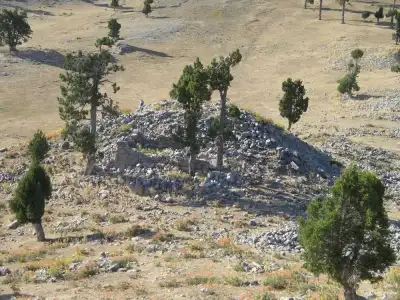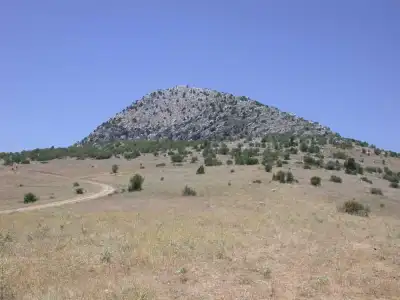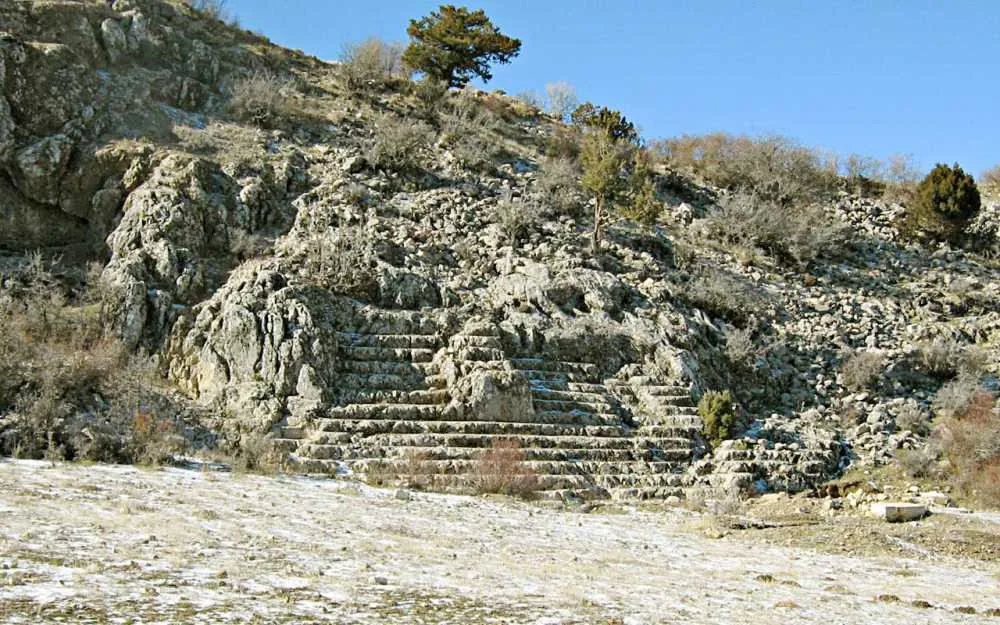
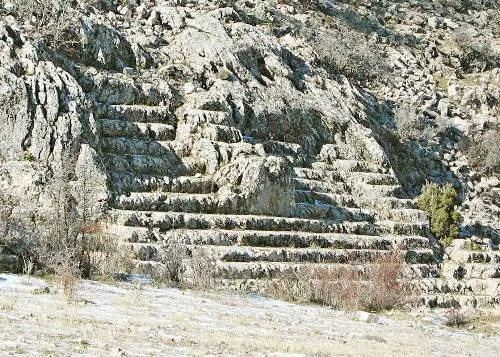
Malos Harabesi, Isparta'nın Eğirdir ilçesine bağlı Sarıidris kasabası yakınında, Göynücek Gediği mevkiindeki bir tepe üzerinde yer alan Helenistik ve Roma dönemi antik kentidir; sur duvarları, bir kule ve kayaya oyulmuş basamaklı toplantı alanıyla sahici bir dağ kentinin izlerini taşır.
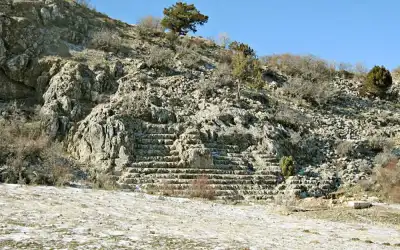
Malos is a small mountain city built on a hilltop at a place called Göynücek Gorge within the boundaries of Sarıidris town in Egirdir. Its acropolis is surrounded by walls dating to the Hellenistic and Roman periods; a tower from these walls still stands. On the eastern slope of the hill, there is a stepped assembly area carved into the rock. Although no large official buildings of the city have been found, these steps leave a tangible trace of the public life of the ancient city.
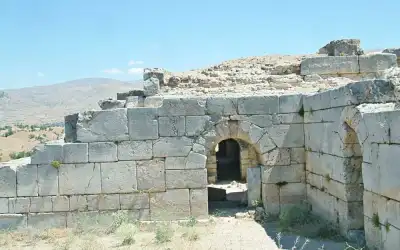
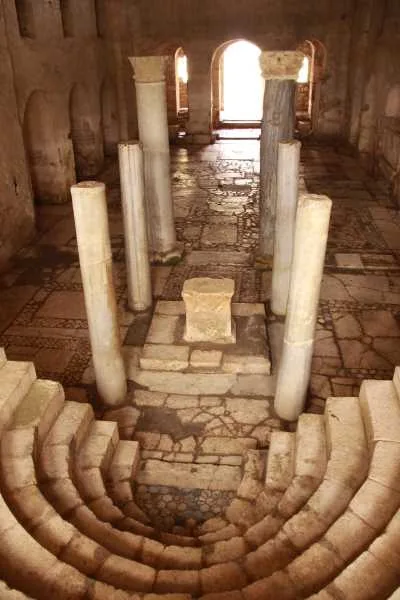
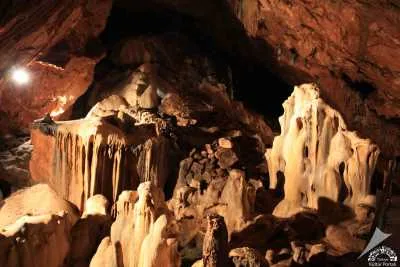
One of the city's temples is located about 1 kilometer northwest of Malos, near Kasherenler Hill. The east wall and gate of this temple remain standing, and there is a cave behind it. The nearly square-planned structure was built at the entrance of a cave, similar to the Eurymedon Sacred Area in the region. It points to a sacred area tradition frequently encountered in the ancient Pisidia region.
Malos is not a large-scale, restored archaeological site. It is a quiet and little-known ancient city waiting to be discovered. Unlike Sagalassos or Adada, it lacks organized visiting infrastructure, so visitors here are typically solo travelers who like wandering through ruins.
Guide's Note
Best Time to Visit
Since there are no shade structures on the hilltop, summer midday hours can be challenging. Spring and autumn offer cooler weather and easier trail hiking. In winter, be mindful that the ground can become slippery after rainfall.
How to Get There
Malos is located on a hilltop at Göynücek Gorge within the boundaries of Sarıidris town, which is part of Egirdir district. Reaching Egirdir from Isparta city center by car, then Sarıidris, is the most practical route. After the town, you climb the ruins via a short hiking trail. Sturdy, non-flat-soled shoes are recommended for this final section.
How Much Time to Allow
About 2 hours is usually sufficient for the archaeological site itself. It makes sense to combine this with a visit to Egirdir town center or a day plan around Lake Egirdir. Malos alone doesn't fill a full day's itinerary.
Route Suggestion
A good day plan starting from Isparta includes a short stop at Lake Egirdir's shore, then heading to Malos via Sarıidris. The nearby Ertokus Caravanserai and Gelendost Ertokus Inn are also in the vicinity; if time permits, these two stops can be added to the route.
Good Photography Spots
The standing tower and the rock-cut stepped assembly area are the city's most distinctive visual elements. The hilltop also offers a good vantage point for wide-angle photographs of the surrounding mountainous terrain and valley views.
Important Considerations
The site is not a regularly maintained museum area. There are no information signs, safety barriers, or guide services. The trail is steep in some sections, so visiting with small children or people with mobility restrictions is not recommended. Bringing water and checking your phone battery is helpful, as cell coverage can be weak in the area.
What You Should Know About Malos
The city's official structures have not been fully archaeologically identified. This is a feature that distinguishes Malos from large-scale ancient cities. The temple on Kasherenler Hill and the cave behind it are examples showing the cave-sacred area relationship specific to Pisidia culture. The same tradition can be seen at the Eurymedon Sacred Area found before the Zindan Cave in Aksu.
This content originates from neresigezilir.com.tr and may not be copied without permission.
Malos Ruins Videos
Malos Ruins videos load when you open this section to keep the page fast.
Show videos
FAQ
Updated: