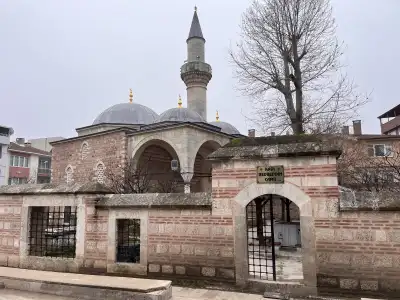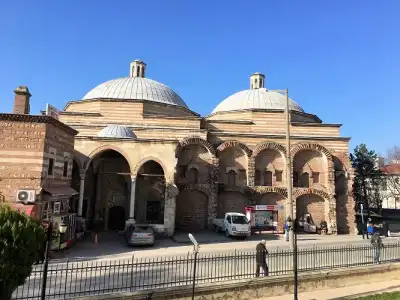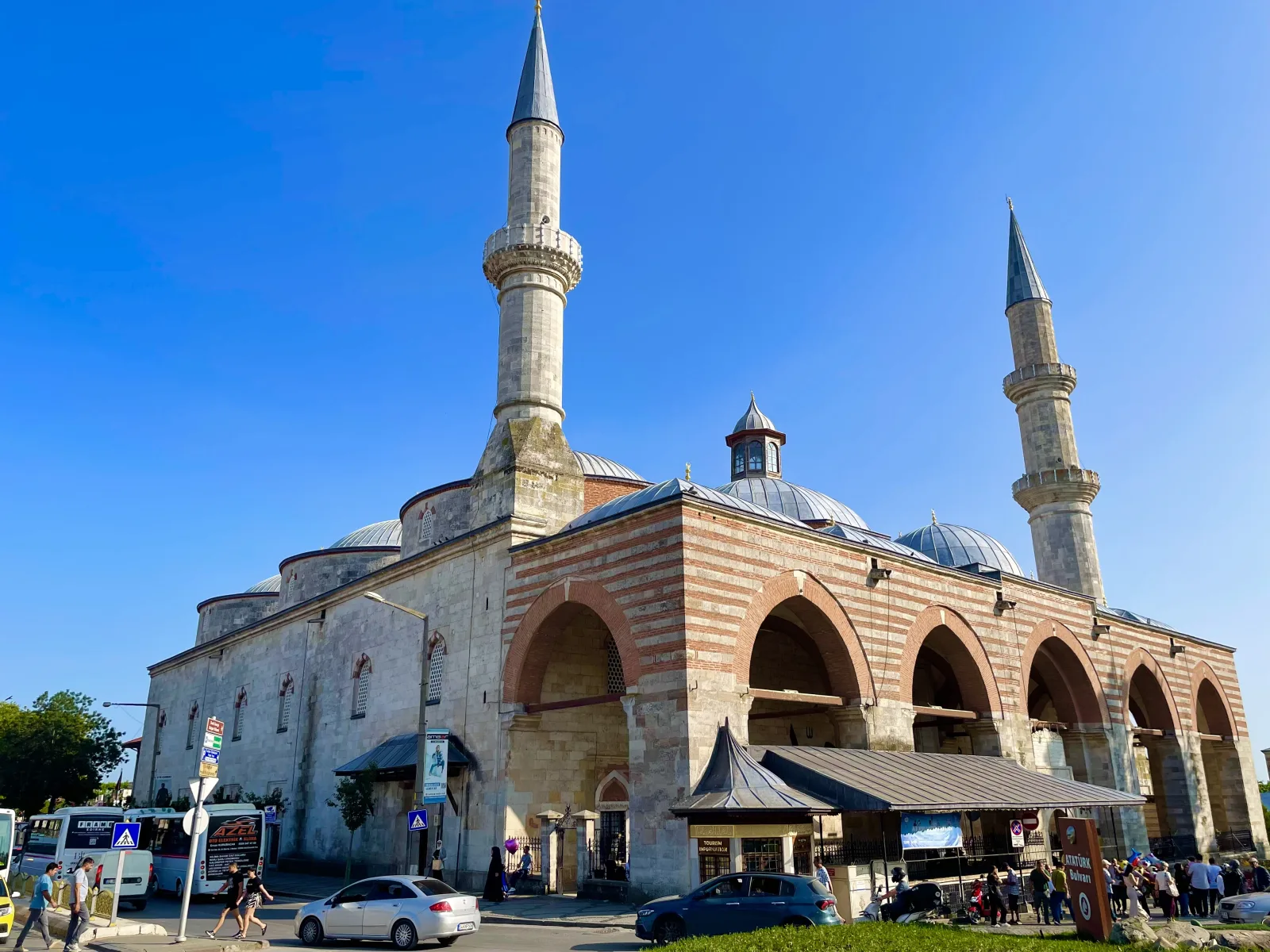
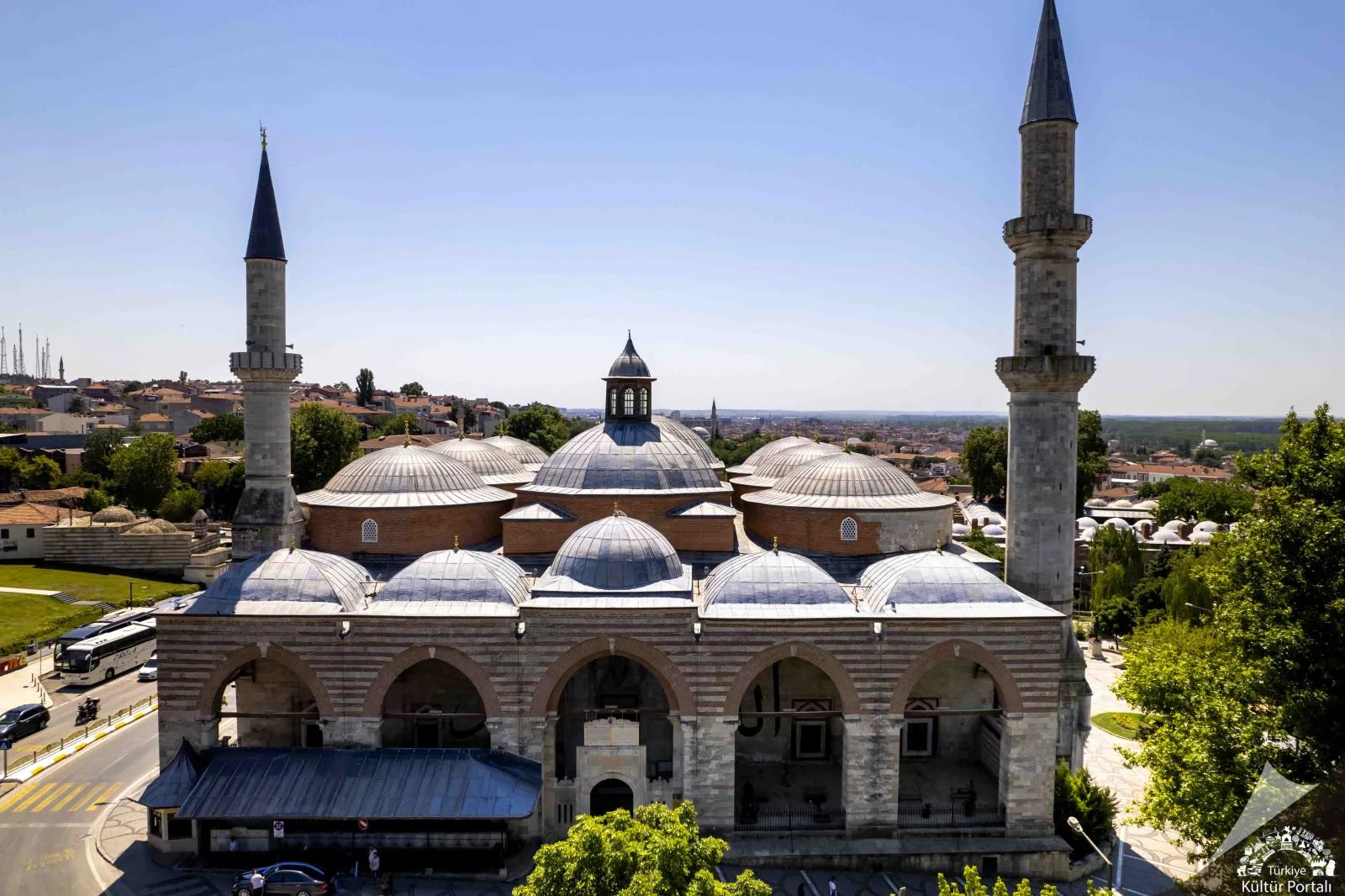
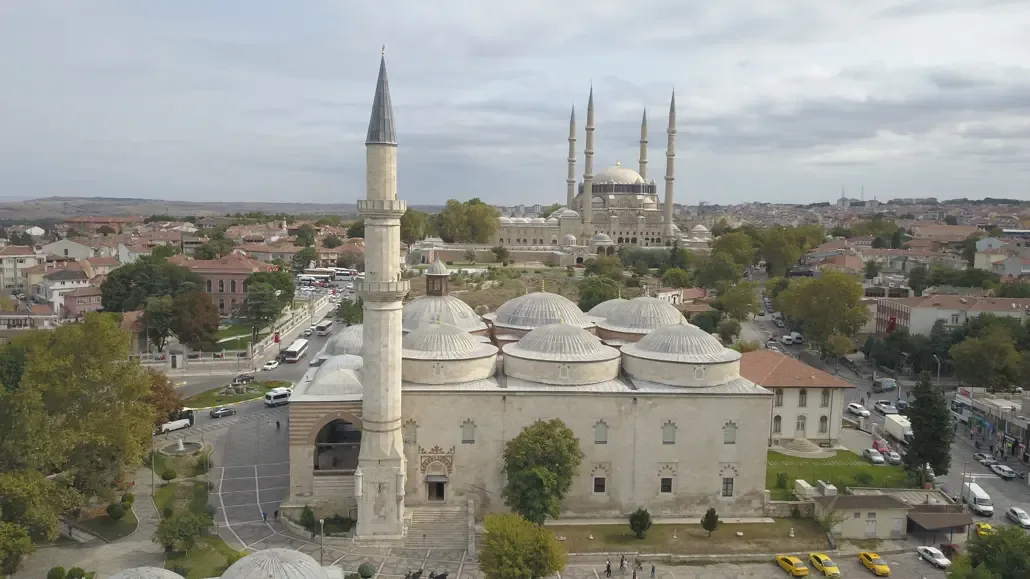
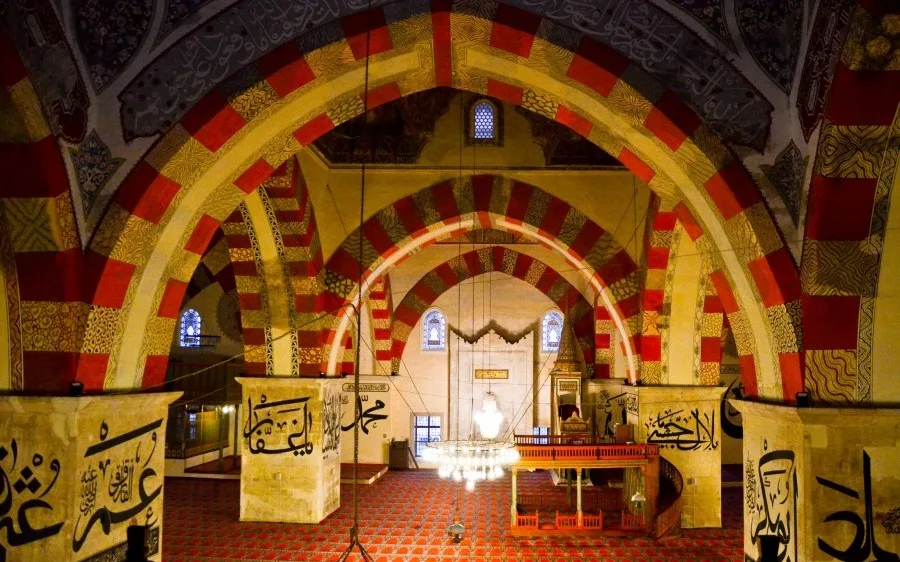
Eski Cami, Edirne merkezinde 1403-1414 arasında inşa edilmiş dokuz kubbeli Osmanlı camisidir. Duvarlardaki iri hat yazıları ve mihrabın yanındaki Kabe taşı parçasıyla tanınır; aktif ibadet mekanıdır.
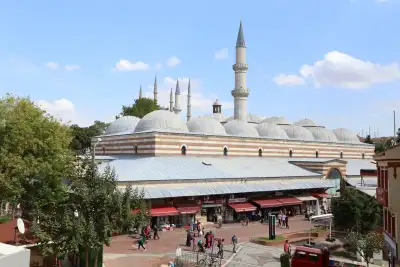
Eski Cami is the first monumental Ottoman structure to survive in Edirne. Its construction began in 1403 by Emir Süleyman, was left unfinished during the period of turmoil after the death of his father Yıldırım Bayezid, and was completed in 1414 by Çelebi Sultan Mehmed. In those years, it was known as Süleymaniye or Ulu Cami; after the Üç Şerefeli Cami was built in the city, it became known as Eski Cami (Old Mosque).
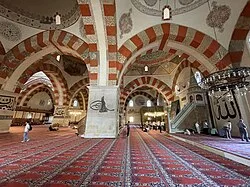
It is a nine-domed, square-plan structure. A single-balcony minaret rises with the mosque on its northern corner; the taller, two-balcony minaret on the western corner was added later by Çelebi Mehmed. Inside, there are only four piers, which makes the space appear larger than it is. The large celi thuluth inscriptions from the 18th and 20th centuries on the walls and piers are striking; for most visitors, these inscriptions are the most memorable aspect of the mosque. To the right of the mihrab, there is a piece of stone (Rukn-i Yamani) said to have been brought from the Kaaba; this detail is frequently highlighted in comments.
The marble minbar is adorned with Rumi and geometric patterns, and features a band of Quranic verses. As it was the city's first grand mosque, a banner was once hung on the minbar. The mosque is still open for active worship; those who visit during evening prayers often comment on the tranquility of the space. It is located in the city center, within walking distance.
Guide's Note
History of Eski Cami
Its construction began in 1403 by Emir Süleyman, and the unfinished construction was completed in 1414 by Çelebi Sultan Mehmed after Süleyman's death. According to the inscription, the architect was Hacı Alaeddin of Konya, and the master builder was Ömer son of İbrahim. The sword-girding ceremonies of Ottoman sultans Ahmed II and Mustafa II were held here. It was damaged by a fire in 1749 and an earthquake in 1752, and was repaired during the reign of Mahmud I; it was restored again between 1924-1934 in the early years of the Republic.
Details to See
The large celi thuluth inscriptions on the walls and piers are the most striking elements of the mosque. Some date from the time of Mahmud I, others from the 1863 restoration. The signature of Abdülhamid II can be seen in the gilded basmala to the right of the minbar. Immediately to the right of the mihrab is the Rukn-i Yamani stone, rumored to have been brought from the Kaaba in Mecca; this is the most special corner of the mosque for visitors.
How to Get There
The mosque is located in the city center of Edirne, very close to Selimiye Mosque and Üç Şerefeli Mosque. It is possible to reach the center from anywhere on foot. For those going by bus, the closest stop is Halk Eğitim 1, approximately a 6-minute walk away. Lines 1A, 1F, 3, and 3A pass through this route.
Best Time to Visit
As it is an active place of worship, hours outside of prayer times offer a more comfortable visit. The light entering in the early afternoon allows you to see the calligraphy on the walls more clearly. If you happen to be there during the evening call to prayer, some visitors choose to wait for a short while in the mosque and observe the prayer.
Where to Include in Your Itinerary
Selimiye Mosque, Eski Cami, and Üç Şerefeli Cami are three important stops close to each other in Edirne. It makes sense to visit these three consecutively on a one-day city tour; they are 5-10 minutes apart on foot. Arasta Bazaar can also be easily added to this route.
Things to Pay Attention to During Your Visit
Since the mosque is still open for worship, it is more appropriate to keep visits short or postpone them during prayer times. Shoes must be removed and silence maintained when entering. It is useful for women to have a headscarf, which are usually also available at the entrance.
This content originates from neresigezilir.com.tr and may not be copied without permission.
Old Mosque Videos
Old Mosque videos load when you open this section to keep the page fast.
Show videos
FAQ
Updated: