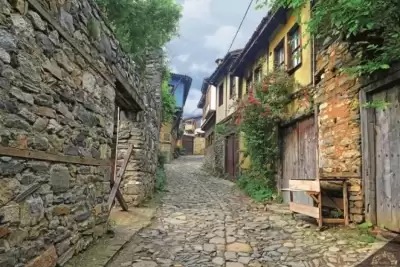
Şengül Hammam is an Ottoman bath located in Bursa's historic bazaar, built by Sultan Yıldırım Bayezid in the 14th century; its revenues were allocated to the Ulu Cami foundation.
Hidden in Nalbantoğlu Neighborhood, in the heart of Bursa's commercial center, Şengül Hammam is a modest but original example of early Ottoman hammam architecture. Built by Sultan Yıldırım Bayezid, with its revenues allocated to the expenses of Ulu Cami, this structure reveals how the city was organized through its waqf (endowment) system. Records show that the hammam was rented for 16 to 25 akçes daily in the 16th century, offering a small window into the economic vitality of the period.
The rectangular-plan structure has a simple interior layout consisting of cold and hot sections. The boiler and furnace are located on the western facade of the hammam. Its small scale as a single hammam type, meaning it does not have separate sections for men and women, distinctly sets it apart from the large double hammams in Bursa. Although it has deviated somewhat from its original state due to fires, the structure continues to stand as part of the historic area, which is considered within the scope of UNESCO World Heritage, along with the Silversmiths' Bazaar.
Guide's Note

What is Şengül Hammam?
Şengül Hammam is a small-scale Ottoman bath located right within the Silversmiths' Bazaar in Bursa's historic bazaar area. Built by Sultan Yıldırım Bayezid Khan, the structure was established with its revenues to be transferred to the Ulu Cami foundation. In this respect, the hammam is not merely a bathing place but a concrete part of the social and economic order of its time.
Built as a single hammam type, the structure has a rectangular plan and consists of cold and hot sections. The boiler and furnace are located on the western facade. Although fires have caused damage to the structure, the hammam continues to exist as part of Bursa's historic urban fabric, which is under UNESCO World Heritage.
When to Visit?
The best time to visit Şengül Hammam and the surrounding historic bazaar is during spring and autumn. Cool and sunny weather between March-May and September-November makes both walking and photography easier. In summer, Bursa's humidity increases; choosing early morning hours during this period ensures a more comfortable visit.
On weekdays, the bazaar area is quieter, giving you a better opportunity to examine the structure and its surroundings. During Friday prayer times, the area around Ulu Cami may become crowded; it is advisable to plan your visit taking these hours into account.
How to Get There?
Şengül Hammam is located in Nalbantoğlu Neighborhood, on Kutucular Boğaz Street, in the historic center of Bursa. If you take Ulu Cami as a reference point, finding the hammam is quite easy; you will reach the structure once you enter the Silversmiths' Bazaar.
For those using the Bursa metro, the nearest stop is Şehreküstü; from there, you can reach it in a few minutes on foot. Visitors getting off at the Ulu Cami stop with city buses can also reach the hammam with a short walk. For those coming by car, finding parking in the bazaar area can be difficult; public transport or walking is more practical.
Suggested Route: Historic Bazaar Tour
Visiting Şengül Hammam not alone, but as part of Bursa's historic bazaar fabric, offers a much more rewarding experience. The suggested route can be set up as follows: Start with Ulu Cami, then wander through the Covered Bazaar and Bedesten, enter the Silversmiths' Bazaar to see Şengül Hammam. From here, you can walk to Koza Han to visit one of the most magnificent examples of Ottoman commercial architecture.
We recommend starting before noon to complete this route. It is also possible to get additional information about the structures by having short conversations with the bazaar shopkeepers; Bursans are quite knowledgeable about their history.
Photo Spots
Şengül Hammam's location, intertwined with the Silversmiths' Bazaar, offers interesting shots for historic texture photography. Angles looking at the hammam's facade from the bazaar corridors provide unique images showing the coexistence of Ottoman trade and bathing culture.
Morning light creates soft shadows in the narrow street structure, providing more advantageous conditions for architectural photography. A wide-angle lens is very useful due to the narrow street structure. The contrast between wood and stone materials within the bazaar also contains striking details.
What to Eat Nearby?
The historic bazaar area where Şengül Hammam is located hosts some of Bursa's most established culinary spots. Some of the original places for İskender kebab are within a few minutes' walk. Not eating İskender when you come to Bursa would be considered an injustice to the city.
In the small cafes and patisseries around Koza Han, Bursa's unique candied chestnuts (kestane şekeri) and İnegöl meatballs can also be found. In the small shops within the bazaar, fresh almond paste and various nuts can be preferred as both snacks and souvenirs.
Things to Know Before Visiting
Şengül Hammam is more of a historical structure than an active tourist facility. It is recommended to confirm whether the structure is currently accessible from local sources before planning your visit. Since it is located within the Silversmiths' Bazaar, access to the structure may become difficult outside of bazaar hours.
Due to the narrow street structure, wheelchair and stroller use is practically difficult. Wearing comfortable walking shoes is important for both this structure and the surrounding historical areas. Being careful about pickpocketing in the bazaar area is a general precaution valid in any crowded historic center.
This content originates from neresigezilir.com.tr and may not be copied without permission.
FAQ

Updated: