Künç Bridge is an Anatolian Seljuk period bridge located on the Yeşilırmak in Amasya, built in the 12th century by Hundi Hatun, daughter of Sultan Mesud II; it features cut stone masonry and can be visited for free.
Located on the Yeşilırmak in the center of Amasya, Künç Bridge is a historical bridge from the Anatolian Seljuk period, connecting the Bayezitpaşa and Şamlar neighborhoods. Also known as Hundi Hatun Bridge, the structure was built in the 12th century by Hundi Hatun, daughter of Sultan Mesud II. Built on three large piers and four high arches made of cut stone, the bridge has connected the two sides of Amasya for centuries.
Over time, as the water level of the Yeşilırmak rose, the bridge's piers became submerged; for this reason, it also became known as Alçak Köprü (Low Bridge) among the public. Today, standing on the bridge and looking at the wooden bay-windowed Ottoman houses on both banks of the Yeşilırmak means experiencing Amasya's timeless beauty in its purest form. With its historical texture, photographic potential, and central location, Künç Bridge is a must-visit stop for anyone visiting Amasya.
Guide's Note
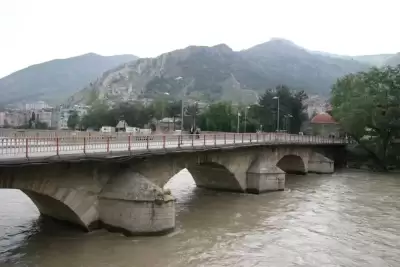
Künç Bridge stands out as an important stop for those who want to explore Amasya's historical texture. Visitors describe the bridge as a deeply rooted structure, dating back to the Roman period, connecting the old city to the opposite bank of the Yeşilırmak. When considered together with the surrounding waterfront houses and river view, it is noted as a preferred spot for taking photos.
Some visitors mention that there are small shops selling local products in the immediate vicinity of the bridge; some state that they later realized the inadequacy of passing through this area without allocating enough time to explore. The general impression is that the bridge should be visited not alone, but as a whole with Amasya's historical center.
- Restoration quality: Some visitors believe that the bridge's repair with concrete material negatively affects its historical appearance and state that it does not reflect the original texture of the structure.
- Expectation management: The bridge itself is a relatively small and simple structure; some visitors point out that those who come with the expectation of a grand historical monument might be disappointed.
Best Time to Visit
Any time of year is suitable for visiting Künç Bridge; however, spring and autumn months are the most ideal periods in terms of both weather conditions and light quality. In April-May, the flow of the Yeşilırmak increases, the bridge's piers remain in the water, and this view adds a special atmosphere to the bridge. For those who want to take photos, early morning hours are golden; the mist over the river and soft light frame the Yalıboyu Houses and the bridge like a painting. After sunset, the bridge and its surroundings are illuminated; strolling along the riverbank at these hours offers a completely different experience. In summer, the city gets crowded, so preferring early morning or late afternoon hours ensures a calmer visit.
How to Get to Künç Bridge?
Since the bridge is located right in the heart of Amasya city center, transportation is extremely easy. Dolmuşes departing from Amasya Train Station or points near the bus terminal will take you to the Bayezitpaşa area; from there, it's a few minutes' walk to the bridge. For those coming by car, parking is limited in the vicinity, so parking a little outside the city and walking might be a more practical option. Amasya's historical center has a very compact structure, so it can be explored on foot along with other important points such as the Pontus Rock Tombs, Bayezitpaşa Mosque, and Yalıboyu Houses.
Photo Spots and Shooting Tips
Künç Bridge is one of Amasya's most iconic photo spots. Standing on the bridge and framing the Yalıboyu Houses on both banks of the Yeşilırmak is a classic but always impressive choice. When viewed from the opposite bank of the river, from the Şamlar Neighborhood, the bridge's arches and the rising rock tombs in the background meet in the same frame. During the golden hour, known as sunrise and sunset, the light creates warm tones on the stone surface. For night shots, long exposure experiments can be tried when the bridge is illuminated; the reflection of the river adds depth to the image. For those who prefer wide-angle lenses, it is possible to capture the entire bridge in a single frame.
What to Eat Nearby?
There are various food and drink options in the immediate vicinity of Künç Bridge and in Amasya city center. Cafes and restaurants lined along the Yeşilırmak offer a great opportunity to drink tea or have breakfast with a view of the bridge. Among Amasya's local delicacies, çökelek cheese, Amasya apple products, and local pastries stand out. In the historical bazaar near the city center, home-cooked meals and local flavors can be tried at restaurants. The cafe culture around the bridge is particularly lively in the evenings; sitting by the river and watching Amasya's historical silhouette is a delightful experience in itself.
Suggested Route: Amasya Historic Center Walk
Künç Bridge is a natural part of the walking route covering Amasya's historic center. You can start your day by seeing the Pontus Rock Tombs, then follow the Yalıboyu Houses along the river to reach Künç Bridge. After crossing the bridge, visiting the Bayezitpaşa Mosque makes for a logical sequence; as the mosque is located right across the bridge. Afterwards, you can walk to points such as the Amasya Museum and Hazeranlar Mansion. This entire route is intense enough to fill approximately half a day and can largely be completed on foot. Returning to the bridge in the evening to watch the illuminated river view makes for a beautiful conclusion.
Things to Know Before Visiting
Künç Bridge is an actively used bridge; vehicle and pedestrian traffic may be encountered during peak hours. It is important not to obstruct traffic flow when taking photos. The stone surface of the bridge can be slippery in wet weather, so it is recommended to wear appropriate footwear. While the surrounding historical structures and riverbank are generally well-maintained, sidewalks in some areas may be narrow and uneven; therefore, those using strollers or wheelchairs should be careful. The bridge and its surroundings can be visited free of charge; no ticket or permit is required.
History and Architectural Features of the Bridge
Künç Bridge was built in the 12th century during the Anatolian Seljuk period by Hundi Hatun, daughter of Sultan Mesud II. For this reason, the structure is also known as Hundi Hatun Bridge. Built with cut stones, the bridge rests on three large piers and four high arches. Over centuries, as the water level of the Yeşilırmak rose, the bridge's piers became submerged; this led to the structure being nicknamed Alçak Köprü (Low Bridge) among the public. Reflecting the simple but sturdy understanding of Seljuk stone masonry, the bridge continues to function today, connecting the two sides of the city. Academic studies on the historical Hundi Hatun Bridge have also examined the carrying capacity of the structure under increasing traffic load, once again demonstrating how solid a heritage the bridge is.
This content originates from neresigezilir.com.tr and may not be copied without permission.
Künç Bridge Videos
Künç Bridge videos load when you open this section to keep the page fast.
Show videos
FAQ

Updated: