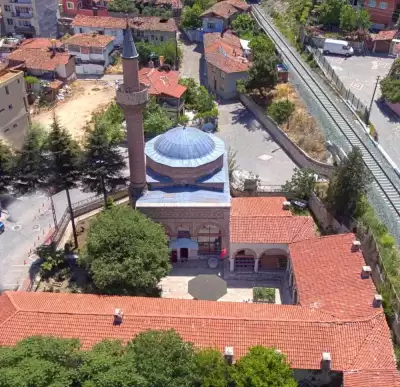
Hızır Paşa Mosque is an Ottoman mosque with an inverted T-plan, built in 1466 by Hayrüddin Hızır Paşa, located in Amasya's Hızırpaşa Neighborhood, and is open for free visits.
Standing quietly in Amasya's Hızırpaşa Neighborhood, the Hızır Paşa Mosque was built in 1466 by Hayrüddin Hızır Paşa. Hızır Paşa was the brother of Yörgüç Paşa, tutor to Murad II, one of the powerful statesmen of the era; thus, the structure serves as a concrete reflection of Ottoman political and cultural influence in Amasya. The mosque was originally part of a complex (külliye) consisting of a Turkish bath, madrasah, and ablution fountain; however, today only the mosque structure remains.
From an architectural perspective, the building reflects the characteristic features of the early Ottoman period with its inverted T-plan scheme and square-plan prayer hall. The deep niche-shaped entrance gate welcomes visitors, while the interior decorations reveal the artistic value of the structure. The ornamentation work carried out in 1960 added another layer to the building's appearance. Located on Amasya's busy historical route, the mosque is among the stops that visitors to the city should not miss.
Guide's Note

Best Time to Visit
Considering Amasya's climate, April–June and September–November are the most comfortable periods to visit Hızır Paşa Mosque. During these months, the weather is neither scorching hot nor cold; moreover, the general tourism intensity of the city remains relatively low. If you are going to Amasya in mid-summer, prefer the early morning hours; you will both avoid the heat and be able to explore the mosque's interior in a calmer environment. Planning a visit during Friday prayer times and religious holidays may not be practical as the building is heavily used during these hours.
How to Get There
Hızır Paşa Mosque is located in the Hızırpaşa Neighborhood, within walking distance of Amasya city center. It is possible to reach it by approximately a 10–15 minute walk from Amasya Train Station; the station exit is very close to the city center. There is a train connection from Samsun to Amasya, and the journey takes approximately 3 hours. For those coming from Ankara or Istanbul, the most common choice is to come to Amasya by bus; the intercity bus terminal is a few kilometers from the center. City minibus lines pass through Hızırpaşa Neighborhood. For those arriving by car, parking space directly in front of the mosque is limited; it may be necessary to look for space in surrounding streets.
Historical and Architectural Features
Hızır Paşa Mosque was built in 1466 by Hayrüddin Hızır Paşa. Hızır Paşa's elder brother, Yörgüç Paşa, was one of the prominent statesmen of the Murad II period; this family connection reveals the building's deep-rooted relationship with the Ottoman court circles. The mosque was originally the central structure of a complex (külliye) consisting of a Turkish bath, madrasah, and ablution fountain; however, today only the mosque of the complex survives.
In terms of architectural plan, the building adopts the inverted T-scheme, frequently encountered in the early Ottoman period. The square-plan prayer hall, combined with the deep niche-shaped entrance gate, gives the structure both functional and aesthetic integrity. The interior decorations were renovated in 1960 and bear traces of the original Ottoman ornamentation style. When evaluated together with other Ottoman works in Amasya's historical urban fabric, the building serves as an important link revealing the city's architectural richness.
Amasya Historical Route Suggestion
Since Hızır Paşa Mosque is located on Amasya's busy historical route, it is much more efficient to visit it not alone, but as part of a walking route with surrounding structures. You can start your day with the Yalıboyu Houses and proceed along the Yeşilırmak riverbank. Then, you can reach Hızır Paşa Mosque by visiting Mehmet Paşa Mosque and Hatuniye Mosque. If you complete your route with the Hilye-i Şerif Exhibition and Calligraphy Arts Museum, you will experience both religious architecture and traditional Turkish art together. A walking route covering all these stops takes between half a day and a full day; we recommend starting early in the morning for a relaxed pace.
Photo Spots
The most impressive photographic angle of Hızır Paşa Mosque is obtained from in front of the building's deep niche entrance gate. The perspective created by the gate and the stone craftsmanship offer interesting shots under different lighting conditions throughout the day. In the early morning, sunlight illuminates the building's facade with a soft tone, while in the afternoon, shadow play creates a sense of depth. Inside, the ceiling and wall decorations, renovated in 1960, provide excellent material for detailed photography; a wide-angle lens or macro mode will be useful for these shots. The narrow streets of the Hızırpaşa Neighborhood where the mosque is located also provide backgrounds that will please photography enthusiasts with their historical atmosphere.
Things to Know Before Visiting
Hızır Paşa Mosque is an active place of worship; therefore, adhering to some basic rules during your visit is both a matter of respect and a practical necessity. You must remove your shoes at the entrance; carrying a cloth bag with you will make it easier. Female visitors are expected to cover their heads; coverings are usually available at the entrance for those unprepared, but it is safer to bring your own. Keep in mind that the interior may be closed to visitors during prayer times; try to plan your visit between prayer times. When taking photos, it is necessary to be quiet and careful not to disturb those praying. The narrow streets around the building may be closed to vehicle traffic; coming on foot is both easier and allows you to experience the neighborhood's atmosphere.
What to Eat Nearby
The historical center where Hızır Paşa Mosque is located is also a convenient spot to explore Amasya cuisine. The city's iconic delicacies, Amasya apple and products made from apples, are easily found in local shops. In the cafes and restaurants along the Yeşilırmak riverbank, you can try homemade mantı, gözleme, and Amasya-style desserts. Small eateries in the historical bazaar area offer affordable and delicious options for lunch. If you time your visit around lunchtime, it won't be difficult to find a place for a local breakfast or a light meal while strolling through the streets around the mosque.
This content originates from neresigezilir.com.tr and may not be copied without permission.
FAQ
Updated: