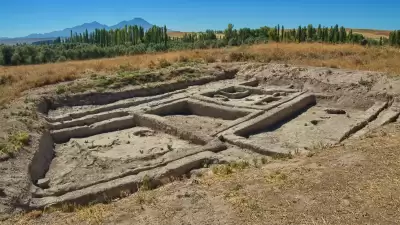
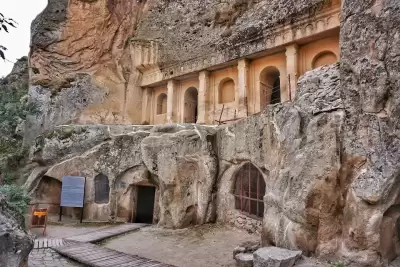
Ala Kilise is a late 9th-century Byzantine rock-cut church carved into the eastern slope of the Ihlara Valley in Belisırma Village, Aksaray; known for its frescoes depicting the Birth of Christ and the Last Supper scenes.
Ala Kilise is a Byzantine-era church carved into the rock on the eastern slope of the Ihlara Valley, north of Belisırma Village, Aksaray province. Representing one of the finest examples of the monastic tradition that flourished in this region after the liberation of Christianity, the structure was built with a closed Greek Cross plan and has a single nave. The central space, where the dome rises on walls delimiting the corner rooms, offers visitors a powerful experience both architecturally and artistically.
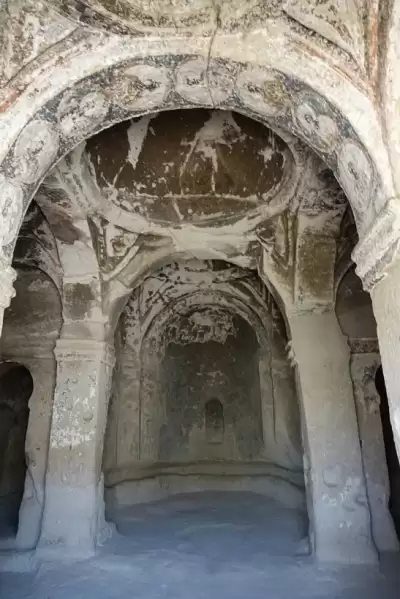
The most striking feature of the church is its frescoes dating to the late 9th century. These frescoes, reflecting fundamental scenes of Christian iconography such as the Birth of Christ, the Last Supper, and Mary of Egypt, reveal the traces of Byzantine art of the period in Anatolia. Saint depictions in medallions on the apse drum complete the visual richness of the structure. Today, the church is entered through the ruined apse, while the original entrance is located at the western end of the north wall.
Guide's Note
Best Time to Visit
The most suitable times to visit Ala Kilise are during the spring and autumn months. In April–May, the lush greenery of the Ihlara Valley and the vibrant flow of the Melendiz River transform the path to the church into a nature walk. In September and October, crowds are relatively smaller, and air temperatures drop to a much more favorable level for walking.
During the summer months, there is a heavy influx of tourists to the Cappadocia region, so the Ihlara Valley route also becomes busy. During this period, setting off early in the morning allows you to benefit from the cool air and explore the church in a calmer atmosphere. In winter, the valley sometimes takes on a snowy appearance; however, caution is advised as paths can become slippery.
How to Get There?
Ala Kilise is located approximately 33 km from Aksaray city center, within the borders of Belisırma Village. Those coming by private car can reach Belisırma Village by following the Aksaray–Güzelyurt highway; cars can be parked near the village entrance, and the church is reached on foot.
For those preferring public transport, bus and minibus services run from Aksaray city center to Belisırma; however, it is advisable to check schedules in advance as they may vary by season. Day trips to Ihlara Valley organized from Cappadocia centers such as Nevşehir or Göreme also include Ala Kilise in their itinerary; these tours offer a practical option for both transport and guidance.
Belisırma Route: From Church to Church
Instead of visiting Ala Kilise alone, planning the Belisırma Village rock-cut churches route as a whole offers a much more rewarding experience. Starting from the north of the village and proceeding along the eastern slope of the valley, in addition to Ala Kilise, Bezirhane Church, Bahattin Samanlığı Church, and Batkın Church can also be visited.
For those planning a longer walk, the entire Ihlara Valley is approximately 14 km long and contains nearly 50 churches and historical living spaces. Selime Cathedral stands out as the most magnificent stop on this route. It is possible to start the route from Belisırma and end it in Ihlara Village or vice versa; the scenery is extremely impressive in both directions.
Best Spots for Photography
Ala Kilise offers rich content for photography enthusiasts, both in terms of its architecture and fresco details. When photographing the apse and dome frescoes inside the church, keep in mind that natural light may be insufficient; a lens with a wide aperture or a stable tripod will be a great help. Flash use is not recommended as it can negatively affect the frescoes.
For shots of the church from the outside, its location on the eastern slope of the valley is quite advantageous; the integrated appearance of the rock-cut structure with its surroundings provides the strongest contrast when the sun is high at midday. Wide-angle shots taken from points in Belisırma Village overlooking the valley are the best way to document the church within its natural context.
Things to Know Before Visiting
Entry to Ala Kilise is through the ruined apse; the original entrance door is at the western end of the north wall and is not currently in use. Since the floor inside the church is uneven and rocky, it is important to choose sturdy, non-slip walking shoes; entering with high heels or sandals is both dangerous and carries the risk of damaging the frescoes.
To protect the frescoes, avoid touching the walls. As Ihlara Valley is an archaeological site, an entrance fee is required; Museum Card holders can enter for free. It is recommended to carry sufficient water and light snacks during your visit, especially for those planning a long valley hike.
Historical and Architectural Significance
Ala Kilise is an original product of the rock-cut monastic tradition that developed in Cappadocia and its surroundings after the liberation of Christianity during the Byzantine Empire. The structure, which has a closed Greek Cross plan, features a dome rising on walls delimiting the corner rooms; the central space and the cross arms form a proportionate whole.
The frescoes in the church are considered important examples of late 9th-century Byzantine painting in Anatolia. In addition to scenes of the Birth of Christ, the Last Supper, and Mary of Egypt, there are also depictions of saints in medallions on the apse drum. In the center of the dome is the scene of the Ascension of Christ. This entire iconographic program holds great documentary value in reflecting the visual narrative tradition of early Christian belief.
What to Eat Nearby?
Belisırma Village is known among Ihlara Valley visitors not only for its historical structures but also for its riverside restaurants within the valley. These establishments, set right on the banks of the Melendiz River, serve fresh trout, village breakfast, and homemade local dishes. Especially after a hike, a lunch accompanied by the refreshing sound of the river is one of the most enjoyable moments of the visit.
Prominent flavors of Aksaray cuisine include pottery kebab, various meat stews, and local pastries. When you return to the city center, you can find many local restaurants offering these delicacies. Since the riverside restaurants in Belisırma may operate seasonally, it is advisable to confirm whether they are open in advance, especially during winter months.
This content originates from neresigezilir.com.tr and may not be copied without permission.
FAQ
Ala Church videos load when you open this section to keep the page fast.
Updated: