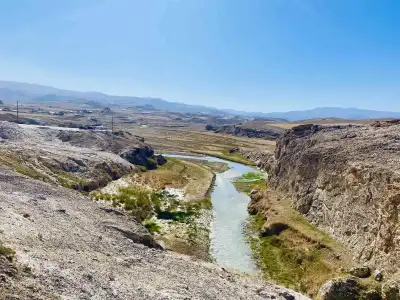
Balık Lake is a lava-dammed lake located at an altitude of 2,241 meters in the Taşlıçay district of Ağrı, notable for its red-spotted trout and velvet scoter population.
Balık Lake is a lava-dammed lake located between the borders of Taşlıçay and Doğubayazıt districts of Ağrı. It is 2,241 meters above sea level, with its deepest point being 37 meters. This altitude places it among the top lakes in Turkey. It is fed by small streams descending from the surrounding mountains, coastal springs, and groundwater.
The lake has the status of a drinking water protection area; it supplies water to surrounding settlements. It is considered an important bird area due to the population of velvet scoters nesting on an island within it. Species such as eagles, hawks, partridges, wild ducks, gulls, and quails are seen in the vicinity. The red-spotted trout living in its waters holds special value for the region; anglers target this species.
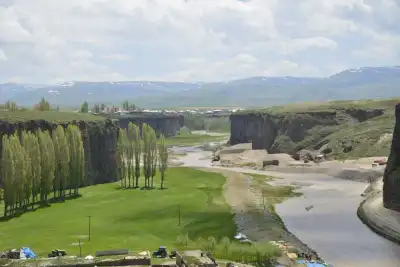
Its surroundings are covered with agricultural lands and pastures, and nomadic activities continue in the summer months. Thanks to its proximity to the foothills of Mount Ağrı, visitors to the lake are greeted with a vast mountain landscape.
Guide's Note

When to Visit?
Balık Lake is at a high altitude. Therefore, the lake completely freezes in winter, and road access becomes difficult. The period between June and September is the most suitable in terms of both road and weather conditions. In July-August, animal husbandry activities are also seen in the surrounding plateaus, which adds a different color to the scenery.
How to Get There?
The most practical way is to go from Ağrı city center to Taşlıçay district and then head towards the lake; the distance is approximately 26 km. For those coming from Doğubayazıt, the distance is 60 km. There is also an alternative route for those coming from Iğdır, following the direction of Pirli Village and İnceköy via Tuzluca, from here the distance to Iğdır city center is 69 km. Although most of the road is asphalt, it turns into a dirt and stony road 10 km before the lake. It can be challenging for vehicles, especially in hilly sections. Before going with a low-chassis vehicle, confirm the road conditions with a local.
How Much Time Should Be Allocated?
A short trip takes 1-2 hours: enough for a walk by the lake, taking photos, and enjoying the scenery. Those who want to camp, fish, or extend their trip to the surrounding plateaus can allocate half a day, or even a full day.
Nearby Stops
Taşlıçay district center can be a short stop along the route. For those going towards Doğubayazıt, Ishak Pasha Palace can be another stop to add to the same day's plan. It is also a suitable location for those who want to view from the foothills of Mount Ağrı.
Things to Pay Attention To
The lake has the status of a drinking water protection area, so be careful not to leave pollutants in the water. Wildlife is rich: species such as eagles, hawks, foxes, and wolves live in the area. When camping, always collect your trash. Due to the high altitude, the weather can change suddenly, so it is useful to have warm clothing.
Good Spots for Photography
The velvet scoter colony on the lake's island offers an interesting shot for those observing with binoculars or a zoom lens. In the morning, when the water surface is calm, the reflection of mountain silhouettes is a preferred moment for photography. When viewed from the northern shore of the lake, the sprawling plateau and mountain scenery in the background stand out.
Natural Structure and Wildlife
Balık Lake is a lava-dammed lake; meaning it was formed when a valley was dammed by a lava flow as a result of volcanic activity. Its deepest point is 37 meters. The surrounding streams, springs, and groundwater are the lake's feeding sources, but the continuity data of this feeding is not clear. The red-spotted trout living in the lake is an important species for the region; the velvet scoter population gives the lake its status as a bird area.
This content originates from neresigezilir.com.tr and may not be copied without permission.
Balık Lake Videos
Balık Lake videos load when you open this section to keep the page fast.
Show videos
FAQ
Updated: