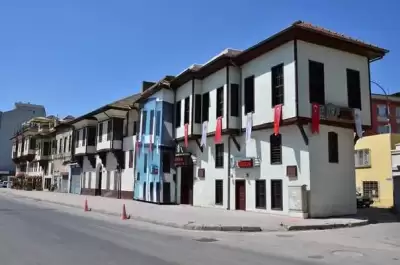
The Kuruköprü Monumental Museum and Traditional Adana House is located in a church building constructed by the Greek community in 1845 in Adana's historical center, exhibiting the ethnographic heritage of Çukurova villages and the Taurus Yörüks.
This museum, steeped in Adana's historical fabric, is actually a church building constructed by the Greek community in 1845. Rising within the framework of the rights granted to non-Muslims by the Tanzimat Edict (1839), the structure, with its rectangular plan architecture from east to west, carries the multicultural spirit of the Ottoman period to the present day. The building served as the Adana Museum from 1950; after the opening of the Archaeology Museum in 1972, it was converted into a museum depot, and later reopened its doors to visitors with the identity of Kuruköprü Monumental Museum and Traditional Adana House.
When you step inside the museum, the collection that greets you bears traces of the daily life of villages in the Çukurova plains and the nomadic Yörüks in the Taurus Mountains. The ethnographic memory of the region is kept alive through traditional clothing, handicraft products, and household items. The structure is one of the rare museums that has much to tell visitors, not only through the artifacts it exhibits but also through its own history.
Guide's Note

The Kuruköprü Monumental Museum and Traditional Adana House stands out as a comprehensive stop for those who want to get to know Adana's history and culture closely. Visitors state that the museum offers a wide range of content, from archaeological finds to industrial history, from weaving to traces of daily life. This venue, where many elements of the city's distant and recent past are exhibited together, appeals to those who want to explore Adana holistically.
The attentive and helpful attitude of the staff is positively reported by multiple visitors. The small and historic structure of the venue gives it a unique atmosphere; however, this also points to the limited capacity of the area.
- Comments not about the venue: Among the reviews, there are suggestions and observations belonging to a different institution that are not related to this museum. Therefore, some of the existing comments do not directly reflect the venue; it is recommended to get up-to-date and on-site information before making a decision.
- Limited number of comments: Since the number of comments for the last six months is quite low, the impressions here may not represent the entirety of the general visitor experience.
The Story of a Church's Transformation into a Museum
The building housing the Kuruköprü Monumental Museum is the scene of one of Adana's most interesting transformation stories. The church, built by the Greek community in 1845, is a tangible product of the right granted to non-Muslims by the Tanzimat Edict to establish places of worship. The rectangular-planned structure, rising on an east-west axis, is an architectural document of the multicultural life in Ottoman cities of the period.
The building gained function as the Adana Museum in 1950. With the opening of the Adana Archaeology Museum in 1972, archaeological artifacts were moved to the new building, and the structure was used as a museum depot for a while. In later years, it was reorganized with the theme of Traditional Adana House and gained its current identity. These historical layers transform the museum from merely an exhibition space into a living document.
When Should You Visit?
Adana is one of Turkey's hottest cities, so timing your visit is important. March, April, May, and October, November are the most balanced periods in terms of both temperature and tourist density. Exploring the city becomes much more enjoyable during these months.
In the summer months (June–August), temperatures can sometimes exceed 40 degrees Celsius. If you plan to visit the museum during this period, choosing between 09:00 and 11:00 in the morning means you will explore in a cooler environment and avoid the afternoon crowds. The museum's opening until 19:00 in the summer also offers flexible visiting hours.
How to Get There?
The museum is located in Kuruköprü Neighborhood, considered the historical center of Adana. It is possible to reach the Kuruköprü stop from many points in the city by municipal buses and minibuses. The walking distance from the stop to the museum is quite short.
When considered together with the historic Stone Bridge (Roman Bridge) and other cultural venues in its vicinity, the museum is on an ideal route for a walking-based city tour. For those arriving by car, finding parking in the city center can sometimes be difficult due to congestion; opting for public transport or a taxi might be more practical.
What to Visit Nearby?
The Kuruköprü Monumental Museum is part of a rich cultural route in Adana's historic center. After visiting the museum, you can reach the Historic Stone Bridge in a few minutes' walk; this Roman-era bridge is one of the most iconic structures over the Seyhan River.
You can add the Ulu Cami (Grand Mosque) and the surrounding historic bazaar texture to your route. If you also want to explore Adana's gastronomy culture, Kuruköprü and its surroundings are home to the city's famous kebab and şalgam (turnip juice) shops. Since all these points are close to each other, it is possible to cover them all with a half-day walking route.
Best Spots for Photography
Photos taken from outside the museum highlight the unique architectural details of the historic church facade. The rectangular mass of the building extending on an east-west axis and its stone masonry offer impressive shots, especially in the morning light.
Inside, Yörük tent arrangements, traditional clothing, and hand-woven textiles are the most interesting elements for photography. It is recommended to confirm with staff at the beginning of your visit whether photography is allowed inside the museum. The Stone Bridge, right next to the museum, is also one of Adana's most popular spots for sunset photos.
What to Eat After Your Visit?
When Adana is mentioned, the first flavor that comes to mind is, of course, Adana kebab. Kuruköprü and its surroundings are among the neighborhoods that host the city's long-established kebab masters. After visiting the museum, you can set up an authentic Adana feast at the local restaurants in the area.
In addition to kebab, şalgam suyu (turnip juice) is an indispensable drink of Adana cuisine; you can choose it spicy or non-spicy. To experience kebab served with fresh pita, grilled peppers, and onions, moving around lunchtime provides the advantage of fresh ingredients and finding a table before the crowds.
Things to Know Before Your Visit
Before going to the museum, we recommend confirming opening hours and possible closing days by phone; it may be closed on public holidays and during maintenance periods. Museum Card holders should have their cards with them at the entrance.
Since the building is a historic church, the floor and interior layout may not be suitable for wheelchair or stroller use. It is a good habit to consult the staff at the entrance for rules regarding cameras and large bags. Don't forget to bring water with you when visiting the museum in summer; Adana's heat can create an unexpected challenge outside.
This content originates from neresigezilir.com.tr and may not be copied without permission.
Kuruköprü Monumental Museum and Traditional Adana House Videos
Kuruköprü Monumental Museum and Traditional Adana House videos load when you open this section to keep the page fast.
Show videos
FAQ

Updated: