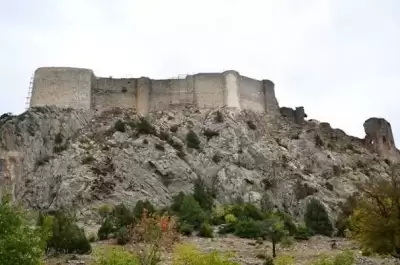
Yılankale is a medieval castle located 13 kilometers from Adana's Ceyhan district, built on a steep hill overlooking the Ceyhan River, and is associated with the legend of Şahmeran.
Located on the historical Silk Road that crosses the Taurus Mountains and extends to Antakya, Yılankale is one of the most striking medieval castles in Çukurova. Built on steep rocks rising on the banks of the Ceyhan River, northeast of Misis, this structure bears traces of the Byzantine, Crusader, and Cilician Armenian periods. The castle's strategic location, with three facades overlooking the Ceyhan River, allowed it to control both trade routes and the fertile plain for centuries.
Also known as Şahmeran Castle among the local people, the structure is intertwined with one of Anatolia's oldest legends. With its dominant position on the Silk Road route, which starts from Gülek and extends east over the Amanos Mountains, Yılankale captivates visitors not only with its historical importance but also with its natural scenery. This structure, which forms the triple castle chain of Çukurova along with Anavarza and Kozan castles, is an indispensable stop for those who want to explore the region.
Guide's Note
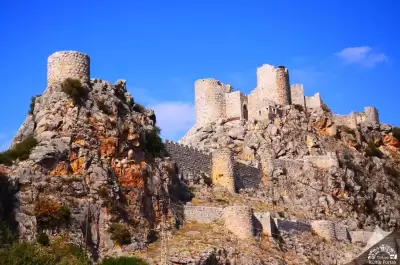
Yılankale is a medieval structure built on a steep hill northeast of the Ceyhan district. The vast majority of visitors state that they are very impressed by the view: the Ceyhan River and the fertile plains of Çukurova can be seen from the top of the castle with a wide perspective. Entry is free, and it is possible to reach the foot of the castle by car.
The ascent to the castle begins with wooden stairs that take approximately 25 minutes. These stairs have a design harmonious with nature and offer resting platforms and photo-taking areas at some points. Restoration work is said to have made the climb easier compared to previous periods. There is a small cafeteria right next to the entrance. On the other hand, some visitors state that the opportunity to examine the interior of the castle closely is limited and that the neglected parts of the structure may be disappointing.
We recommend paying attention to the following points when planning your visit:
- The wooden stairs end at a certain point; after that, a rocky and steep climb begins. This section can be challenging for small children, the elderly, and those with mobility limitations.
- There is a time restriction for exiting; gendarmerie may fine vehicles remaining in the area after the designated time (17:00 in the evening).
- The road from the main road to the castle is single-lane, so careful driving is required against oncoming vehicles.
- There are no informative signs or promotional panels inside the castle; researching the historical structure beforehand can make the visit more productive.
- Even on clear days, the wind can be quite strong; it is advisable to dress accordingly.
History and Legend of Yılankale
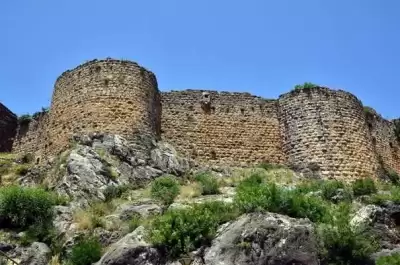
Yılankale stood out as one of the most critical defense points in the Çukurova region during the Crusader occupation in the Middle Ages. The structure was fundamentally shaped during the Byzantine period, then repaired and expanded during the Crusader and Cilician Armenian dominations. This layered history allows for the observation of stone masonry and construction techniques from different periods together on the castle walls.
The castle's name is directly associated with the Şahmeran legend, which lives in the region. According to the legend, Şahmeran, a half-human, half-snake creature, lived in the caves beneath this castle. This belief led to the castle being known as Şahmeran Castle among the people and offers visitors not only a historical but also a mythological experience.
Best Time to Visit
Adana's transitional characteristic between continental and Mediterranean climates causes temperatures to rise considerably in summer. Therefore, visiting Yılankale during March-May or September-November offers a much more enjoyable experience. In spring, the surrounding hills turn green, and the reflections of the Ceyhan River create a perfect backdrop for photography.
In summer, always prefer the early morning hours; at noon, rock surfaces become excessively hot, and the climb becomes difficult. In winter, fog and rain can occasionally be seen in the region; although the scenery becomes dramatic, the roads can become slippery.
How to Get There?
From Adana city center, follow the E-5 highway towards Ceyhan. When you see the sign for Yılankale Junction (K-4) on the O-52 highway, exit; from there, you can reach the castle by driving approximately 3 km further. Free parking is available around the castle.
While a private car is the most practical option, it is also possible to reach the junction by minibuses and buses departing from Adana or Ceyhan. For those who want to walk from the junction to the castle, the path is flat and clear; however, keep in mind that the final part requires climbing on rocks.
Surrounding Area and Route Suggestion
Yılankale forms part of a wonderful castle route along with Çukurova's three major castles. After visiting the ancient city of Misis (Mopsuestia) in the south, you can proceed to Yılankale, then head north to add Anavarza Castle and Kozan Castle to your day.
Around Yılankale, there are small sales points offering local menengiç coffee. One should not miss tasting this bitter-aromatic coffee; it is one of Çukurova's unique flavors. If you allocate a full day, you can easily complete all three castles.
Photography Spots
Yılankale is one of Turkey's most impressive spots, especially for drone photography. The composition that emerges when the castle silhouette on the steep rock, the winding bed of the Ceyhan River, and the Taurus Mountains stretching in the background are seen together is truly breathtaking.
At ground level, the bastions on the eastern facade of the castle and the walls facing the river offer the strongest frames. During sunrise and sunset, known as the golden hour, the light creates warm tones on the stone walls, adding depth to your photos. In the early morning hours, when fog covers the Ceyhan Plain, the landscape takes on an almost fairytale appearance.
Things to Know Before Visiting
The ascent to the castle involves climbing over steep rocks. Choosing sturdy, non-slip shoes is important for both your safety and comfort; climbing with sandals or flat-soled shoes can be difficult. If you are coming with small children, we recommend being careful in some sections.
Shade within the castle is quite limited; in summer, bring plenty of water and sunscreen. There are no regular facilities or cafes in the vicinity, so prepare your snacks and drinks in advance. If you plan to fly a drone, do not forget to check current regulations and region-specific restrictions beforehand.
This content originates from neresigezilir.com.tr and may not be copied without permission.
Yılankale (Snake Castle) – Adana Ceyhan Videos
Yılankale (Snake Castle) – Adana Ceyhan videos load when you open this section to keep the page fast.
Show videos
FAQ

Updated: