Çinili Mosque is an Ottoman mosque built in 1640 by Kösem Sultan in Üsküdar, Istanbul. Known for its Iznik tiles covering the interior, the structure can be visited free of charge and is an active place of worship.
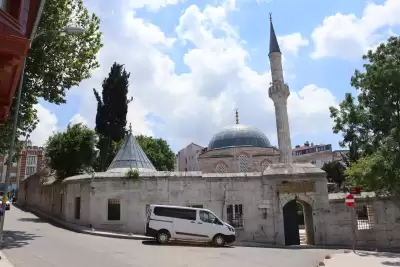
The Çinili Mosque (Tiled Mosque) takes its name from the Iznik tiles that cover its interior from floor to ceiling. It was built between 1638-1640 by Mahpeyker Kösem Sultan. Kösem Sultan, wife of Sultan Ahmed I and mother of Murad IV and Ibrahim I, was the most influential figure of the period known as the Sultanate of Women in 17th-century Ottoman politics. Its architect, Kasım Ağa, was a successor of the Mimar Sinan school. The mosque is not as large as the grand imperial mosques, but it forms a balanced composition with its single-domed space, portico at the entrance, and elegant minaret.
Inside, tulip, carnation, and hyacinth motifs in shades of cobalt blue, turquoise, green, and coral red adorn the walls. These tiles date to the first half of the 17th century and are considered among the last great productions of the Iznik workshops before their decline. Visitors often describe how the light entering through the windows brings the glazed surfaces to life; the mosque is small but its atmosphere is intense. One comment notes that outside of prayer times, only the exterior tiles can be seen, and that a visit outside of prayer times should be planned to see the interior.
The mosque was built as part of a külliye (complex) consisting of a madrasah, a public fountain (sebil), a primary school (mektep), and a Turkish bath (hamam). Although the bath and school have undergone changes over time, the layout of the külliye is still discernible. It is a structure untouched by tourist crowds, located in a quiet neighborhood of Üsküdar, away from the throngs of Sultanahmet or Süleymaniye.
Related discoveries: Places to visit in Istanbul, Historical Sites, Historical sites in Istanbul, Büyük Mecidiye Mosque (Ortaköy Mosque).
Guide's Note
When to Visit
Since the mosque is actively used for worship, it is difficult to enter the interior during prayer times. Visitors have learned this from experience: when visiting outside of prayer times, all the tiles can be seen; otherwise, one might have to settle for the exterior. Late mornings and afternoons, especially on days other than Friday prayer, are more suitable. Check current prayer times before you go.
How to Get There
Reaching Üsküdar Pier by ferry and then walking along Çavuşdere Street from in front of Mihrimah Mosque is the classic route; it takes about half an hour. For those who prefer not to walk, there are bus and minibus lines that stop at Bağlarbaşı, from where the mosque is a few minutes' walk. For those coming from Kadıköy or Beşiktaş, a ferry and walk combination is both scenic and practical.
Location in Üsküdar
The mosque is located on Çinili Hamam Street in the Murat Reis neighborhood, near Bağlarbaşı. Since it is slightly inland from Üsküdar's coastline, tourist density is low; the neighborhood fabric is still part of daily life. Other Üsküdar mosques like Şakirin Mosque and Valide-i Atik Mosque nearby can also be visited in a short time.
How Much Time to Allocate
Since the mosque is small in scale, 20-30 minutes is sufficient. However, those who want to examine the tiles in detail and observe the changing light might spend more than half an hour. It can be combined with other Üsküdar stops (Mihrimah Sultan Mosque, Şemsi Paşa, coastline) for a half-day Üsküdar tour.
Good Spots for Photos
Inside, the tile panels around the mihrab are the most densely patterned section. Colors appear more vibrant during hours when light from the windows hits the glazed surface. From the outside, the minaret and the entrance portico are also simple but photogenic. If the mosque is not crowded, there is a high chance of taking quiet shots inside; working with natural light without a tripod or flash yields the best results.
Things to Pay Attention To
As it is an active place of worship, modest attire is required; headscarves for women are usually available at the entrance. Shoes are removed at the entrance. During prayer, it is more appropriate to wait on the side or prefer to visit after prayer rather than walking around inside. Wheelchair access is not available, so entry may be difficult for visitors with mobility limitations.
Kösem Sultan and the Külliye
The mosque was designed not as a standalone structure but as part of a külliye: a madrasah, a fountain, a sebil, a primary school, and a Turkish bath. Although some of these structures have undergone changes over time, the basic layout is still visible. Kösem Sultan's commissioning of this külliye was a reflection of her influence in the palace during her era; the structure was designed as both a religious and social center.
FAQ

Updated: