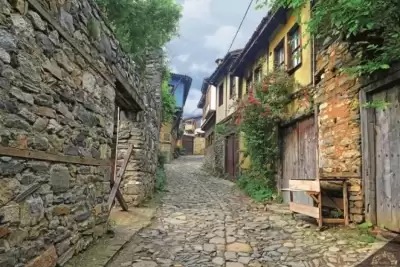
Bursa Castle is an ancient fortification located in Hisar Neighborhood, Osmangazi, built by the Bithynians on natural rocks in the 1st century BC. The walls, approximately 2 kilometers long, were used during the Roman, Byzantine, and Ottoman periods. They can be visited for free and offer panoramic views of the Bursa plain from their commanding position over the city.
Bursa Castle is a magnificent fortification rising on one of the city's highest points, encompassing thousands of years of history. Built by the Bithynians on natural rocks in the 1st century BC, the castle was repeatedly repaired and expanded during the Roman Empire, Byzantine, and Ottoman periods. The majority of the remains that have survived to the present day are from the walls rebuilt after the Gothic attacks in the 3rd century AD.
The walls, with a total length of approximately 2 kilometers, are divided by historic gates such as Hisar Gate, Kapl谋ca Gate, and Zindan Gate. Severely damaged in the 1855 Bursa earthquake and partially demolished by various roadworks in subsequent centuries, the castle underwent a comprehensive restoration process in the 2000s. The panoramic view extending from the walls and their immediate vicinity to the Bursa plain, Uluda臒, and the city skyline makes the visit worthwhile in itself.
Related discoveries: Places to visit in Bursa, Historical Places, Historical places in Bursa, Bursa Grand Mosque.
Guide's Note

Bursa Castle is a frequently visited spot for those who want to feel the history of the city up close. The dungeons and walls have been restored; there is a historical atmosphere within and around the castle. The panoramic view of Bursa from the upper floor is particularly appreciated by visitors. Admission is free, and there is also free parking and a small municipal cafe nearby.
It is sometimes possible to encounter events such as fencing demonstrations within the castle. The staff is reported to be helpful and friendly. It also offers suitable spots for those who want to take photos.
Things to note:- One visitor believes that the castle does not offer much to see and largely consists of walls; it may be useful to adjust your expectations accordingly.
- A negative impression regarding safety in the surrounding area at late hours has been conveyed; caution is recommended for evening visits.
- During holiday periods, it has been noted that there are odor and fly problems due to the animal market set up around the castle; keep this in mind when planning visits on special days.
Best Time to Visit
Most of the year is suitable for visiting Bursa Castle; however, April-May and September-October offer the most balanced period in terms of both air temperature and crowd levels. During the summer months, especially at noon, shade is scarce on the walls, so early morning or late afternoon is recommended. In winter, the view may be limited by fog and rainy weather; however, for those who want to see snow-covered Uluda臒 as a backdrop, winter mornings also hold a unique beauty. Sunset hours are the most preferred time for photography enthusiasts, with the play of light extending over the walls to the Bursa plain.
How to Get to Bursa Castle
The castle has five different entrance gates; the most well-known of these is Hisar Gate. It is possible to walk from Zafer Square; thanks to its central location, it can be reached quickly from many points in the city. Bus and tram lines going to the Osmangazi district are the most practical public transport options. For Zindan Gate, you can follow the location via Kale Street. Parking facilities are quite limited for those coming by car; therefore, it is easier to park nearby and prefer to walk.
History of the Castle
The foundations of Bursa Castle were laid by the Bithynians on natural rocks in the 1st century BC. The ancient city was named Prusa ad Olympum, and the castle was built to surround this settlement. Expanded during the Roman Empire, the structure maintained its strategic importance during the Byzantine period. The walls, largely rebuilt after the Gothic attacks in the 3rd century AD, form the basis of the remains that have survived to the present day. After the Ottomans conquered Bursa in 1326, they used the castle as an administrative center; the structure continued its function until the 19th century. The 1855 Bursa earthquake destroyed a significant part of the walls, and in subsequent centuries, some sections were demolished during road construction. Restoration work carried out in the 2000s largely brought the existing structure back to life.
Photography Spots
Bursa Castle is an extremely rich place for taking photographs. Hisar Gate and the surrounding historic stone textures offer an ideal framework for both architectural and street photography. When viewed from the upper parts of the walls, the Bursa plain and Uluda臒 meet in the same frame; this angle provides a captivating view with golden tones, especially at sunset. Photographs taken in the narrow stone streets within the castle, in front of old houses with wooden bay windows, reflect the historical spirit of the city. In the early morning, when fog covers Uluda臒, wide-angle shots taken from the walls capture a quite dramatic atmosphere.
What to Eat Around the Castle
The Hisar district, right next to Bursa Castle, is one of the city's oldest neighborhoods and offers a cozy atmosphere to visitors with its small cafes and restaurants. For 陌skender kebab, a symbol of Bursa, the long-established restaurants in the Osmangazi district are considered the right address. Small patisseries and tea gardens around the castle are ideal for resting during walks. The city's famous candied chestnuts and 陌neg枚l meatballs are also among Bursa's unique flavors; to try them, it is enough to visit restaurants close to the center.
Suggested Itinerary: Castle and Surroundings
Combining a visit to Bursa Castle with other historical sites in the city is quite easy. You can start your day at Hisar Gate and walk along the wall line, then explore the historical fabric within the castle. Tophane Park, within walking distance from here, houses the tombs of the founders of the Ottoman Empire, Osman Gazi and Orhan Gazi; the tea garden within the park is a nice spot for a break. You can continue your visit with the Grand Mosque and the Covered Bazaar in the Osmangazi district to experience Bursa's historical layers in a single day.
Things to Know Before Visiting
When walking along the wall line at Bursa Castle, the ground in some sections can be uneven and slippery; it is important to choose comfortable walking shoes. Stroller and wheelchair use is difficult due to the stone-paved and sloping paths. Shaded areas are quite limited around the castle; it is recommended to carry water and sun protection in summer. People still live in the inner castle neighborhood; therefore, it is necessary to adopt a calm and respectful visiting approach. Evening lighting may not be sufficient, so it is advisable to be careful in the evening hours.
FAQ
Bursa Castle videos load when you open this section to keep the page fast.

Updated: