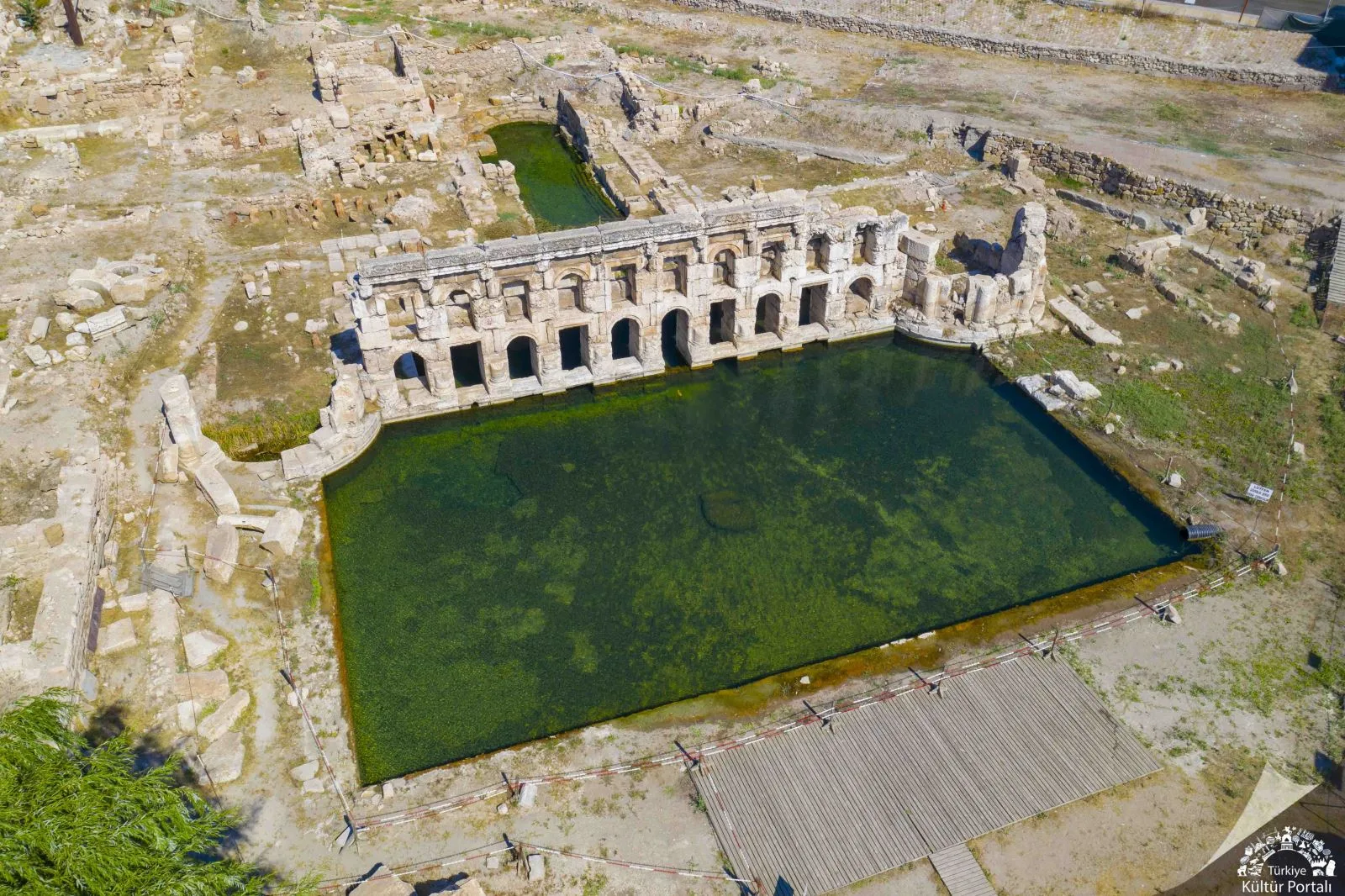
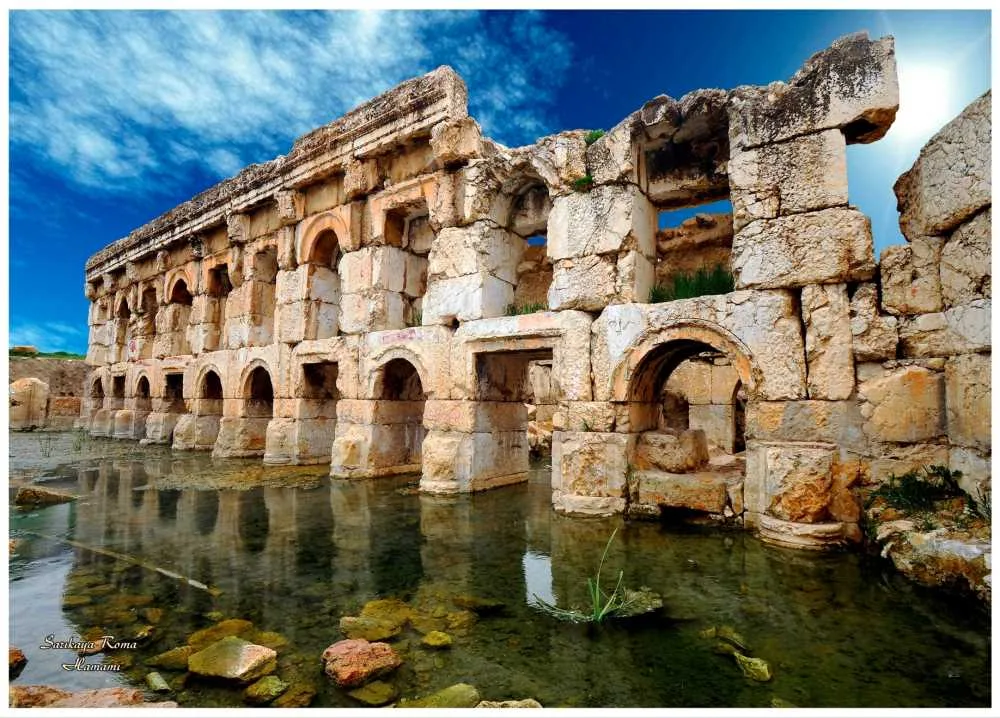
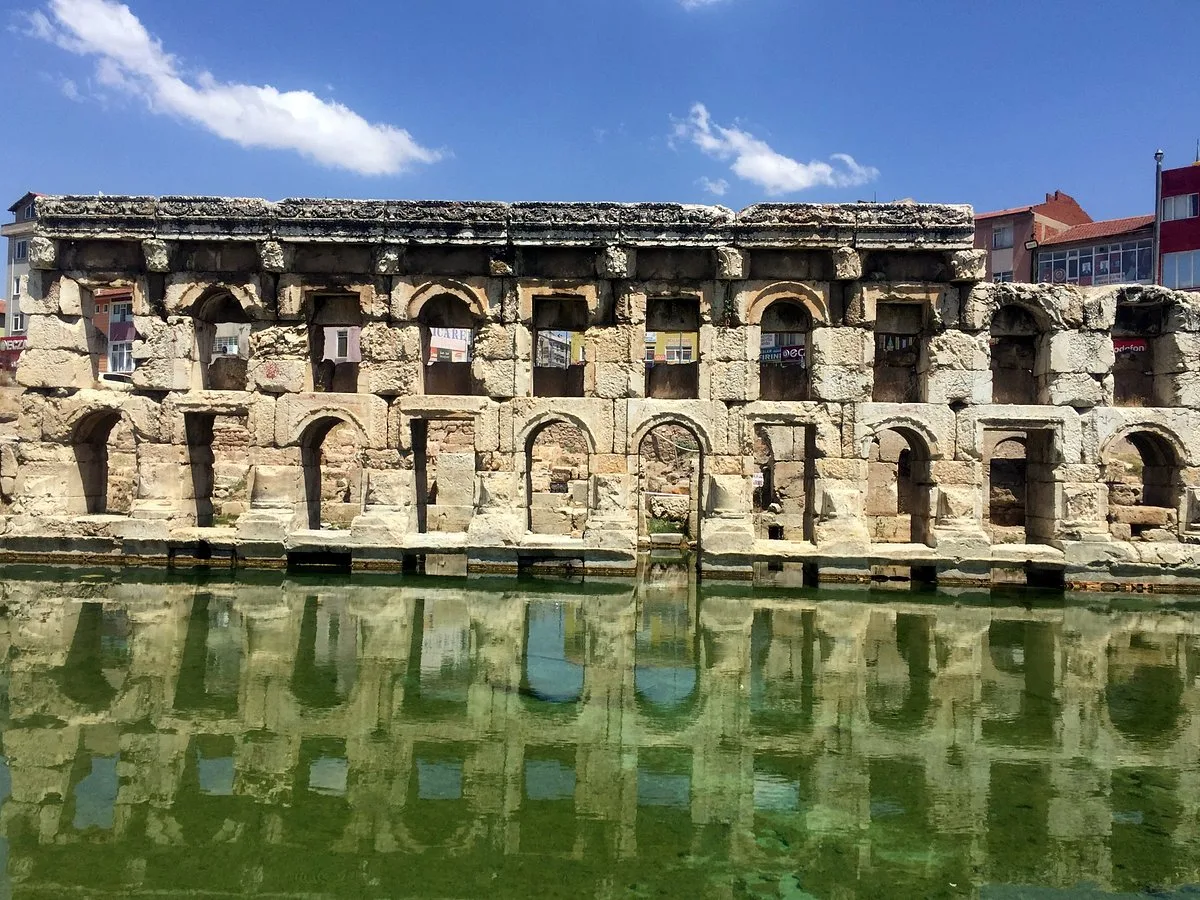
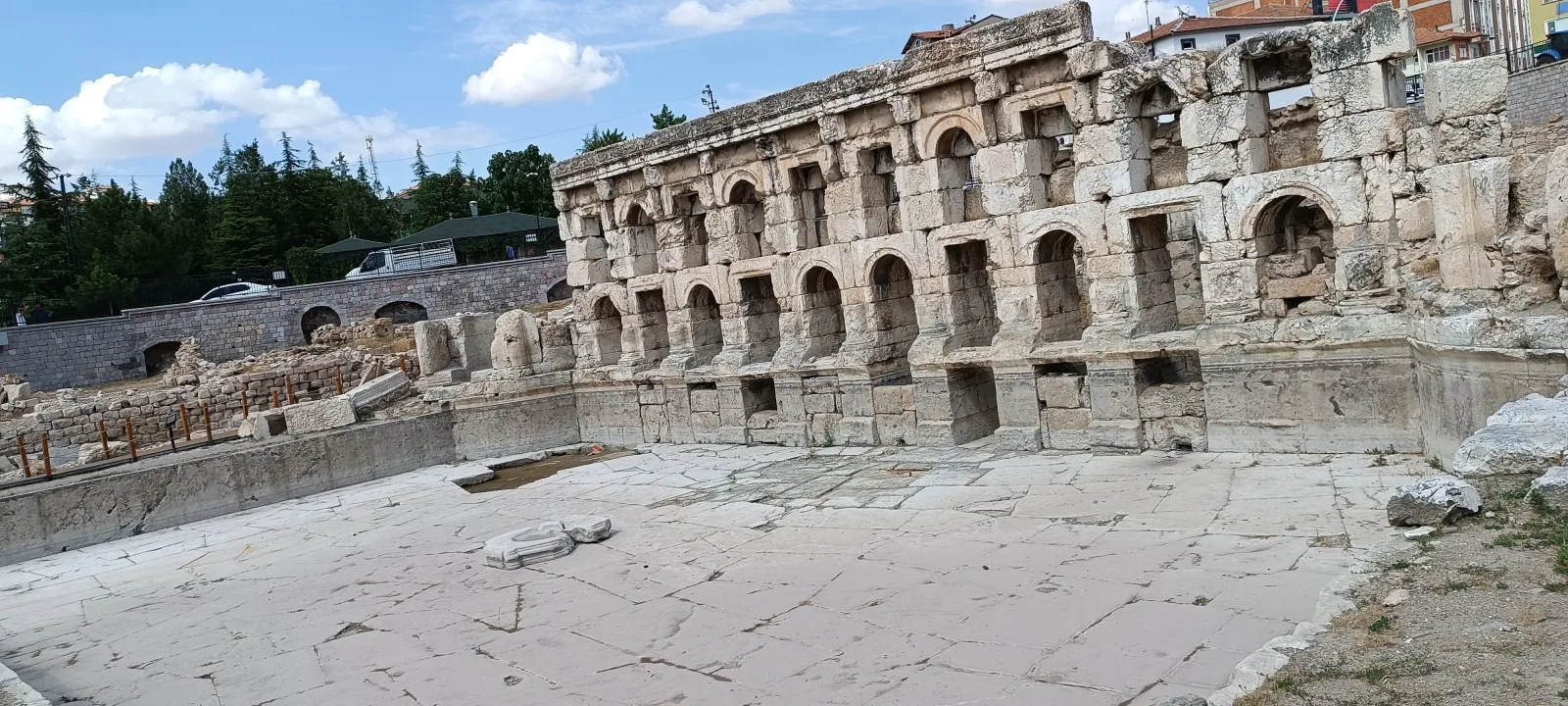
Sarıkaya Roma Hamamı, Yozgat'ın Sarıkaya ilçesinde, MS 2. yüzyıldan kalan termal hamam kalıntısıdır. Mermer kemerli batı cephesi ve havuz izleriyle ayakta duran yapı, giriş ücretsizdir.
Sarikaya Roman Bath is a remnant squeezed into the heart of the district center, embedded in daily life. Built in the 2nd century AD on top of a thermal spring then called Aquae Sarvenae. During the Byzantine period, with the spread of Christianity, a church was added to its north and the place then took the name Basilica Therma. According to Christian sources, Peter, one of the apostles, passed through here during his journey from Sivas to Kayseri and then to the Buyuknefes village of Yozgat.
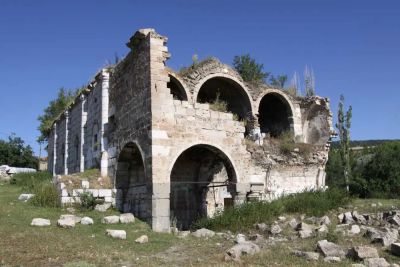
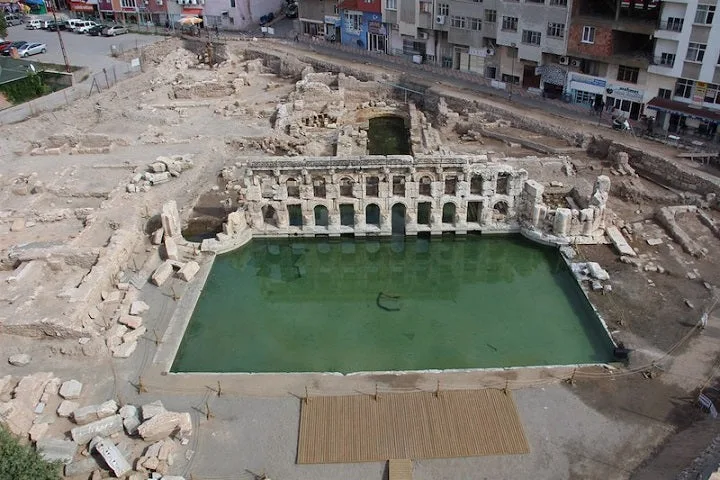
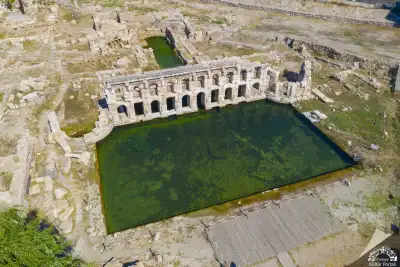
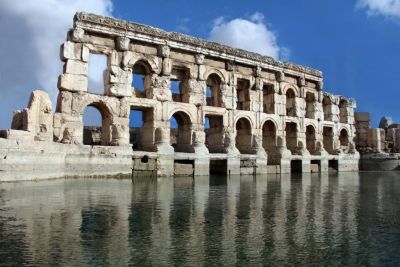
Most of the structure was destroyed over time. What remains standing is the barrel-vaulted western facade wall that provided passage to the rear chamber. This wall with ten-eyed, two-story marble arches was worked in Corinthian order, with only the lower portions of the half-columns at the arch supports surviving to the present day. At the north and south ends of the wall, approximately 30 meters long, there are circular pool remains; a large thermal pool in front, an inner pool descended by two staircases behind, and a third pool to the east are visible. It continued to be used as a bathhouse during the Seljuk and Ottoman periods, but infrastructure works carried out during the Republic era seriously damaged the structure.
A prominent point in visitor comments is that despite the bath being located in the city center, it is easy to access and free parking is available in the surrounding area. Some visitors criticize the new construction around it, while those expecting more archaeological areas to be uncovered hope for further excavations. The teahouse beside it can be used for a short break. Added to UNESCO's World Heritage Tentative List in 2018, the structure is one of the few surviving Roman period thermal baths that has remained standing in Anatolia.
Guide's Note
What is Sarikaya Roman Bath?
A Roman thermal facility built in the 2nd century AD on top of a hot spring then called Aquae Sarvenae. The hot water emerging from underground was used directly in the bath. During the Byzantine period, a church was added to its north and the settlement began to be called Basilica Therma. It continued to be used as a bathhouse center during the Seljuk and Ottoman periods, but infrastructure works during the Republic era caused the destruction of most of the structure.
Ruins to See
The only standing part is the barrel-vaulted western facade wall that provided passage to the rear chamber. This wall with ten-eyed, two-story marble arches was worked in Corinthian order; only the lower portions of the half-columns at the arch supports have survived to the present day. There are circular pool traces at the north and south ends of the wall, a large thermal pool in front, an inner pool descended by stairs behind, and a third pool to the east. The series of arches on the western facade is the most striking point for photography.
How to Get There?
Approximately 77 km from Yozgat city center to Sarikaya district. Access is easy as it is on the main route connecting the Black Sea to the Mediterranean. After reaching the district center, the bath is in Kapilica Neighborhood, within walking distance. Free parking areas are available around, which is convenient for those arriving by vehicle.
How Much Time Should You Allow?
The area is not large, 30-45 minutes is sufficient to tour the ruins and take photographs. If you have come to Sarikaya, you can add other thermal facilities in the district or natural areas in the surrounding area to your route and complete your day.
Things to Consider Before Visiting
The structure is in an open area, a protected site; it is important to tour the ruins without touching them. Some visitors note that the new construction in the surrounding area overshadows the historical texture, so you may need to choose your angle carefully when taking photographs. A brief reading about the bath's history before visiting can make your tour more meaningful.
Best Time to Visit
As an open area, it is more comfortable to visit early in the morning or in the evening during the summer months to avoid midday heat. Spring and autumn are favorable in terms of both weather and lighting for photography.
Other Nearby Stops
Sarikaya is known for its thermal springs; there are bathhouse facilities and small teahouses near the bath. A teahouse right next to the bath can be preferred for a short break. On your return to Yozgat center, you can also include other historical structures in the city in your itinerary.
This content originates from neresigezilir.com.tr and may not be copied without permission.
Sarikaya Roman Bath Videos
Sarikaya Roman Bath videos load when you open this section to keep the page fast.
Show videos
FAQ
Updated: