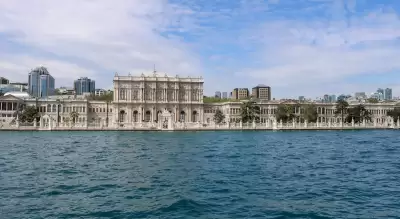
Dolmabahçe Palace is an Ottoman palace located in Beşiktaş on the shores of the Istanbul Bosphorus, completed by Sultan Abdülmecid in 1853. A synthesis of Neo-Baroque, Rococo, and Neoclassical architecture, the structure includes 285 rooms and 46 halls; it is where Atatürk spent his last days.
Dolmabahçe Palace is located in Istanbul's Beşiktaş district, on the Bosphorus shore stretching between Kabataş and Beşiktaş, covering an area of 250,000 square meters. Initiated by Sultan Abdülmecid in 1843 and completed in 1853, this structure was designed by the Balyan family of architects and symbolizes the Ottoman Empire's opening to the West. A unique synthesis of Neo-Baroque, Rococo, and Neoclassical architectural elements, the palace remains one of the most expensive and largest structures of its era.
The palace consists of three main sections: the Selamlık, the Harem, and the Crown Prince's Apartments. It contains 285 rooms, 46 halls, 68 restrooms, and 6 hammams. The balustrades of the magnificent Grand Staircase are made of crystal, and the chandelier hanging from the ceiling of the Ceremonial Hall is one of the world's largest Bohemian crystal chandeliers. The palace also holds deep historical and emotional significance as the place where Mustafa Kemal Atatürk passed away on November 10, 1938.
Guide's Note
It is difficult to make a broad assessment as the number of existing visitor reviews is quite limited; however, all feedback received is positive. Visitors generally leave the palace satisfied and give high ratings.
It is particularly noted in the comments that visiting the harem apartments is recommended. The palace courtyard itself is described as impressive, indicating that the structure leaves a strong impression on visitors not only with its interiors but also with its exterior areas.
Most of the comments are very brief; no detailed information is shared on topics such as service quality, ticket prices, crowd density, or guidance. Therefore, we recommend consulting additional sources when planning your visit.
What is Dolmabahçe Palace?
Dolmabahçe Palace is a structure built in the late Ottoman Empire, becoming the new administrative center of the empire after Topkapı Palace. Sultan Abdülmecid commissioned the famous Balyan family of architects to build a structure comparable to the magnificent palaces in the capitals of Western states. Completed in 1853 after approximately ten years of construction, the palace is the reflection of the Ottoman Empire's modernization efforts in stone and marble.
The structure consists of the Selamlık (the section used for state ceremonies and official receptions), the Harem (the private living quarters of the sultan and his family), and the Crown Prince's Apartments. With a total of 285 rooms and 46 halls, the palace interiors are adorned with the most valuable fabrics of the period, Hereke carpets, Yıldız porcelains, and artworks brought from Europe. Today, Dolmabahçe, open to visitors as a museum under the Directorate of National Palaces, continues to be one of Istanbul's most visited cultural heritage sites.
When to Visit?
The most suitable times to visit Dolmabahçe Palace are April–May and September–October. During these months, both temperatures are pleasant for sightseeing, and the crowds are significantly reduced compared to the summer tourist season. Spring, when the palace gardens are in full bloom, also offers a wonderful atmosphere for photography.
In July and August, the palace can be extremely crowded; during this period, arriving early in the morning, close to opening time, significantly shortens waiting times. The palace is closed on Mondays; plan your visit accordingly. In winter months, visitor density decreases, offering an opportunity to explore the palace in a quieter environment; however, keep in mind that weather conditions may negatively affect garden tours.
How to Get to Dolmabahçe Palace?
The palace is very well connected by Istanbul's public transport network. The most practical option is to arrive at the Kabataş stop by tram (T1 line) or Marmaray and then walk for about 10 minutes. Kabataş is also a frequent stop for ferries coming from the Anatolian side and various points along the Bosphorus.
The palace can also be easily reached on foot from the Beşiktaş side. Beşiktaş piers are connected by ferry services from central points such as Üsküdar, Eminönü, and Kadıköy. If you plan to come by car, especially on weekends and during summer months, be aware that surrounding roads can be busy and finding parking might be difficult. Therefore, public transport or taxi/ride-sharing apps would be a much more practical choice.
Visit Route and Sections
Since the palace consists of three main sections, planning your visit in advance will help you use your time and energy efficiently. If you want to see all sections, purchasing a combined ticket would be the most logical option.
The Selamlık section is the official face of the palace. The Ceremonial Hall, where state ceremonies were held, houses one of the world's largest Bohemian crystal chandeliers; this 4.5-ton chandelier mesmerizes visitors. The Crystal Staircase is one of the palace's most iconic interior elements. In the Harem section, you can see the private living quarters of the sultan and his family, ornate apartments, and the room where Atatürk spent his last days in Istanbul. The clocks in Atatürk's bedroom, where he passed away, are stopped at 09:05, the time of his death, leaving a profound impact on visitors. Don't forget to explore the palace gardens; this green area, combined with the Bosphorus view, forms one of the most enjoyable parts of the visit.
Photo Spots
Dolmabahçe Palace is a treasure trove for photography enthusiasts. The view of the sea facade taken from the Bosphorus forms the most well-known and impressive shot of the palace; this angle can be captured during ferry tours or from the opposite shore. The Treasury Gate and Sultanate Gate on the land side also offer strong compositions.
Photography inside some sections may be restricted; pay attention to your tour guide's instructions. The palace gardens, especially in spring when flowers bloom, provide an excellent backdrop for portraits and landscape photos. Early morning moments when the light hits the palace from the Bosphorus are golden for exterior photography.
Things to Know Before Your Visit
A guided tour is mandatory inside the palace; individual visits are not possible. Tours start at specific intervals and are available in Turkish and English. Therefore, the time you spend in the palace is partly dependent on the tour schedule.
Since visitors will walk on centuries-old parquet and carpets inside, overshoes/slippers are provided. Wearing comfortable shoes is still important. Müzekart (Museum Pass) is not valid in the Selamlık section; however, it can be used for the Harem. Considering that tickets can sell out during peak seasons, it is recommended to purchase online tickets or arrive early. Food and drink consumption is prohibited inside the palace; you can consider nearby cafes before or after your visit.
What and Where to Eat Nearby?
In the immediate vicinity of Dolmabahçe Palace, in the Beşiktaş and Kabataş districts, you can find options for every budget. Beşiktaş bazaar, within walking distance of the palace, offers a wide range from fish sandwich stalls to long-established restaurants. The taverns and restaurants in the back streets of Beşiktaş are ideal for discovering the most authentic flavors of Istanbul cuisine.
On the Kabataş side, Bosphorus-view cafes and restaurants line the shore. After your visit, sitting near the ferry pier and enjoying a cup of tea while watching the Bosphorus can be a nice option to unwind. For lunch, the modest restaurants around Beşiktaş Fish Market offer both delicious and economical choices.
This content originates from neresigezilir.com.tr and may not be copied without permission.
Dolmabahçe Palace Videos
Dolmabahçe Palace videos load when you open this section to keep the page fast.
Show videos
FAQ
Updated: