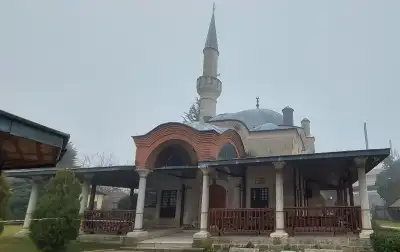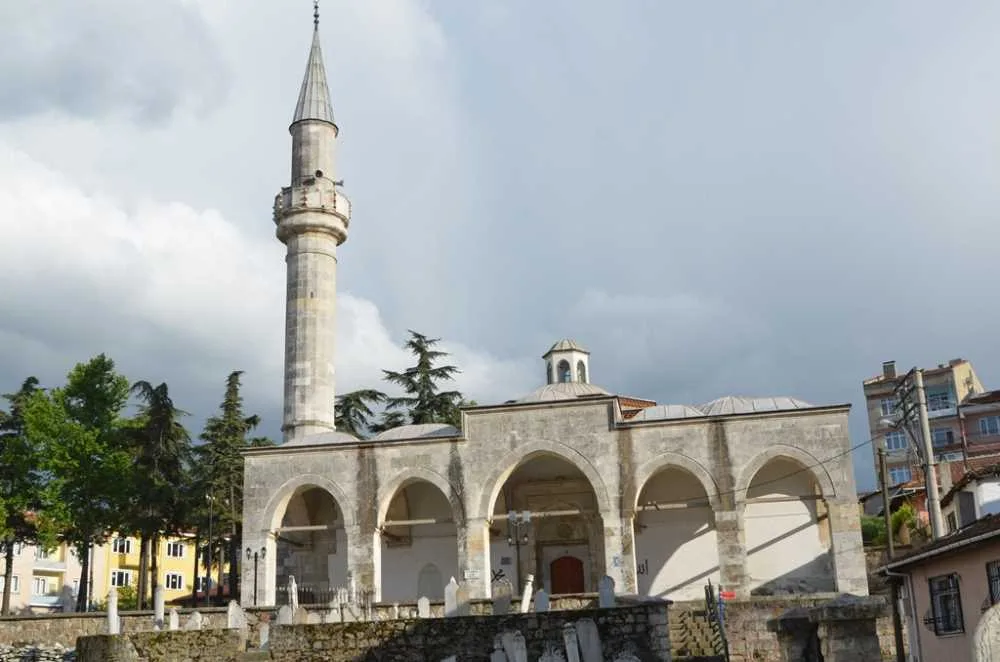
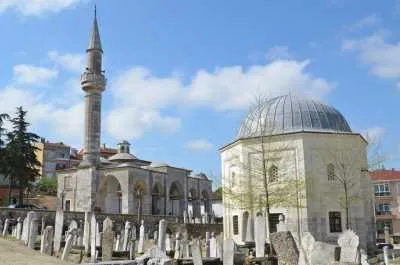
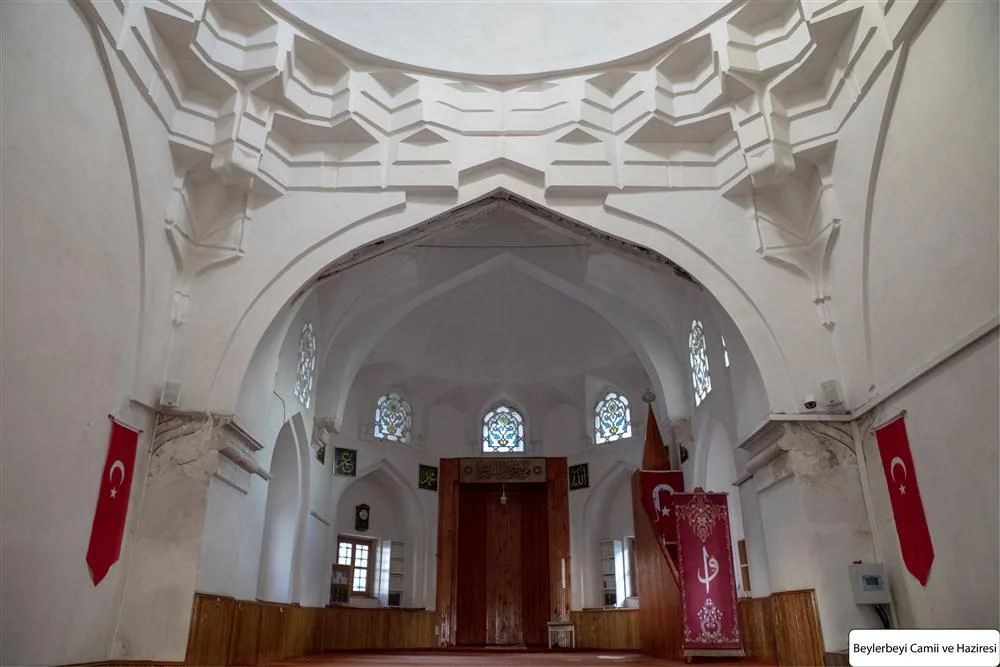
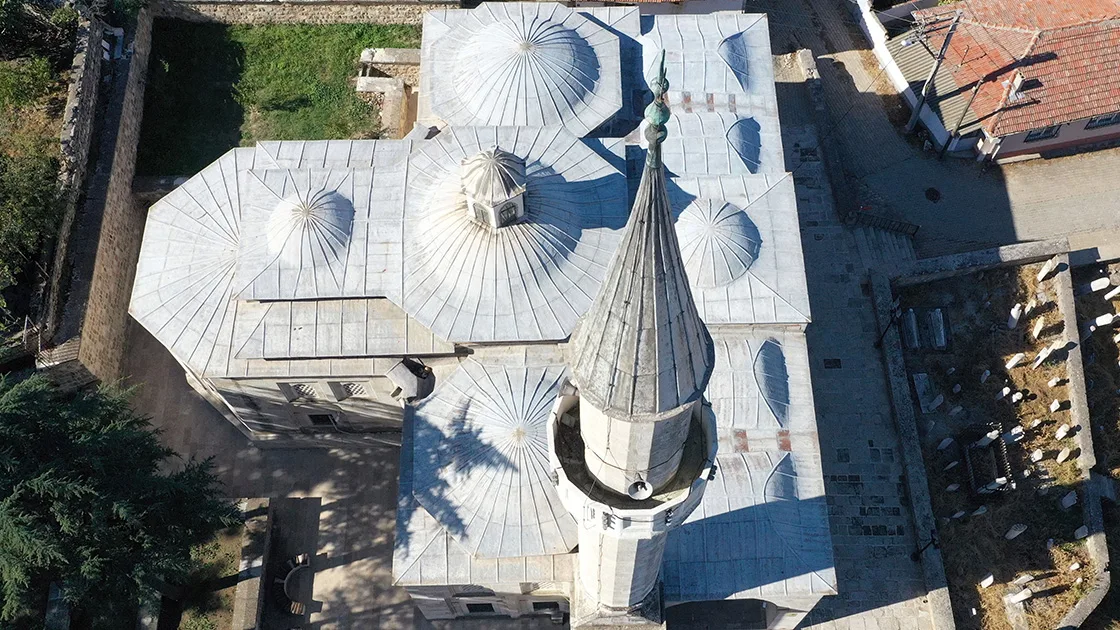
Beylerbeyi Camii, Edirne'nin merkezinde 1429'da Sinaneddin Yusuf Paşa tarafından yaptırılan çokgen planı, tek kubbeli erken Osmanlı camii. Sivri kemerli mermer taş kapısı ve zaviyeli mimarisiyle dönemin Bursa üslubunu yansıtır.
Beylerbeyi Mosque is located on a hillside along the street extending from the center of Edirne to Sarayiçi. Its builder was Sinaneddin Yusuf Pasha, a nobleman from the reign of Murad II, first the Bey of Tırhala and then the Beylerbeyi of Rumeli; foundation records indicate the date 1429-30. The mosque itself has no inscription, which is why its founder has long been a subject of debate. Although some sources point to Abdullah Bey, the foundation documents have clarified the matter.
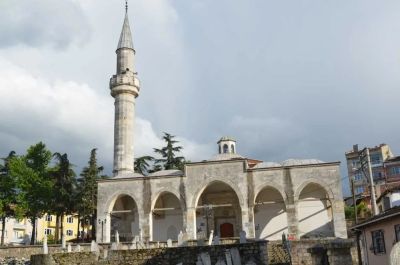
The structure is one of the zawiya mosques with an inverted T-plan, reflecting the Bursa style of the period: a polygonal body, a single dome, and domed tabhane sections on both sides. The pointed arched marble stone gate on the entrance facade is the most striking detail of the building. Inside, there are pen-work motifs on the underside of the large arch, and the prayer hall, consisting of two square-plan sections, gives a simple yet proportionate impression. Evliya Çelebi mentioned the mosque as "spacious and beautiful" in the 17th century; the Balkan War and subsequent occupations left the structure in ruins, and it underwent restoration in the 1950s.
A point frequently mentioned in visitor reviews is that the mosque is often open only during prayer times due to theft incidents. Visitors may find the door locked, so it might be necessary to arrange a time to enter. The exterior facade and courtyard can always be seen, however; visitors who notice the difference in the architectural plan state that the structure is a must-see example. The tomb of its founder is in the cemetery across the street from the mosque.
Guide's Note
What is Beylerbeyi Mosque, and Who Built It?
The mosque was built by Sinaneddin Yusuf Pasha, who was first the Bey of Tırhala and then the Beylerbeyi of Rumeli during the reign of Murad II. Since it has no inscription, its founder was debated for many years, with some sources pointing to Şarabdar Abdullah Bey. However, the foundation record dated 1429-30, found by M. Tayyib Gökbilgin, clarified the matter. Essentially, the mosque was designed as part of a small complex (külliye) consisting of a tomb, hammam, and madrasah; today, the mosque is the most well-preserved structure.
Architectural Details: Stone Gate and Pen-Work
The structure is a polygonal, single-domed zawiya mosque with an inverted T-shape; it conforms to the typical plan scheme of early Ottoman mosques in the Bursa style. The pointed arched marble stone gate at the entrance is the most striking feature when viewed from the outside. Inside, pen-work decorations with motifs remain on the underside of the large arch, accompanying the two square-plan sections of the prayer hall. There are domed tabhane sections on both sides, indicating that the structure was not only a place of worship but also a zawiya mosque that served as accommodation.
When to Visit, How to Enter?
There is a frequently repeated warning in visitor reviews: the mosque is often kept locked due to theft incidents and is only opened during prayer times. If you want to see the interior, try to go around noon or afternoon prayer times. You don't need to observe a specific time to see the exterior facade and courtyard; they are always accessible during the day.
How to Get There?
Beylerbeyi Mosque is located on a hillside along the street extending from Edirne city center to Sarayiçi. It is possible to reach it by walking from the central bus stops or from around the Selimiye Mosque. For those going by car, parking options around the mosque are limited, so exploring on foot is more practical.
Combine with Other Historical Structures Nearby
Since the mosque is close to the city center, it can be included in the same walking route as Selimiye Mosque, Eski Mosque, and Üç Şerefeli Mosque. The tomb of the founder, Sinaneddin Yusuf Pasha, is located in the cemetery across the street, and a short visit there can also be made. Planning it as the last stop on a half-day Edirne mosque tour would add a lesser-known but architecturally distinct example to the list.
Things to Note
Some visitors mention the lack of maintenance in the courtyard and its surroundings, and insufficient street lighting. If the mosque is closed, do not expect a guarantee of entry beforehand to avoid disappointment; focus on seeing the exterior architecture. The nearby cemetery area has also been described as unkempt in some reviews, so keep this in mind during your visit.
This content originates from neresigezilir.com.tr and may not be copied without permission.
Beylerbeyi Mosque Videos
Beylerbeyi Mosque videos load when you open this section to keep the page fast.
Show videos
FAQ
Updated: