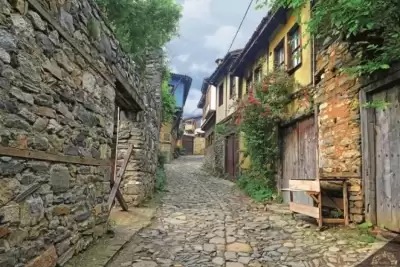
The Gerush Synagogue is a synagogue in Bursa's Osmangazi district, built in the 16th century by Sephardic Jews expelled from Spain, notable for its Baghdadi dome; admission is free.
The Gerush Synagogue takes its name from the word gerush, which means 'expelled' or 'banished' in Spanish. In 1492, Sephardic Jews expelled from Spain settled in various cities of Anatolia after the Ottoman Empire opened its doors; Bursa was among the foremost of these cities. The synagogue was built in the early 16th century, during the reign of Sultan Selim II, as a tangible reflection of this community's presence and worship tradition in Bursa.
Located south of Altıparmak Street, on Arap Şükrü Street, the structure is architecturally interesting with its dome built using the Baghdadi technique. The synagogue, modest in scale with a capacity of 100-150 people, was among the structures repaired after the 1855 Bursa earthquake, along with all mosques; a French architect's signature was also involved in this process. Today, the structure is preserved in very good condition and continues to be an active place of worship.
Related discoveries: Places to visit in Bursa, Historical Places, Historical places in Bursa, Bursa Grand Mosque.
Guide's Note

About Gerush Synagogue
The Gerush Synagogue is one of the most important structures documenting the historical presence of the Jewish community in Bursa. The word 'Gerush' means exile or expelled in Spanish; the synagogue's name directly refers to the 1492 expulsion. That year, Sephardic Jews expelled from Spain settled in various cities of the empire at the invitation of the Ottoman sultans. Bursa was among the foremost of these cities.
The structure was built in the early 16th century during the reign of Sultan Selim II. With its dome built using the Baghdadi technique and a capacity of 100-150 people, the synagogue presents a modest but original architecture. It was repaired by a French architect after the 1855 Bursa earthquake, which deeply affected the city. Today, it is still used as an active place of worship.
Historical Background
In 1492, Jews expelled from Spain by the decree of Queen Isabella and King Ferdinand began to settle in Anatolia after the Ottoman Empire opened its doors. This inclusive policy of the Ottomans was quite remarkable in Europe at the time. Bursa, along with Istanbul and Thessaloniki, became one of the important stops for this migration.
The Sephardic community that settled in Bursa came together to preserve their language, traditions, and worship practices and established the Gerush Synagogue. The name of the structure was deliberately chosen to keep alive the historical trauma experienced by the community and their process of seeking refuge in the Ottoman Empire. The synagogue served as the center of the social and religious life of the Bursa Jewish community for centuries.
When to Visit?
The ideal time to visit Bursa is between April-June and September-November. During these months, the weather is neither too hot nor too cold; exploring the city's historical texture on foot is much more enjoyable. If you wish to visit the Gerush Synagogue, choosing hours outside of prayer times is important for both you and the community's respect.
Since the synagogue is an active religious site, if you plan to visit on Shabbat (Saturday) and Jewish religious holidays, you may need to inquire beforehand. Weekday mornings are generally calmer.
How to Get There?
The Gerush Synagogue is located on Arap Şükrü Street in Bursa's Osmangazi district. You can easily reach it by walking south from Altıparmak Street, one of the city's busiest streets.
Those who wish to come from Bursa city center by public transport can use bus lines heading towards Osmangazi. Up-to-date line and schedule information can be accessed via the Metropolitan Municipality's BURBIS application. For those coming by car, there are paid parking options nearby. The walking distance from stops on Atatürk Street or Altıparmak Street is quite short.
Suggested Route: Historic Bursa Tour
The Gerush Synagogue can be part of a route that can be easily explored in a single day, along with other important structures in Bursa's historical center. The suggested itinerary can be structured as follows:
Grand Mosque → Covered Bazaar → Koza Han → Gerush Synagogue → Altıparmak Street → Muradiye Complex
This route offers the opportunity to see magnificent examples of Ottoman architecture alongside historical structures belonging to Jewish and Christian communities. It is approximately a 4-5 hour walking route; comfortable shoes and plenty of water are recommended.
What to Eat Nearby?
The Osmangazi region, where the Gerush Synagogue is located, is one of Bursa's richest areas in terms of gastronomy. There are many restaurants and eateries offering traditional Bursa cuisine around Koza Han, which you can reach with a few minutes' walk after your visit.
One should not leave Bursa without trying the local İskender kebab. The city's famous candied chestnuts, İnegöl meatballs, and various Ottoman desserts can also be counted among the flavors that reflect the local taste. It is not difficult to find both affordable and quality options on Altıparmak Street.
Photo Spots
Photos taken from outside the Gerush Synagogue reflect the structure's simple yet impressive facade and the historical texture of Arap Şükrü Street. The angle of light falling on the street in the early morning hours is quite suitable for photography.
If you wish to take photos inside the synagogue, you must first consult the community and obtain permission. Keep in mind that it is an active place of worship. The surrounding historic streets and centuries-old buildings also offer interesting shots.
Things to Know Before Visiting
The Gerush Synagogue is an active religious site. A quiet and respectful demeanor should be adopted during the visit. Covering one's head and wearing appropriate clothing is expected when entering; being prepared for this beforehand will make your visit smoother.
Since the synagogue's visiting hours and conditions may vary, it is advisable to get up-to-date information from the Bursa Provincial Directorate of Culture and Tourism or local guides before going. This step becomes even more important if you plan to visit on special days in the Jewish religious calendar.
FAQ
Gerush Synagogue videos load when you open this section to keep the page fast.

Updated: