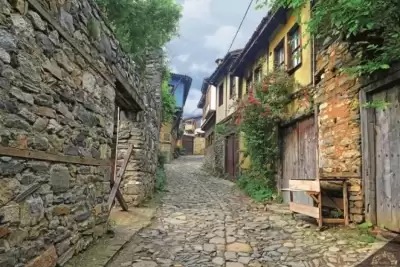
Bursa Walls are historical defensive structures surrounding the Hisar Region, dating back to the Byzantine period and expanded by the Ottomans. Located on the Tophane slope, the walls came under Ottoman control after Orhan Gazi's conquest in 1326 and were repaired and strengthened over centuries.
Bursa Walls are historical defensive structures that encircle the Hisar Region, the oldest settlement area of the city, and a large part of which has survived to the present day. The foundations of the walls date back to the Byzantine period, and according to some researchers, even earlier periods. With the conquest of Bursa by Orhan Gazi, son of Osman Gazi, in 1326, the structures came under Ottoman control and were repaired and strengthened over time. Located on the Tophane slope, the walls served for centuries as both a strategic defense line and a structure defining the boundaries of the Hisar neighborhood, which formed the city's initial core.
The towers, gate remnants, and wall sections still standing on and around the walls today reveal Bursa's layered history. The narrow cobblestone streets within Hisar, old Bursa houses with wooden bay windows, and some structures built on the walls transform this area from a mere archaeological remnant into a living historical fabric. A walk along the walls starting from Tophane Park offers panoramic views of the city while also providing an opportunity to closely observe architectural traces from the pre-Ottoman and early Ottoman periods.
Related discoveries: Places to visit in Bursa, Historical Places, Historical places in Bursa, Bursa Grand Mosque.
Guide's Note
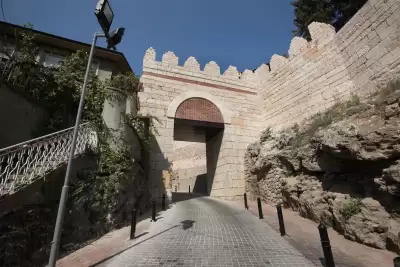
Bursa Walls are particularly highlighted by those who want to see the city panoramically. Visitors state that they can observe the general silhouette and historical texture of Bursa together from here. It is considered a recommended stop to include in the itinerary for those who want to feel the historical layers of the city.
A practical suggestion shared by visitors is that a more comprehensive Bursa tour can be created when visited together with the nearby tombs of Osmangazi and Orhan Gazi.
Current comments are quite limited in number and mostly consist of short general impressions. Therefore, it is not currently possible to make a clear assessment of the venue's accessibility, infrastructure status, or possible negative aspects from comment data. It is recommended to check current conditions on-site when planning a visit.
Best Time to Visit
Since Bursa Walls are an open-air area, they can be visited all year round; however, April-May and September-October are the most comfortable periods in terms of both weather conditions and crowds. In spring, the greenery and blossoms on the Tophane slope provide a beautiful contrast to the stone texture of the walls. In summer, temperatures can rise considerably in the afternoon, so visiting in the early morning or late afternoon is much more enjoyable. In winter, when Bursa is sometimes foggy and rainy, the walls take on a desolate and mystical appearance, creating an interesting atmosphere for photography enthusiasts.
How to Get to Bursa Walls?
The walls are located in the Hisar district, Tophane region, which is part of Bursa's Osmangazi district. It is within walking distance from the city center. Municipal bus lines belonging to Bursa Metropolitan Municipality that use the Tophane route reach right to the foot of the walls. It can also be easily reached by taking the Bursaray (metro) to the Şehreküstü stop and walking from there. For those coming by car, there are limited parking spaces around Tophane; however, since the streets within Hisar are quite narrow, it is much more practical to leave the car outside.
Hisar and Wall Route: Suggested Itinerary
Starting from Tophane Park is a logical starting point. After visiting the tombs of Osman Gazi and Orhan Gazi in the park, you can start walking towards the Hisar district by following the wall sections. While progressing along the towers and gate remnants on the walls, it is also possible to see the old Bursa houses by turning into the cobblestone streets of Hisar. You can extend the route towards Pınarbaşı or enjoy the view by stopping at points overlooking the city from the Tophane ridges. The entire walk takes approximately 1.5-2 hours; those who want to go at a faster pace can finish in 1 hour.
Photography Spots
Bursa Walls stand out as one of the best photography locations in the city. The wall sections on the Tophane slope offer impressive shots, especially in the golden hour light. The panoramic view extending over the Bursa plain and Uludağ in the distance from the walls or from high points immediately adjacent to them is perfect for wide-angle photographs. In the narrow streets within Hisar, corners where historical wooden houses are intertwined with the wall structures create an interesting background for documentary-style shoots. City silhouette photos taken from Tophane at sunset are quite popular.
What to Eat Nearby?
There are small cafes and traditional restaurants around Hisar and Tophane. For Bursa's unique İskender kebab, historical kebab shops within walking distance from Tophane can be a good choice. It is possible to enjoy the historical atmosphere by drinking tea and Turkish coffee in the small coffee houses within Hisar. Candied chestnuts, İnegöl meatballs, and peach kebab are also among the flavors that must be tried in Bursa. For more comprehensive dining options, it is practical to head towards the Grand Bazaar and Koza Han area.
Things to Consider Before Visiting
When walking along the walls, the ground can be uneven and slippery in some sections; it is important to choose comfortable, non-slip shoes. Although vehicle traffic is limited in the streets of the Hisar district, caution is required in narrow passages. Since some parts of the walls are adjacent to private properties or have structures built on them, access may not be possible at every point. It is important to carry water with you, especially in summer; the number of shops within Hisar is quite limited. For families with children, it should be noted that there are no railings in some sections along the walls.
Historical Background
The foundations of Bursa Walls date back to the Byzantine period, based on the city's ancient name Prusa. When the city was conquered by Orhan Gazi in 1326 AD, the walls came into Ottoman hands and were repaired and strengthened during the early Ottoman period. The Hisar Region served as the first administrative center of the Ottoman Empire; state affairs were conducted within these walls, and palace structures were built. Over time, the city grew beyond the walls, and Hisar preserved its existence as the historical core of the city. Today, a significant portion of the walls stands, but some sections have been destroyed or had structures built upon them over centuries.
Bursa Walls Videos
Bursa Walls videos load when you open this section to keep the page fast.
Show videos
FAQ
Updated: