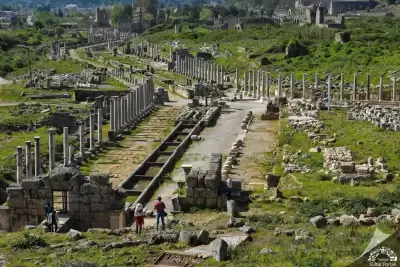
Limyra Ancient City, located on the slopes of Toçak Mountain in Finike, Antalya, is a Lycian city inhabited since the 5th century BC. It bears traces of the Hellenistic, Roman, and Byzantine periods with the monumental tomb of King Pericles, rock-cut tombs, and theater ruins.
Limyra is an ancient Lycian city located approximately 6 kilometers from Finike, 3 kilometers inland from the sea, nestled on the southern slopes of Toçak Mountain. Continuously inhabited since the 5th century BC, the city presents itself as an open-air archaeological museum with layers from the Hellenistic, Roman, and Byzantine periods. Rock-cut tombs carved into the mountainsides, theater ruins in the lower city, and various monumental structures offer the opportunity to read the architectural language of different periods side by side.
The most striking structure of the city is the monumental tomb of King Pericles, dating back to the 4th century BC. Attributed to Pericles, one of Lycia's powerful rulers, this structure provides important clues about the stone craftsmanship and architectural understanding of the period. Structures believed to have been built after the earthquake in 141 AD concretize the Roman period layer in the city. Access to the area is quite easy as a route branching off the Finike–Elmalı road passes right through the middle of the ancient city; however, this also means that a part of the area has been affected by modern road construction.
Guide's Note

Limyra Ancient City, located in the Finike district of Antalya, is a historical heritage site with deep roots extending to the Roman period. The most prominent feature noted by the majority of visitors is the spring water flowing through the ancient city: it is reported to be extremely cold and refreshing, with ancient walking paths even visible beneath the water. Wandering among thousands of years old stones and the general atmosphere of the area are highlighted as positive aspects. Visitors also note that restoration work is ongoing.
On the other hand, multiple visitors state that the maintenance and cleanliness of the area have deteriorated compared to previous years. Despite the entrance fee, shortcomings in landscaping and preservation are a frequent source of disappointment for visitors. Some sections being closed and the entrance point not being up to the standard expected of an archaeological site are also among the shared observations.
- Entrance fee: Museum Pass is accepted; if you don't have one, you need to pay a per-person fee. Turkish citizens can also pay in Turkish Lira.
- Cleanliness and maintenance: Multiple visitors mention dried vegetation, reeds, and general neglect.
- Closed areas: Access to some important parts of the ancient city may be restricted.
- Water crossing: The waterway, previously noted as walkable, is now closed due to rising water levels and a wire fence barrier.
Best Time to Visit
The most suitable period to visit Limyra is during April, May, and October. During these months, when temperatures are mild, walking up to the rock-cut tombs on the hillside is much more enjoyable. The Finike region can be quite hot in summer; those planning a visit in July-August should enter the site around 8-9 AM and leave before noon. In winter, the area is usually deserted, and some services may be limited.
In spring, the surrounding agricultural lands and mountain slopes turn lush green, making both sightseeing and photography more rewarding. Even during peak tourist season, Limyra remains quieter compared to neighboring sites like Myra or Olympos. This is a significant advantage for those seeking a peaceful exploration.
How to Get to Limyra?
The most practical way to reach Limyra Ancient City is by rental car or private vehicle. From Antalya city center, take the D400 highway towards Finike; after approximately 1.5–2 hours of driving, turn onto the Finike–Elmalı road. After proceeding 5-6 km on this road, follow the sign and turn right, then continue for another 1 km to reach the site entrance.
For those preferring public transport, there are regular bus services from Antalya to Finike. From Finike to the ancient city, you can continue by taxi or rental car. If you are coming from Kumluca or Kaş, it is possible to reach via the same road; the distance from Kumluca is also quite short.
Suggested Itinerary
Upon entering the site, it is logical to first visit the structures in the lower city: the theater ruins and surrounding architectural elements offer a good starting point. Afterwards, you can walk towards the slopes of Toçak Mountain to examine the rock-cut tombs up close. The climb to the slope involves a short but demanding path; comfortable shoes are essential.
The monumental tomb of King Pericles is one of the most important points of the area, so allocate sufficient time here. It is advisable to plan 2-3 hours to explore the entire area at a leisurely pace. You can combine your visit with Finike's coastline or the nearby Arykanda Ancient City to make a full day of it.
What to Eat Nearby?
There are no food and beverage facilities right next to Limyra. We recommend bringing water and light snacks with you before your visit; especially in summer, this small precaution makes a big difference. The nearest dining options are located in Finike town center.
Finike is a district known for its oranges; fresh orange juice and local citrus products are a must-try. The fish restaurants and pide salons in the town center are sufficient for a daily meal. For those seeking a more comprehensive gastronomic experience, Antalya city center or Kaş offer better options.
Photo Spots
Limyra is a very fruitful area for photography. The arrangement of the rock-cut tombs on the mountainside yields striking shots, especially in the morning light. The panoramic view of the plain and the distant Finike bay from the theater ruins is also captivating.
The stone craftsmanship details of King Pericles' tomb are an ideal subject for close-up shots. In spring, the wild flowers and green mountain slopes around the area create a beautiful contrast with the ancient structures. Those carrying wide-angle or telephoto lenses will be distinctly advantaged in capturing all the rock-cut tombs in a single frame.
Things to Consider Before Visiting
Since the area is largely open terrain, sunscreen, a hat, and plenty of water should definitely be with you. Flat-soled, sturdy walking shoes are required for climbing to the rock-cut tombs; it can be risky to go to these sections with sandals or high heels.
Keep in mind that the modern Finike–Elmalı road passes through the middle of the ancient city; pay attention to vehicle traffic. Museum Pass holders can benefit from discounted or free entry; checking current conditions beforehand saves both time and money. Since guided tour services may not always be available, reading resources in advance or downloading an audio guide app will be helpful for those who want to understand the area better.
This content originates from neresigezilir.com.tr and may not be copied without permission.
Limyra Ancient City Videos
Limyra Ancient City videos load when you open this section to keep the page fast.
Show videos
FAQ

Updated: