The Museum of Anatolian Civilizations is an archaeological museum located next to Ankara Castle in Ulus, Ankara, exhibiting over 194,000 artifacts ranging from the Paleolithic Age to the Iron Age in restored Ottoman bazaar structures.
The Museum of Anatolian Civilizations, which has become a symbol of Ankara, is housed in two historic Ottoman buildings in the Ulus district, leaning against the southeastern wall of Ankara Castle: the Mahmut Paşa Bedesteni and the adjacent Kurşunlu Han. These 15th-century structures were meticulously restored in the 1990s and converted into a museum; both the collections they hold and the buildings themselves serve as historical documents.
The museum's origins date back to 1921, to Mustafa Kemal Atatürk's directive to establish a Hittite museum in the capital. Since then, artifacts collected from all over the country have been exhibited in chronological order; visitors can gradually discover findings from the Paleolithic Age, through the Neolithic, Chalcolithic, Bronze Age, Hittite, Phrygian, Urartian, and Iron Age civilizations. Thanks to this collection, the museum was awarded the European Museum of the Year prize.
Guide's Note
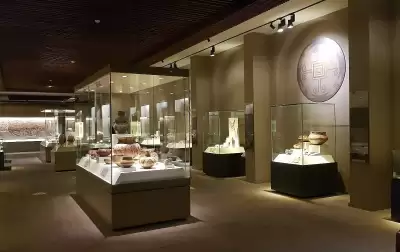
The Museum of Anatolian Civilizations leaves a strong impression on visitors with its collection spanning a vast period from the Neolithic era to the Roman Empire. Hittite artifacts, ceremonial vessels, figurines, and excavation finds concretely reveal Anatolia's layered history. Visitors who have visited the museum multiple times also state that they discover new things with each visit.
The exhibition layout follows a specific chronological timeline, making the collection relatively easy to follow. Müzekart holders can benefit from free entry; therefore, it is recommended to carry your card with you. The museum, which attracts significant interest from international visitors, offers an international atmosphere.
We recommend paying attention to the following points before your visit:
- Some halls are quite spacious; due to the density of the exhibits, planning which artifacts to focus on beforehand can make your visit easier. Also, one section is currently under renovation.
- The museum is located on steep slopes; transportation can be tiring if you are not using a private vehicle.
- Temperatures inside can rise during summer months; it is advisable to bring water with you.
- If you do not have a Müzekart, the entrance fee is considered high.
History and Significance of the Museum
The story of the Museum of Anatolian Civilizations dates back to the founding years of the Republic of Turkey. Work initiated in 1921 by Atatürk's directive gained momentum with the aim of exhibiting Hittite artifacts collected from various excavation sites across the country in Ankara. Over time, the museum incorporated the heritage of all civilizations that lived in Anatolia, not just the Hittite period, thus achieving its comprehensive identity today.
As of 2019, the collection comprises 194,759 artifacts. The exhibition halls are arranged chronologically, allowing visitors to examine findings from the Paleolithic Age, through the Neolithic, Chalcolithic, Early Bronze Age, Assyrian Trade Colonies, Hittite Empire, Phrygian, Urartian, and Iron Age civilizations in sequence. The museum received the European Museum of the Year award for its unique arrangement and the richness of its collection.
When to Visit?
Considering that Ankara's summers are hot and dry, and winters are cold and snowy, the most comfortable period for a museum visit is April-June and September-October. During these periods, you can also comfortably explore Ankara Castle and the historical fabric of its surroundings.
The museum can get crowded on weekends and public holidays. For those wishing to avoid crowds, weekday mornings, especially visits immediately after opening, offer a much calmer experience. During the summer, the exhibition halls can remain cool during midday, making the museum a good stop to cool down during hot Ankara summers.
How to Get There?
The most practical way to reach the museum is via the Ankara Metro M1 line. Get off at Ulus Station and walk for about 10-15 minutes towards Ankara Castle to reach the museum entrance. Walking through the historic Ulus bazaar along the way is pleasant for experiencing the atmosphere of the district.
Ulus can also be easily reached by EGO city buses. The museum does not have its own parking lot; therefore, those arriving by car may have to use nearby paid parking lots. It is also possible to be dropped off directly at the museum entrance by taxi or application-based ride services within Ankara.
Suggested Route: Ulus Historic Core
The Museum of Anatolian Civilizations is a natural starting point for a more comprehensive historical walk in the Ulus district. After visiting the museum, you can climb up to Ankara Castle, which is just above it, to enjoy panoramic views of the city. Descending from the castle to visit the ruins of the Roman Bath and the Temple of Augustus transforms the day into a journey through time from antiquity to the Ottoman era.
For lunch, you can experience the flavors of Ankara cuisine at traditional restaurants in Ulus; afterwards, you can add the nearby Ethnography Museum and the Republic Museum to your itinerary for a truly full day of Ankara history.
Photo Spots
The most impressive external photo angle of the museum is obtained from the corner where the stone facade of the Mahmut Paşa Bedesteni is seen together with the walls of Ankara Castle. Shots taken before noon, when the light hits the south, yield particularly strong results.
Inside, the main hall exhibiting Hittite reliefs offers beautiful frames for photography enthusiasts thanks to its dramatic spot lighting. Phrygian period bronze fibulae and belt buckles, and Urartian metal vessels contain interesting details for in-vitrine macro photography. Since flash photography is not allowed inside the museum, a wide-aperture lens will make your job easier.
Things to Know Before Visiting
Entry to the museum is free with a Müzekart; cardholders only need to have their cards with them. For those without a Müzekart, we recommend checking the current entrance fee from the official fee list of the Ministry of Culture and Tourism before your visit; prices may be updated periodically.
Flash photography is prohibited inside the museum. Large backpacks may need to be left at the cloakroom. Audio guide services are available in the exhibition halls, with foreign language options offered. The museum has a cafeteria and a museum shop. While wheelchair access is provided, please note that some passages may be narrow.
What to Eat Nearby?
The Ulus district, where the museum is located, is home to Ankara's most established artisan restaurants. Traditional delicacies such as kelle paça soup, etli ekmek, and Ankara's unique beyin tava can be found in the small restaurants here. Pastry shops around Ulus Square offer Ankara's famous Ankara dessert and various pastries.
On the other hand, many visitors to the museum prefer to go to Kızılay or Çankaya after Ulus to complete their lunch or dinner with a wider selection of restaurants. The small cafeteria inside the museum is sufficient for light snacks and drinks.
This content originates from neresigezilir.com.tr and may not be copied without permission.
Museum of Anatolian Civilizations Videos
Museum of Anatolian Civilizations videos load when you open this section to keep the page fast.
Show videos
FAQ

Updated: