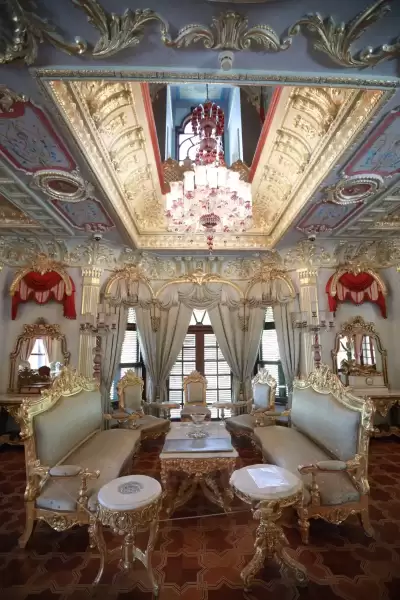
The Ankara Museum of Foundation Works is a free museum located on Atatürk Boulevard in Ulus, exhibiting carpets, kilims, wooden artifacts, tiles, metalwork, leather, and manuscripts dating from the 13th to the 20th century.
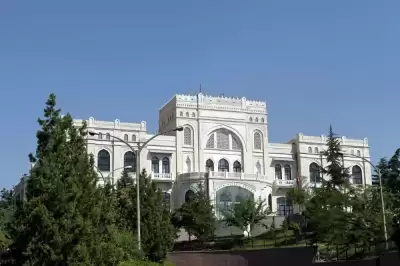
The Ankara Museum of Foundation Works is located on Atatürk Boulevard in Ulus, the historical center of the capital. The building was completed in 1928 by the Directorate of Foundations as an primary school; it was later restored and converted into a museum in 2007. The structure itself is worth seeing, with its simple yet powerful facade characteristic of the 1st National Architectural Movement.
The core of the collection consists of artifacts gathered from mosques, tombs, and foundation buildings across Anatolia. Embroidered wooden doors and mihrabs from the 13th and 14th centuries, handwritten Qur'ans from the 16th century, Kaaba covers, and rare carpets and kilims are among the museum's prominent pieces. Visitors can also observe the conservation workshop and carpet washing pool, getting a close look at how the artifacts are preserved.
The museum offers an equipped visitor experience with information kiosks providing guidance in 5 languages, an accessible elevator and restroom, a cafeteria area, and parking. Entry is completely free, making it an unmissable stop for those visiting Ankara.
Guide's Note

The Ankara Museum of Foundation Works is a two-story museum affiliated with the General Directorate of Foundations, which can be visited free of charge. The bulk of the collection consists of historical carpets and kilims from various mosques across Turkey; these textiles from the Seljuk and Ottoman periods span a wide timeframe from the 13th to the 20th century. Visitors can also encounter handwritten Qur'ans from ancient times and periodic exhibitions; in recent months, the Kaaba cover exhibition has also attracted attention.
The knowledge and helpfulness of the museum staff are frequently praised by visitors. Guided tours for school groups are also reported to be successfully conducted. The gift products offered by the museum and the QR code-supported information systems have also been well-received. The visit is stated to be completed in approximately 15 to 30 minutes; therefore, it is recommended to plan it together with other museums in Ulus.
No significant complaints stand out in the comments; however, there are a few points to note:
- The museum is located in a busy and traffic-congested area of Ulus; if you are coming by car, it is recommended to research parking options in advance.
- Since the collection is primarily focused on carpets and kilims, it may not be sufficient on its own for those seeking a more comprehensive museum experience.
- Advance reservations are required for group visits.
General Information About the Museum
The Ankara Museum of Foundation Works is one of the rare institutions that gathers the artworks produced by the Turkish foundation tradition over centuries under one roof. Opened in 2007, the museum houses carefully collected carpets, kilims, wooden artifacts, metalwork, tiles, leather, and manuscripts from various corners of Anatolia's foundation structures. The chronological depth of the collection extends from the 13th to the 20th century, which places the museum in a much more comprehensive position than an ordinary local museum.
The building where the museum is established is as interesting as the artifacts it contains. Built in 1928 by the Directorate of Foundations as an primary school, the structure reflects the characteristic features of the 1st National Architectural Movement. This building, restored and converted into a museum, can also be read as a concrete example of Ankara's early Republican era architectural heritage.
When to Visit?
Since the museum is open year-round, there are no seasonal restrictions. In the early morning hours, especially on weekdays, visitor density is quite low, and you have the opportunity to examine the artifacts in a calmer environment. School groups sometimes arrive around noon; for those who want to avoid these hours, 09:00-11:00 in the morning is a good window.
In spring and autumn, combining the museum with Gençlik Park, which is directly opposite, is a nice option. In summer, the air-conditioned museum halls also become particularly attractive for escaping Ankara's heat. The museum is closed on Mondays, so plan your visit accordingly.
How to Get There?
The museum is located on Atatürk Boulevard in Ulus, one of Ankara's most central points. It is quite easy to reach by public transport: you can get off at the Ulus stop of Ankaray or Metro and walk a few minutes to the museum. Many EGO bus lines also pass through Ulus square.
For those coming by private car, the museum has its own parking area. The museum is also within walking distance of historical sites such as Ankara Castle, the Museum of Anatolian Civilizations, and Hacı Bayram Mosque, making it possible to combine this area with a half or full-day historical Ankara tour.
Photo Spots
The most striking areas for photography inside the museum are the wooden artifacts gallery and the manuscripts section. Embroidered wooden doors and mihrabs from the 13th-14th centuries offer extremely rich material for detailed photography. The Kaaba covers exhibition also allows you to capture powerful shots, both visually and documentarily.
The museum building itself is also photographically valuable: the facade, bearing the traces of the 1st National Architectural Movement, is beautifully framed especially in the morning light. The angle looking at the museum from Gençlik Park is a good position to capture the entire building. Since lighting conditions may vary in some halls inside, we recommend consulting museum staff before using flash.
What to Eat Around the Museum?
There is a cafeteria area inside the museum; a practical option for a short break. For a more comprehensive dining experience, Ulus and its surroundings offer a rich array of choices. It is not difficult to find established Ankara restaurants, kebab shops, and pide salons in the area.
In the streets near Ulus square, you can experience affordable and delicious Ankara cuisine. For local delicacies such as Ankara tava and Beypazarı güveci, check out the traditional restaurants in the area. Visiting the museum before noon and then having lunch in Ulus is a good way to make efficient use of the day.
Historical Ankara Route Suggestion
The Museum of Foundation Works, when combined with other important venues in Ankara's historical Ulus region, creates a fulfilling day tour. You can start your day at Ankara Castle, explore the historical texture within the castle, then descend to visit the Museum of Anatolian Civilizations; this museum houses one of Turkey's most comprehensive archaeological collections.
After seeing Hacı Bayram Mosque and the ruins of the Temple of Augustus in the afternoon, you will have reached an ideal time slot for the Museum of Foundation Works. Allowing about 1.5 hours before the museum closes is sufficient to comfortably explore the collection. This route allows you to see Ankara's history, from ancient times to the Ottoman period, and then to the early years of the Republic, all in one day.
Things to Know Before Visiting
The museum is closed on Mondays; arrange your visit plan accordingly. While admission is free, different arrangements may apply for some special events or exhibitions. It is a good habit to follow the museum's official communication channels for up-to-date information.
The museum has an accessible elevator and accessible restroom; access is well thought out for wheelchair users and those with strollers. Information kiosks serve in 5 languages, making it possible to follow the collection without knowing Turkish. There may be restrictions on photography for some artifacts; we recommend getting information from the staff in advance.
This content originates from neresigezilir.com.tr and may not be copied without permission.
Ankara Museum of Foundation Works Videos
Ankara Museum of Foundation Works videos load when you open this section to keep the page fast.
Show videos
FAQ
Updated: