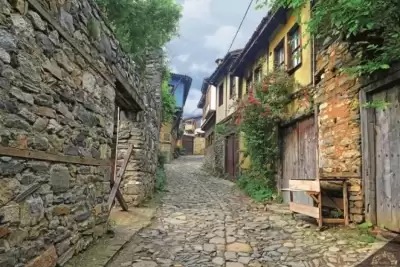
Gölyazı Inner Castle and City Walls are approximately 800-meter-long wall remnants from the Roman and Byzantine periods of the ancient city of Apollonia, located on the shore of Lake Uluabat in Bursa's Nilüfer district. The modern village settlement continues within the walls built with large cut stones, and entry is free.
Gölyazı, situated on a peninsula connected to the mainland by a narrow bridge on the shore of Lake Uluabat, was known as Apollonia ad Rhyndacum in ancient times. The remnants of the walls surrounding the village reveal the defensive strategies of this ancient city during the Roman and Byzantine periods. Built with large cut stones, the walls served as a shield against enemy attacks for centuries and created a unique urban silhouette intertwined with the lake's waters.
The most intriguing feature of the walls is that the modern village fabric continues to exist right in the middle of these ancient structures. Walking along the approximately 800-meter-long wall line, you are accompanied by stone houses and narrow streets on one side, and the calm waters of the lake on the other. Along with church ruins, traces of windmills, a historic hammam, and nearly 80 registered buildings, the walls are a fundamental part of what makes Gölyazı an open-air museum.
Related discoveries: Places to visit in Bursa, Historical Places, Historical places in Bursa, Bursa Grand Mosque.
Guide's Note

About Gölyazı Walls
Gölyazı is a small village located on a peninsula on Lake Uluabat, part of Bursa's Nilüfer district. This settlement, anciently known as Apollonia ad Rhyndacum, was surrounded by walls from the Roman period due to its strategic location. The surviving wall remnants and traces of the inner castle reflect the defensive architecture of the Byzantine period. The approximately 800-meter-long wall line almost completely encircles the peninsula; the villagers continue their daily lives in the shadow of these ancient walls.
The wall structures are believed to have served both as defense and to delineate the lake shore. The structure, made of large cut stones, along with other ancient ruins in the region, makes Gölyazı one of Turkey's most unique open-air archaeological sites.
When to Visit?
The best time to visit Gölyazı is between April-June and September-November. During these months, the weather is neither scorching hot nor cold; walking along the walls is much more enjoyable. Early morning fog and water reflections on the lake's surface offer incredibly impressive photographic opportunities.
In mid-summer, the village can get quite crowded; if you visit on a weekday, you'll find a calmer atmosphere. While the region remains attractive for migratory birds in winter, the paths around the wall structures can be wet and slippery, so caution is advised.
How to Get There?
The most practical way to reach Gölyazı from Bursa city center is by starting with public transport. Take the metro to Küçük Sanayi station; from there, you can take minibuses or dolmuşes heading to Gölyazı. Services run at regular intervals throughout the day, but we recommend checking the last service time in advance.
For those coming by private car, it's quite easy to reach the village, which is about 25-30 km from Bursa's western exit. You can park your car at the village entrance; since the peninsula is small, it's not really possible to drive around inside, so exploring on foot is the best option.
Suggested Route
Upon arriving in Gölyazı, your first stop should be the bridge entrance; from here, you can follow the wall line. As you walk along the wall structures, enjoy the lake view and delve into the narrow streets between the stone houses. You will encounter registered historical buildings, old church ruins, and hammam traces along your way.
After exploring the walls, head down to the village pier; the fishing boats and the calm atmosphere of the lake offer a different kind of pleasure. If you have time, stop at one of the small restaurants in the village for a fish meal. You can complete this entire route at a relaxed pace in 1.5-2 hours.
Photo Spots
Gölyazı is a true treasure for photography enthusiasts. The lake-facing side of the wall structures offers extraordinary shots, especially at sunrise and sunset. The view from the bridge towards the peninsula allows you to frame the entire walls and village.
Walking through the narrow stone streets, the flowers in front of doors, old wooden windows, and the texture of the wall stones are inspiring for close-up photography. If there's a layer of fog over the lake in the morning, don't miss it; photos taken at those times gain a completely different depth.
What to Eat?
Gölyazı's location on the shore of Lake Uluabat makes the village privileged in terms of fish and freshwater products. There are small fish restaurants in the village; you can taste fresh carp, catfish, and other lake fish here. For seasonal menus, we recommend confirming availability before heading to the village.
If you can't eat in the village at lunchtime, you can also find options in small towns and districts along the way when returning to Bursa city center. Don't forget to bring water and light snacks; market facilities in the village are limited.
Things to Consider
Since the wall remnants are in an open area, it's important to plan your clothing according to weather conditions. Stone surfaces become slippery in rainy weather; choose comfortable, non-slip shoes. As villagers continue to live in this historical area, it's important to respect private property and minimize noise during your visit.
The number of public transport services to Gölyazı can be limited; plan your return time in advance. We recommend taking cash with you as there may not be an ATM in the village.
Gölyazı Inner Castle and City Walls Videos
Gölyazı Inner Castle and City Walls videos load when you open this section to keep the page fast.
Show videos
FAQ
Updated: