Sillyon is one of the best-preserved ancient cities in the Pamphylia region, located on a rocky plateau 600 meters high in Serik, Antalya; it houses a theater, city walls, and temple ruins.
Sillyon is a defense-oriented ancient city built on a steep and high rocky plateau, approximately 37-40 km from Antalya city center and 15 km from Serik district center. Sharing the same geography with other important cities of the Pamphylia region such as Perge, Aspendos, and Side, Sillyon resisted many invasions throughout history thanks to the natural defense advantage of its location; it is even reported that Alexander the Great could not easily capture the city. With a long settlement history extending from the Hellenistic period to the Byzantine period, the city still bears the traces left by different civilizations today.
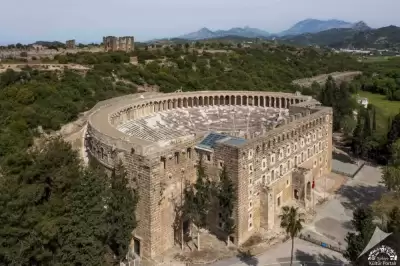
Among the structures that greet you upon reaching the city, the theater, city walls, bath ruins, and temple foundations stand out. The theater area is particularly striking; the seating rows carved into the rock surface and the remains of the stage building are still standing. The panoramic view extending from the plateau over the Pamphylian plain and the sparkling Mediterranean in the distance transforms the city from a mere archaeological stop into a visually powerful experience. The much lower visitor density compared to cities like Aspendos or Perge offers the chance to explore Sillyon in a calm and undiscovered atmosphere.
Guide's Note

Sillyon Ancient City offers a calm atmosphere intertwined with nature, unlike crowded tourist attractions. The vast majority of visitors find it worth seeing; especially the plain view obtained thanks to its location on a hill and the raw, untouched state of the ancient structures attract attention. Entry is completely free, and a museum card is not required.
There is still an active Ottoman fountain in the city; visitors can fill their drinking water from here. As excavation work continues, the area is quite large and there are many places to explore; however, it is recommended to allocate enough time to visit the entire area. Some visitors emphasize that the archaeological potential of the city has not yet been fully revealed and that comprehensive restoration work is needed.
Before your visit, it would be wise to pay attention to the following points:
- Challenging climb: Since the city is built on a hill, a quite tiring slope awaits you at the beginning and towards the summit; choose comfortable shoes.
- Safety risks: There are open storage wells 4-5 meters deep, cracks in places, and sections along the edge of cliffs in the area; pay attention to warning signs.
- Neglect: More than one visitor states that the area is not adequately protected and that restoration is urgently needed; some structures are in danger of collapse.
- Excavation environment: As work continues, the ground may be barren and uneven.
What is Sillyon and Why is it Important?
Sillyon is considered one of the four great ancient cities of the Pamphylia region. The others are Perge, Aspendos, and Side. But Sillyon is the least known and least visited among these four; which gives it a completely different atmosphere. The city is built on a flat rock plateau approximately 600 meters high. This geographical location transformed the city into an almost natural fortress in ancient times.
According to historical sources, Alexander the Great besieged Sillyon when he passed through the region in 333 BC; however, he had to retreat in the face of the city's natural defensive strength. This detail alone clearly demonstrates the strategic location of Sillyon. Inhabited from the Hellenistic period through the Roman and Byzantine periods, the city contains layers of different civilizations.
Best Time to Visit
The most suitable periods to visit Sillyon are spring and autumn. In April, May, June, and September and October, the weather is ideal for both walking and photography. In spring, the surrounding plains turn green, while in autumn, golden yellow tones add a distinct depth to the landscape.
In July and August, temperatures in the Antalya region can approach 40 degrees Celsius. The number of shade-providing trees on Sillyon's rock plateau is quite limited; therefore, if you plan to visit in mid-summer, choosing the early morning hours, preferably between 08:00-10:00, is important for both health and an enjoyable trip. In winter months, weather conditions can sometimes be dangerous on rocky paths.
How to Get to Sillyon?
The easiest and most practical way to reach Sillyon is by private car. From Antalya city center, follow the D400 highway (Antalya-Alanya road) towards Serik. After turning north from the Abdurrahmanlar or Belek junction, drive approximately 12 km further to reach Yanköy Neighborhood. Since it is about 24 km from Antalya Airport, it is also possible to come directly by renting a car.
Those who wish to come by public transport can reach Serik district center by bus or dolmuş and then take a taxi from there. There is no regular line operating from Serik to the ancient city. Organized day trips through tour operators from Antalya center can also be preferred; these tours usually include Sillyon along with Aspendos or Perge.
Suggested Route: How to Explore Sillyon?
Upon entering the city, we recommend first examining the main gate ruins and city walls. The walls bear traces from both the Hellenistic and Byzantine periods and concretely demonstrate the city's defense strategy. Then head to the theater area; the seating rows carved into the rock surface and the surviving parts of the stage building are among the most impressive structures.
After the theater, visit the bath ruins and temple foundations, walking to different points of the plateau. As you approach the southern and eastern edges of the plateau, the entire Pamphylian plain and the blue strip of the Mediterranean in the distance open up. These points are the most valuable moments for both scenery and photography. 2-3 hours are sufficient to comfortably explore the entire area.
Photography Spots
Sillyon is a very fertile location for photographers. The rock-carved cavea part of the theater creates dramatic shadow and texture plays, especially in the morning light. Shots taken from or right next to the city walls, combined with the plain and sea stretching in the background, allow you to achieve deep compositions.
The cliff points on the southern edge of the plateau are ideal for panoramic shots with wide-angle lenses. In spring, the greenery of the surrounding agricultural lands, and in autumn, the yellow-brown tones add a distinct color to the photographs. During sunrise and sunset, the light creates a very soft and warm tone on the stone surfaces.
Things to Consider Before Visiting
It is essential to bring plenty of water when going to Sillyon; especially in summer, there are no sales points near the city. Due to the rocky and uneven terrain, wearing closed-toe, sturdy-soled shoes is important for both comfort and safety. Walking with sandals or flip-flops can be quite difficult.
Shade is extremely limited in the ancient city; you must bring a hat, sunglasses, and sunscreen. In some parts of the city, the ground may be uneven or slippery; be careful while walking. If you are coming with small children, it is important to keep them close at the edge points of the plateau. Visiting with pets is possible, but a leash is mandatory.
What to Eat and Where to Go Nearby?
Restaurant options are quite limited in the immediate vicinity of Sillyon. While there are small village cafes and restaurants in Yanköy Neighborhood, their hours and capacities vary. For more dining options, you need to go down to Serik district center.
Serik hosts many restaurants offering fine examples of Antalya cuisine. Fresh fish, döner kebab, and local mezes are prominent choices. If you are planning a trip combining Sillyon with Aspendos, taking a lunch break in Serik center or in restaurants near Aspendos is a practical solution. Bringing small snacks and fruits with you would also be a good idea for a long trip.
How Many Days Should It Be Included In?
Sillyon is not a full-day trip destination on its own; you can comfortably see the entire city with a 2-3 hour visit. Therefore, combining Sillyon with other ancient cities in the Antalya region is the most logical approach. Aspendos Ancient Theater is only a few kilometers away, and it is quite easy to visit both sites on the same day.
Perge Ancient City is also located on the same route. A route starting from Antalya center, covering Perge, then Sillyon, and Aspendos, allows you to see the region's Pamphylian heritage collectively in a single day. If you are driving, this triple route forms a program of approximately 6-8 hours.
This content originates from neresigezilir.com.tr and may not be copied without permission.
Sillyon Ancient City Videos
Sillyon Ancient City videos load when you open this section to keep the page fast.
Show videos
FAQ
Updated: