


Bukchon Hanok Village is a historic neighborhood in Seoul's Jongno District, located between Gyeongbokgung and Changdeokgung palaces, featuring traditional Korean houses (hanok) from the Joseon Dynasty period. Admission is free.
Bukchon Hanok Village is located in Jongno-gu, on a hillside between two major Joseon palaces. The name means "north village" in Korean because it is located north of Cheonggyecheon Stream. The hanoks here have been continuously renovated over centuries but have preserved traditional architecture. Wooden roofs, narrow stone stairs, and winding streets still follow the settlement pattern from the 14th century.
A significant part of the village is a real residential area. Most of the houses are still inhabited by people, which is why you will encounter signs calling for silence and respect on some streets. There are comments among visitors reminding of this situation: speaking in low voices, being careful when taking photos in front of house doors. Some travelers find the neighborhood small and overly touristy and head to quieter alternatives like Eunpyeong Hanok Village. Most visitors, however, say that walking through narrow streets wearing hanbok and observing the roofline has a unique charm to it.
From some viewpoints, Namsan Tower or Bukhansan Mountain can be seen between the houses. There are small cafes and souvenir shops on the streets, but do not expect a wide range of shopping options. The main attraction here is the architectural texture and views.
Guide's Note
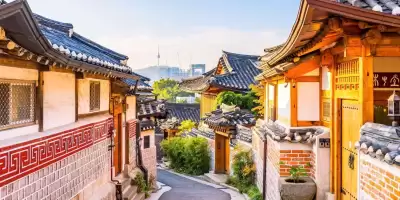
Bukchon Hanok Village is a historic neighborhood in Seoul's Jongno District that preserves traditional Korean architecture to the present day. Visitors report experiencing an atmosphere from the past as they walk among century-old tile-roofed hanok houses, intertwined with the modern city fabric. The view from the hilltop showing historic roofs together with Namsan Tower in the distance stands out as a particularly noteworthy detail.
The village is particularly notable for its narrow streets, which are well-suited for photography enthusiasts and those who want to explore while wearing rental hanbok. There is no admission fee; however, paid traditional workshop experiences such as ceramic painting and handmade souvenir production are available within the neighborhood. Connections can be made on foot to nearby Gyeongbokgung Palace and Samcheong-dong; this makes the village part of a more comprehensive route. It is noted that when explored at a leisurely pace, the area can be completed in under an hour.
Some practical information and points of attention that repeatedly appear in comments are as follows:
- Visiting hours: The area closes at 17:00; entering before 10:00 in the morning is not considered appropriate so as not to disturb residents.
- Silence rule: Since people still live in the neighborhood, designated quiet zones must be observed; visitors particularly warn about this.
- Hills: As the village is built on a hill, walking can be physically tiring; consider this if you get tired easily.
- Summer heat: Temperatures can be quite hot in summer months; it is recommended to bring a hat or umbrella.
- Souvenir shop prices: While the surrounding shops and cafes are attractive, prices are noted to be high.
- Crowds: Congestion noticeably increases on weekends, though crowds can be encountered on weekdays as well.
When to Go
Spring and autumn are the most comfortable seasons. Summer months can be tiring due to humidity and heat; one visitor noted for this reason "it was too hot, it was difficult to understand the sights." Going shortly after 10:00 in the morning works well. If you leave it for the afternoon, groups and tour buses fill the streets, and walking through narrow passages becomes difficult.
How to Get There
Metro Line 3 Anguk Station is the village's nearest exit. From the station, following the signs, you can reach the main streets within 10-15 minutes. You can also walk from Gyeongbokgung Palace, the distance is short.
Nearby Places
As the village is located between Gyeongbokgung and Changdeokgung palaces, visiting all three on the same day is a common choice. Jongmyo Shrine is also nearby; the historical route can be completed this way.
How Much Time to Allocate
1-2 hours is sufficient for exploring just the village. Some visitors say "there is not much to do here," which is an accurate observation. The purpose here is to see the architecture and streets, the list of activities is short. If you want to take photos and rent hanbok, the time can extend.
Photo Spots
From between the houses, Namsan Tower can be seen from some points, and from some heights, the silhouette of Bukhansan Mountain is visible. Stone-stepped narrow streets and wooden doors are the most photographed details. Coming in hanbok is preferred as it shows the traditional texture and clothing together.
Things to Note
Most of the houses are inhabited by ordinary people. Some streets have signs requesting silence, which must be respected. One visitor noted "you need to be careful not to speak too loudly, because there are many people living inside." Not taking photos of private property doors without permission, being patient in narrow streets during crowded hours is helpful.
General Assessment
Visitor opinions are mixed but generally positive. Some find the village small and too touristy and head to quieter alternatives like Eunpyeong Hanok Village. Conversely, most people say it is "a must-see place in Seoul" and appreciate the view and street texture. It is ideal for a short visit, the most realistic approach is to go without expecting a long program.
This content originates from neresigezilir.com.tr and may not be copied without permission.
FAQ
Updated: