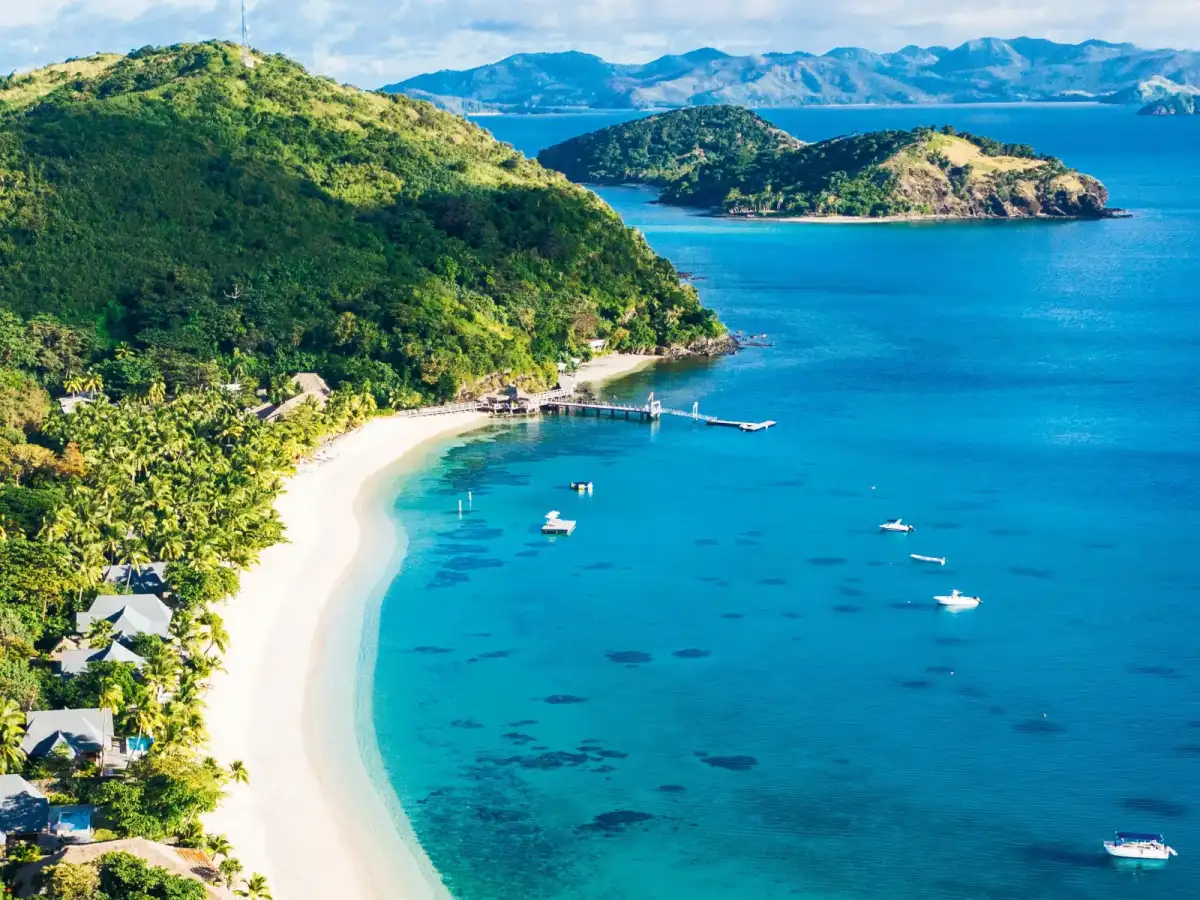
Fiji
Fiji is an island nation located in the heart of the Pacific Ocean, consisting of approximately 330 islands. Most of the islands were formed as a result of volcanic activity 150 million years ago, and geological activity…


When to Go?
The ideal time to visit Fiji is between May and October. These months are known as the dry season, with clear weather and less rainfall. Although sea temperatures remain warm throughout the year, conditions for diving and beach activities are much better during this period.
Between November and April, the season is rainy, and the risk of hurricanes increases. However, hotels may be cheaper during this time. If budget is important and you are tolerant of the weather, you can decide based on your own experience.
How to Get to Fiji?
There are no direct flights from Turkey to Fiji. Flights are usually connected via Australia or New Zealand. There are direct flights of approximately 3-5 hours from eastern Australian cities (Sydney, Melbourne). Flights from Auckland, New Zealand, are regular and take 3-4 hours.
Fiji's main airport is Nadi International Airport (Viti Levu island). Boats, small planes, or helicopters are used for inter-island travel. Reaching other cities like Suva from Nadi is relatively easy.
Main Places to Visit in Fiji
Nadi, Suva, and Lautoka on the main island of Viti Levu are the principal cities. Nadi is a commercial hub and gateway. On Viti Levu, Natadola Beach is one of the famous sandy beaches, while Sabeto Hot Springs and Mud Pool offer a natural spa experience. Taveuni island is known for its volcanic structure and waterfalls, and the Yasawa Islands for authentic cultural experiences and river sources.
Coral reefs, tropical forests, and clean water sources are found throughout the island. Inter-island boat trips are short, comfortable, and appealing. All kinds of activities are available, from luxury resorts to fishing and diving tours.
How Many Days Are Enough for Fiji?
5-7 days are sufficient to comfortably explore the basics of Fiji. During this time, you can spend a day or two in Nadi, then go to one of the islands (Yasawa or Mamanuca) for beach and diving activities. If you want to explore more deeply, 10-14 days would be more suitable.
If you are planning a honeymoon or a long vacation, even 2-3 weeks will pass quickly. Since there is no rush on inter-island boat trips, time can be extended as desired. You can plan your trip according to the weather and your personal preferences.
Suggested Itinerary
Classic itinerary: 1-2 days in Nadi → 4-5 days in the Yasawa Islands → return. When staying at tourist resorts in Yasawa, boats and guides organize tours in groups. Visiting Natadola Beach or going to Sabeto Hot Springs can also be done on Viti Levu.
Longer itinerary: Nadi → Mamanuca Islands (2-3 days) → Yasawa Islands (3-4 days) → return to Viti Levu for a day trip to Taveuni or Vanua Levu. If you want to dive in coral reefs, include this in your plan. If you move at a relaxed pace, the short boat trips between the islands are enjoyable.
Where to Stay?
Accommodation options in Fiji are extensive. In Nadi and Viti Levu, you'll find everything from luxury resorts and boutique hotels to budget-friendly options. The Yasawa and Mamanuca islands mostly have small resorts; these can be booked as part of a package tour or independently.
Backpacker hostels are also available on the islands; this option is popular thanks to Fiji's hospitable culture and social environment. Whatever your budget, it is recommended to book in advance online. Prices drop significantly during the off-season.
What to Eat in Fiji?
Fijian cuisine is based on fresh seafood. Lovo (earth oven style), Kokoda (fresh fish marinated in lemon), and Dalo (taro plant) are local delicacies. Coconut milk, various fish pickles, and seafood are found everywhere. Meals are generally light and rich in tropical fruits.
International cuisine is available at resorts. Restaurants in Nadi and Suva offer a mix of Fijian, Indian, and Australian dishes. Prices can be high in tourist centers, but fresh fruit and fish are very cheap in local markets. Water is always potable.
Shopping
Classic tourist souvenirs are abundant in Fiji: Indian handicrafts, local ink, wood carvings, and photographs. Markets, art galleries, and tourist shops in Nadi and Suva are the main shopping areas. Coral and shell products are popular, but most are preserved, and sales may be subject to legal restrictions.
Local craft products are more reasonably priced. Shopping in resorts is more expensive. The currency is the Fijian Dollar; credit cards are accepted in tourist areas, but cash is preferred in markets.
Budget Planning
Budget diversity in Fiji is wide. At a backpacker level, you can live on 40-60 USD per day (hostels, local food). For a mid-range tourist, 100-200 USD is needed, and for a luxury vacation, 250 USD and above. Booking flights and hotels in advance significantly reduces prices.
Prices drop during the off-season (November-April). Allocate an additional budget for inter-island boat tours, diving, and unguided activities. Transfers from Nadi airport to the city, resort packages (usually including meals) affect the budget. Health insurance is not mandatory but recommended if high-sea activities are involved.
Things to Consider
It is possible to enter Fiji without a visa for up to 3 months; your passport must be valid for at least 6 months. Sunburn is a serious danger, use high SPF protection. There may be strong currents in the sea, swim in areas indicated by local guides. Mosquitoes may increase in some areas, bring repellent and nets.
Currency exchange can be done at the airport, but the rate is higher; ATMs are plentiful in cities. The risk of malaria and Zika is low but not entirely absent; consult a doctor for travel insurance and health information. Be respectful of local culture; certain areas may be closed to tourists. Avoid those who demand excessively high prices in tourist markets.
Photo Spots
The silver sands and turquoise water at Natadola Beach provide excellent photos. Sabeto Hot Springs is great for capturing the texture of geothermal activity and hot water pools. The coral reefs in the Yasawa Islands offer unforgettable moments with colorful fish and coral structures under diving conditions.
Sunset photos can be taken from any beach; seeing the sunset from a boat is especially magical. Volcanic landscapes and tropical forests are wonderful photo motifs in Taveuni. Blue lagoons and secluded beaches form natural frames on boat tours. Please ask for permission before taking portrait photos of local people.
General Information About Fiji
Fiji is an island nation in the South Pacific Ocean, consisting of two main islands (Viti Levu and Vanua Levu) spanning 330 kilometers. The vast majority of the islands were formed as a result of volcanic activity approximately 150 million years ago. Some geothermal activity is still observed in Vanua Levu and Taveuni. The population is around 900,000, and its economy relies on fishing, tourism, and sugar production.
Fiji's culture is a mix of indigenous Melanesian people, Indian immigrants, and Australian-Pacific influences. Hospitality and a relaxed philosophy of life are ingrained. The official language is English, and Fijian and Hindi are also widely spoken. The time zone is UTC+12 (2 hours ahead of Australia, 7 hours ahead of Turkey). Fiji's currency is the Fijian Dollar, and banknotes and coins are easily found.
This content originates from neresigezilir.com.tr and may not be copied without permission.
Places to Visit
No places found for this filter.