Thessaloniki, Greece

Hagia Sophia Cathedral

Updated:
Add to Favorites
8 min read 52 views 🇹🇷 TR 🇬🇧 EN
Ticket Paid entrance
Hours Generally open for visits on weekdays and…
Duration Average 30-45 minutes;
QUICK ANSWER

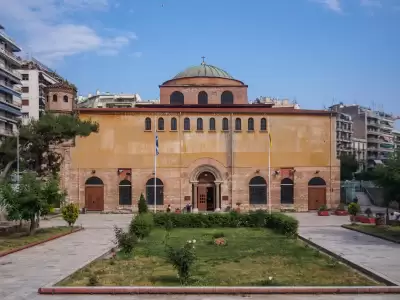
Hagia Sophia Cathedral is a Byzantine-era church built in the 7th century in the center of Thessaloniki. Noted for its golden mosaics of Christ in the dome, the structure was converted into a mosque after the Ottoman conquest in 1430 and now serves as a museum, listed as a UNESCO World Heritage Site.

Hagia Sophia, one of the important structures forming the historical fabric of Thessaloniki, indicates that a place of worship has been present in this area since the 3rd century. The structure we see today was built in the 7th century, inspired by the famous Hagia Sophia in Istanbul. Used as the metropolitan church, or cathedral, of the city between 1204 and 1430, Hagia Sophia is considered one of the most important examples of Byzantine architecture and art.

With Sultan Murad II's conquest of Thessaloniki in 1430, the structure was converted into a mosque, taking the name Hagia Sophia Mosque. In 1912, when the city passed to Greece, it was converted back into a church and can now be visited as a museum. The golden mosaics inside, especially the scene depicting the Ascension of Christ in the dome, captivate visitors. It is truly an unmissable stop for those interested in Byzantine art history.

The structure is located in the heart of the city, at the intersection of Agia Sofia and Ermou streets. You can easily reach it by walking from Aristotelous Square. Hagia Sophia, which holds an important position among Thessaloniki's Byzantine monuments on the UNESCO World Heritage list, offers visitors a rich experience with both its architectural details and its historical layers.

Experience Summary

Guide's Note

Hagia Sophia Cathedral

The vast majority of visitors find this church worth seeing. The building has a simple and angular appearance from the outside, but once inside, it offers a historical and magnificent atmosphere. Visitors who happened to catch a choir performance particularly welcomed this experience.

While comments are generally short and positive, detailed feedback about the venue remains quite limited. Therefore, it is difficult to make a comprehensive assessment of the visitor experience.

  • Name confusion: Some visitors confuse this structure with the Hagia Sophia in Istanbul. Although this church in Thessaloniki was inspired by the one in Istanbul, it is a different structure; keeping this distinction in mind before your visit can help you manage your expectations correctly.
Sıdkı Alper NeresiGezilir Editor

The Byzantine Jewel of Thessaloniki

Hagia Sophia Cathedral, located in the heart of Thessaloniki at the intersection of Agia Sofia and Ermou streets, is one of the city's most impressive Byzantine monuments. This magnificent structure, built in the 7th century, was designed inspired by the Hagia Sophia in Istanbul. Although a church has stood on the same site since the third century, the current building is a mature example of early Byzantine architecture.

The soaring dome and the golden mosaics of Christ inside, especially the Ascension scene at the very center of the dome, transport you to a different era with their artistic power. This magnificent building, which served as the metropolitan church of the city between 1204 and 1430, was converted into a mosque during the Ottoman period, and regained its church identity in 1912 when Thessaloniki passed to Greece. Today it is open to visitors as a museum and is listed as a UNESCO World Heritage Site.

The Ideal Time to Visit

Any time of year is suitable for visiting Hagia Sophia Cathedral, but spring and autumn are generally the most comfortable times to explore Thessaloniki. Summer months can be crowded, but if you arrive early in the day, you'll avoid the crowds and have a better chance to see the mosaics in the morning light filtering into the dome.

The late afternoon sun also creates a different atmosphere inside the building, so if you're a photography enthusiast, you might consider these hours. If you're visiting other Byzantine structures in Thessaloniki, it's a good route to plan Hagia Sophia for the morning and then head towards the Rotunda or Ayios Dimitrios in the afternoon.

Transportation and Location

Hagia Sophia Cathedral is located right in the center of Thessaloniki, about a 10-minute easy walk from Aristotelous Square. From Aristotelous Square, proceed along Ermou Street and then turn onto Agia Sofia Street. Since it's on the city's main shopping and sightseeing route, it's almost impossible to get lost, and there are plenty of signs along the way.

If you want to use public transport, you can take any bus to the city center, get off at Aristotelous Square, and walk. Taxis are also affordable, but since you're in the center, walking is both more enjoyable and allows you to feel the pulse of the city. If your accommodation is in the center, it will only take a few minutes to reach it on foot.

How Many Days to Allocate?

Exploring the interior of Hagia Sophia Cathedral, examining the mosaics and architecture, will take approximately 30-45 minutes. If you are interested in Byzantine art and want to take detailed photos and examine architectural details, you can allocate an hour. However, the structure is so centrally located that it forms a natural stop within your general city tour of Thessaloniki.

If you are planning a 2-3 day trip to Thessaloniki, it makes sense to include Hagia Sophia in your itinerary while visiting the Byzantine monuments in the city center on the first day. You can easily create a route that includes the White Tower, Rotunda, Ayios Dimitrios Basilica, and Ancient Agora all on the same day. Unless you are specifically coming to Thessaloniki just for this structure, consider it a stop on your city tour.

Suggested Itinerary

Start early in the morning from Aristotelous Square, have breakfast by the sea, then head towards Ermou Street. While soaking in the shopping atmosphere on the street, reach Hagia Sophia and see its dome mosaics in beautiful light. From here, walk to the Ancient Agora, which is within walking distance, and then proceed towards the Rotunda. Have lunch at one of the nearby traditional tavernas.

In the afternoon, visit the Ayios Dimitrios Basilica, then go up to the Ano Poli (Upper Town) area to enjoy panoramic views of the city. In the evening, descend back to the center and complete the day with Thessaloniki-style mezes at the taverns in the Ladadika district. This route balances both the Byzantine heritage and the living culture of the city.

Things to Note

Although Hagia Sophia functions as a museum, it is still considered a sacred building, so please be respectful when entering. Entry is usually free or a symbolic fee is charged, but it's best to confirm current information on site. Bag checks may occur, and large backpacks or suitcases are generally not welcome.

Photography without flash is allowed inside, but there may be restrictions in some special areas, so pay attention to the information at the entrance. It can get quite hot inside during the summer months, so carry your water bottle with you. Some museums may be closed on Mondays, so it's useful to check the current opening hours for Hagia Sophia in advance. Since it's in the center, there's heavy traffic around, so be careful when walking.

Tips for Photography

To photograph the mosaic of Christ in the dome, you need to sit right in the middle and look up; a wide-angle lens will make your job easier. The morning light reflects the golden colors inside beautifully, while the afternoon light coming from the side windows creates more dramatic shadows. For exterior shots, moving to the west side of the building and framing the dome silhouette against the sky yields good results.

Tripod use is generally prohibited indoors, so you can increase your ISO and lean against walls to prevent camera shake. If you want to capture the details of the mosaics, a zoom lens works well. In the late afternoon, you'll get beautiful warm tones on the exterior facade. Try to keep modern buildings in the vicinity out of your frame to preserve the historical ambiance.

Budget Planning

The entrance fee for Hagia Sophia Cathedral is symbolic or sometimes free; a contribution of a few euros might be expected. Thessaloniki is generally a more affordable city compared to Istanbul, but good planning is necessary due to the exchange rate of the Euro against the Turkish Lira. Nearby cafes and restaurants are a bit more expensive as it's a tourist area, but still not excessively so.

If you want to have a coffee, you can budget 3-5 euros, and for lunch at a tavern-style place, around 10-15 euros. Public transport in Thessaloniki is economical, with reasonable ticket prices. Generally, for a mid-budget traveler, 40-50 euros per day excluding accommodation is sufficient. Most Byzantine sites are free or very affordable, so museum visits won't break the bank.

Accommodation Recommendations

The most logical area for accommodation in Thessaloniki is Aristotelous Square and its surroundings; from here, you can walk to Hagia Sophia. The Ladadika district is also a lively choice, being both central and vibrant for nightlife. Boutique hotels and Airbnb options are quite diverse, and you can easily find a place according to your budget.

If you are a traveler who loves historical ambiance, staying in the Ano Poli (Upper Town) area is a romantic option, but getting down to the center from there can be a bit tiring. There are also youth hostels and hostel options, with very reasonable prices. If you want to stay by the sea, hotels along the bay offer views, but walking to the center takes some time. Making reservations in advance, especially in summer, provides a price advantage.

Food and Drink Nearby

There are many tavernas and cafeterias right around Hagia Sophia. You must try Thessaloniki's famous bougatsa dessert; it's indispensable if you like pastries for breakfast. Stop by the nearby Modiano Market to browse local delicacies and buy fresh seafood and various cheeses.

For lunch, head towards the Ladadika district and order a meze platter at traditional taverns for a wonderful experience. Thessaloniki-style stuffed mussels, tarama salad, and fresh fish are a must-try. Experiencing the meze culture while drinking tsipouro is the best way to understand the city's spirit. Vegetarian options are also plentiful, as Greek cuisine is very rich with its olive oil dishes.

Shopping Opportunities

Around Hagia Sophia, Ermou Street is Thessaloniki's main shopping axis, where you can find everything from international brands to local boutiques. For Byzantine-themed souvenirs, check out the gift shops of museums; quality mosaic reproductions and books make great mementos.

At Modiano Market, you can buy local products, spices, olive oil, and cheeses. For travelers looking for handmade jewelry and ceramics, the small workshops in Ano Poli are interesting. Bottles of ouzo and tsipouro, unique flavors of Thessaloniki, are great gift options for your return. Bargaining culture is not very common, but friendly conversations are always welcome.

Hagia Sophia Cathedral Videos

Hagia Sophia Cathedral videos load when you open this section to keep the page fast.

Show videos

FAQ

It is located at the intersection of Agia Sofia and Ermou streets. You can reach it in about 10 minutes on foot from Aristotelous Square. Since it is in a central location in Thessaloniki, you can easily visit it while exploring the city.

Although the current structure was built in the 7th century, a church has been on this site since the 3rd century. It was designed inspired by the Hagia Sophia in Istanbul and is a beautiful example of Byzantine architecture.

Yes, after the conquest of Thessaloniki by Sultan Murad II in 1430, the structure began to be used as the Hagia Sophia Mosque. In 1912, when the city passed to Greece, it reverted to its function as a church.

Absolutely. The golden mosaic of the Ascension of Christ in its soaring dome is worth seeing. It houses important examples of Byzantine art and is therefore listed as a UNESCO World Heritage Site.

Entrance conditions and hours can vary. Generally, historical churches in Thessaloniki are open for visits during certain hours, but it is advisable to check current information on site or confirm from official sources.

Since Hagia Sophia is in a central location, other important tourist spots such as Aristotelous Square, the White Tower, and the Ancient Agora are within walking distance. If you want to explore Thessaloniki's Byzantine heritage, be sure to include this structure in your itinerary.

Yes, between 1204 and 1430, the Hagia Sophia Church served as the metropolitan church, or cathedral, of Thessaloniki. It was one of the most important religious structures in the city during that period.

Generally open for visits on weekdays and weekends, but we recommend checking current operating hours before your visit.

Average 30-45 minutes; allow 1 hour for detailed examination and photography.

Spring and autumn months (April-May, September-October) are ideal for both weather conditions and tourist density. It can be hot in summer, but as the structure is indoors, it does not pose a problem.
White Tower Next discovery
Next Stop

White Tower

Selanik, Yunanistan

The White Tower, rising on Thessaloniki's waterfront, is a historic structure built by the Ottomans in the 15t…

~0.7 km Explore

Updated:

Reviews (0)

No reviews yet

Be the first to review!

Share Your Experience

Share your experience

Your impressions help other travelers.